

🚀 Ready to take your video meetings to the next level in 2025?
We’ve rounded up the 15 Best Conference Room Cameras that deliver crystal-clear video, smart tracking, and seamless audio — whether you’re hosting a quick team huddle or a global strategy call. 🌍📸
🎯 Find the perfect pick for:
✔️ Small huddle rooms
✔️ Mid-size meetings
✔️ Large boardrooms
✔️ Hybrid teams
💡 From AI-powered framing to 360° coverage, this list has it all! Check them out!

What is the Electronic Signature Agreement and 17 Benefits for Managers
What is the Electronic Signature Agreement and 17 Benefits for Managers

Empowering Hybrid Work: Microsoft Teams App Development for the Modern Workplace
Learn how Microsoft Teams app development supports the hybrid workplace model, helping teams stay connected, productive, and collaborative from any location with custom app functionalities.


Powerful Strategies for Upskilling Your Offshore Team | Future Proof Accountants
This video is about the top 3 tips to upskill your offshore team. Powerful Strategies for Upskilling Your Offshore Team" provides insights and techniques for enhancing the skills and capabilities of your remote team. From training programs to effective communication methods, this content offers actionable strategies to maximize productivity and success in offshore operations.


Exploring the Technical Issues of Video Conferencing
“Troubleshooting Video Conferencing: Common Technical Issues and How to Solve Them! 🛠️👨💻🔍 Don’t Let Glitches and Audio Problems Disrupt Your Virtual Meetings 🚫💻💬 Learn How to Troubleshoot and Resolve Technical Issues like a Pro!

This is Callissia Fragrans under the microscope! I am grateful beyond human words to @sonia__levy for these stunning images. A successful start to a beautiful remote collaboration! Thank you!
🔬
There is something captivating about the images being ever so slightly unattainable, fuzzy at the edges, bringing edges to the centre in layers no unlike human skin, yet shifting away from the human focus.
🌿
Read about my project Hidden (2020 onwards) via the link in my linktree. It began with a tiny video portrait of Callisia I created especially for Chlorophilia exhibition at @aptgallery curated by Paul Malone and Nicola Rae @nrae_studio, with music by @samuelhollowayproductions, now also a text piece written for Uprooting the Anthropocene Symposium, @torchoxford, all under one canopy. And more to come!
✨
@carlos.magdalena.kew this is my planty project I mentioned!
🤓
#callisiafragrans #mexicoendemic #filmingunderthemicroscope #remotecollaboration #humanplantnarratives #vegetalbeings #hiddendisability #abilitydifference #access #medicinalplants #chlorophilia
https://www.instagram.com/p/CSM3hArIkqymV_0iM7xPUdLkItOjPf8Krz_-ZE0/?utm_medium=tumblr


What is Miro? How Can You Use it For Remote collaboration?

The online collaborative whiteboard platform to bring teams together, anytime, anywhere.
Miro is a cloud-based collaboration tool for small to midsize businesses. The solution features a digital whiteboard that can be used for research, ideation, building customer journeys, and user story maps, wireframing, and a range of other collaborative activities. The solution’s whiteboard toolkit enables users to create mockups and schemes, write down ideas and leave feedback on other members’ input. Boards can be created using pre-loaded templates and can be converted into a presentation or saved as a PDF.
Miro also comes with an integrated library of icons, wireframes, and other content. Users can also upload files, images, and documents from their computer or Google Drive.
Miro is perfect for:
- Remote collaboration
- Ideation and Brainstorming
https://www.keifersimpson.com/post/what-is-miro-how-can-you-use-it-for-remote-collaboration

FOSTERING TEAM SOLIDITY

The pandemic has had a huge impact on individual and collective health and prosperity, and no one knows when our economy and our society will be healthy again. Yet opportunities exist. If companies and leaders can inspire team members to proactively solve problems, set aside old practices, test and prove innovative ways to work, and pilot new systems, the likelihood of organizations surviving — and, indeed, thriving — is much greater.
The single most important component are caring leaders: leaders who adapt to serve their employees and their companies and create positive traction. It is important for leaders to take steps to build trust and cooperation among their employees to maximize productivity and team satisfaction. Modelling best behaviors and creating shared experiences, they must evolve and adapt, and some behaviors that can help them are:
1. Develop Rules Of Engagement
Ask people what it takes to have a great team, what the definition of a great teammate is, and what actions each needs to participate in to support those definitions. Once done, ask what phrase could be used, without people being defensive, to create accountability. What it does is it levels the playing field and re-establishes trust.
2. Define Clear Commitments
We lose trust when we perceive others have not followed through on what we expect; yet these commitments are often not clearly articulated, mutual and measurable. In new teams or in teams trying to recover trust, it is important to have clearly articulated agreements and accountability measures to ensure everyone involved has aligned expectations.
3. Show Trust First
As the leader, are you trusting them? Where are you holding the reins too tightly, thinking you are best to handle a particular client or project? What information are you holding back, assuming others cannot handle it? Trust them more, and they will begin to learn they can trust, too.
4. Share and Be Receptive
Trust is determined by openness, credibility, and respect, practiced consistently. Leaders must foster an environment where others’ differences are accepted and look out for others’ welfare. Leaders who share thoughts and feelings and who are receptive to the thoughts and feelings of others build trust.
5. Model Respectful Argumentation
Establish a regular routine that supports the process of argumentation during all team meetings. Argumentation among team members instigates positive tension that leads to mutual respect, trust, and innovation. By learning how to respectfully disagree, people learn that there is no need to mistrust someone with a different perspective, because argumentation feels a lot different than mere arguing.
6. Identify Why Trust Is Low
Think of trust as deposits or withdrawals from an account. Low trust is a result of too many withdrawals. There are several areas that can build or break trust with teams. One thing leaders can do is to identify the reasons for low trust. By getting down to the root issues you can start to rebuild trust.
7. Have Team Members Interact on A Personal Level
Create an opportunity for the team to interact on a personal level at a retreat, challenge, or event. Make it easy for people to be authentic, tell stories and reveal their character. It is with this shared experience that a structured dialogue about earning each other’s trust and respect can evolve into the best way to work together as team. A didactic exercise alone cannot produce trust.
8. Share A Regular Meal
People are hard to hate up close, and nothing brings togetherness like sharing a meal. Engage in activities (a monthly team lunch or coffee) focused on nonwork discussion. Engage in personal sharing exercises, discuss vacations and personal and professional goals, or have a self-awareness workshop, such as a personal assessment tool, to create mutual understanding. Teams that eat together build stronger bonds.
9. Understand Communication Styles
We all have different behavioral styles, and when we encounter someone who approaches tasks or communicates differently than we do, it can lead to mistrust. By discussing motivators, work styles and how each style prefers to communicate, you will bridge misunderstandings and begin to build trust.
10. Create A Necessity
From a practical standpoint, it is all about creating a “necessity.” Human behavior is most likely to adapt when changes are a matter of survival. The most effective method I have seen work is to create that necessity. Put those that you perceive as not trusting each other into a team and define the project success in a way that forces trust building.
11. Don’t Be Afraid to Be Vulnerable
It is so powerful when a leader shows vulnerability to their team. When anyone is vulnerable their team often responds with empathy, which starts a cycle of trust. If you need to build trust more quickly, hold an offsite and ask everyone on the team to develop and share two growth goals with the entire team. This provides everyone with an equal opportunity to be vulnerable and to support each other.
12. Teach Safety Instead
We cannot teach trust any better than we can teach a fool proof method of falling in love. Trust equals an outcome, rather than a catalyst. Instead, teach safety and trust will grow. When we feel safe, we trust. Try criticizing in private, praising in public or other safe practices, and watch the trust build on your team.
13. Learn Each Other’s Stories
Everyone has a personal history that impacts how they show up in their professional setting and the lens by which they view the world. Establishing trust requires team members be given the opportunity to share the stories that have shaped them. This allows the armor to come down so they can see each other authentically and develop the compassion that will guide them through the challenging times.
14. Do Charitable Work Together
Sometimes the best building of bonds and trust is outside the walls of the organization. Those who serve others by building a Habitat house, meeting kids and families under cancer care, or serving meals and educating the homeless often get something far greater than getting along better at work. Volunteer experiences where trust can be built often directly translate positively and immediately.
Content Curated By: Dr Shoury Kuttappa.


Gain the benefits of Remote collaboration with cloud migration!
Today,
more business people are working away from the office than ever before. With
the cloud, your employees can perform their roles from wherever they are
throughout the world. Employees can collaborate with ease, thanks to
collaboration and communication tools and software. Time and labour costs are
also greatly reduced, as cloud computing makes file sharing much easier.

BARRIERS TO TEAM OPERATIONS: BEHAVIOURS ASSOCIATED

The collaborative nature of teams means they are subject to pitfalls that individuals working alone do not face. Team members may not always work well together and focusing the efforts of individuals on shared goals presents challenges to completing tasks as efficiently and effectively as possible.
Three Barriers to Building a Team
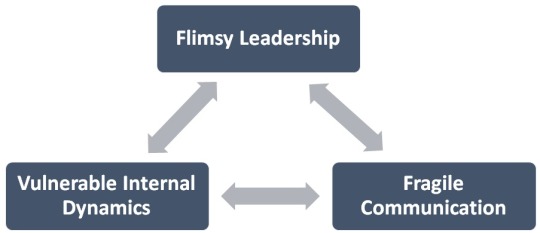
A) Flimsy Leadership
Everything flows from leadership. And when there is a problem in the team, usually, it’s the leader’s fault. The wise king Solomon said, without a vision, the people perish. There could be several reasons that a team is not working, and most often, it starts with the leader.
i. Is there no vision for the team?
ii. No one in the team knows where they are heading?
iii. Is there favoritism being practiced by the leader?
iv. Is the leader too critical of new ideas or suggestions?
v. Is the leader’s style too imposing on everyone?
It could be various reasons, but usually the problem has its roots with the leader.
B) Fragile Communication
Communication is key to the proper functioning of a team. And poor communication can lead to misunderstandings, resentment, offences within a team. Sometimes it’s because one person’s frankness or direct approach offences another person; and another responds in hurt. While conflict is normal in teams, without resolving them, this poor communication can lead to destructive conflict and cause a team to break down.
C) Vulnerable Team Dynamics
Teams can fail because some people just cannot work with others. For example, if we have two extremely opinionated team members, we will be seeing conflict all day in the team. Also, if we have team members that are ‘yes’ men; we won’t see a lot of participation and open discussion in the team. The thing is that, we must find the right mix of individuals to make a team; not just in terms of personalities, but also in terms of skills and abilities.
While these right individuals may have disagreements in approach and perspective, but that’s the idea behind a team, different individuals bringing different points of view so that synergy within the team can be achieved.
The Secrets of Great Teamwork
Today’s teams are different from the teams of the past: They are far more diverse, dispersed, digital, and dynamic (with frequent changes in membership). But while teams face new hurdles, their success still hinges on a core set of fundamentals for group collaboration.
The basics of team effectiveness were identified by J. Richard Hackman, a pioneer in the field of organizational behavior. He uncovered a ground-breaking insight: What matters most to collaboration is not the personalities, attitudes, or behavioral styles of team members. Instead, what teams need to thrive are certain “enabling conditions.” These conditions—a compelling direction, a strong structure, and a supportive context—continue to be particularly critical to team success. Modern teams are also vulnerable to two corrosive problems— “us versus them” thinking and incomplete information. Overcoming those pitfalls requires a fourth critical condition: a shared mindset.
The Enabling Conditions
A) Compelling direction: … … . . . The foundation of every great team is a direction that energizes, orients, and engages its members. Teams cannot be inspired if they do not know what they are working toward and don’t have explicit goals. Those goals should be challenging (modest ones do not motivate) but not so difficult that the team becomes dispirited. They also must be consequential: People have to care about achieving a goal, whether because they stand to gain extrinsic rewards, like recognition, pay, and promotions; or intrinsic rewards, such as satisfaction and a sense of meaning. In remote teams, direction is especially crucial because it’s easy for far-flung members from dissimilar backgrounds to hold different views of the group’s purpose.
B) Strong structure: … … …Teams also need the right mix and number of members, optimally designed tasks and processes, and norms that discourage destructive behavior and promote positive dynamics. High-performing teams include members with a balance of skills. Diversity in knowledge, views, and perspectives and demographics can help teams be more creative and avoid groupthink.
Team members from diverse backgrounds often interpret a group’s goals differently. This is one area where remote teams often have an advantage. Cosmopolitan members bring technical knowledge and skills and expertise that apply in many situations, while locals bring country knowledge and insight into an area’s politics, culture, and tastes. Larger teams are more vulnerable to poor communication, fragmentation, and free riding (due to a lack of accountability). With remote teams, people in different locations often handle different components of a task, which raises challenges. Repartitioning the work to give them ownership increases motivation and engagement and improves the quality, quantity, and efficiency of work.
Destructive dynamics can also undermine collaborative efforts. We’ve all seen team members withhold information, pressure people to conform, avoid responsibility, cast blame, and so on. Teams can reduce the potential for dysfunction by establishing clear norms—rules that spell out a small number of things members must always do (such as arrive at meetings on time and give everyone a turn to speak) and a small number they must never do (such as interrupt).
C) Supportive context: … … … . . This includes maintaining a reward system that reinforces good performance, an information system that provides access to the data needed for the work, and an educational system that offers training, and last—but not least—securing the material resources required to do the job, such as funding and technological assistance. Ensuring a supportive context is often difficult for teams that are geographically distributed and digitally dependent, because the resources available to members may vary a lot.
D) Shared mindset:… … … . . Distance and diversity, as well as digital communication and changing membership, make teams especially prone to the problems of “us versus them” thinking and incomplete information. The solution to both is developing a shared mindset among team members—something team leaders can do by fostering a common identity and common understanding. Teams now often perceive themselves not as one cohesive group but as several smaller subgroups. This is a natural human response: Our brains use cognitive shortcuts to make sense of our increasingly complicated world, and one way to deal with the complexity of a remote team is to lump people into categories. But we also are inclined to view our own subgroup—whether it’s our function, our unit, our region, or our culture—more positively than others, and that habit often creates tension and hinders collaboration.
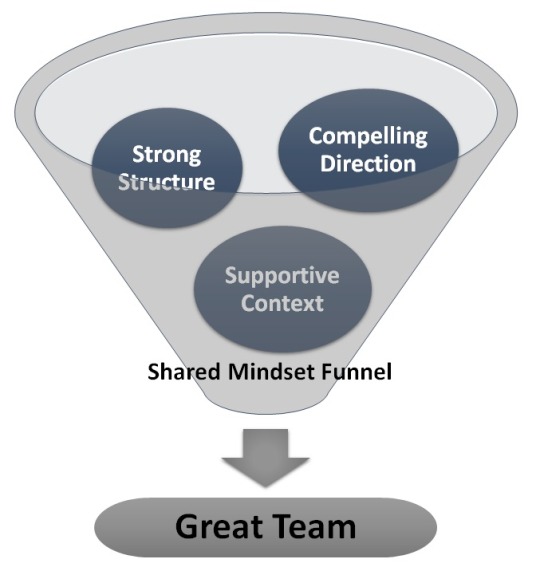
Incomplete information is likewise more prevalent in remote teams. Shared knowledge is the cornerstone of effective collaboration; it gives a group a frame of reference, allows the group to interpret situations and decisions correctly, helps people understand one another better, and greatly increases efficiency. There are many ways team leaders can actively foster a shared identity and shared understanding and break down the barriers to cooperation and information exchange. One powerful approach is to ensure that each subgroup feels valued for its contributions toward the team’s overall goals.
**Sources: The works of J. Richard Hackman
Content Curated By: Dr Shoury Kuttappa.


Thrilled to be included in @f22aop Spotlight Focus - The Space Between exhibition amongst such talented female photographers @assocphoto with my personal collaboration with @victoriagranof ‘Barter, Baby.’ 📗💥💥
The Space Between showcases exceptional image making from our f22 members - Women Photographers at the AOP. Browse the talent from emerging and established photographers that explores the physical and emotional space between objects, people and nature.
Exhibiting Photographers:
Kate Abbey, Liz Artindale, Olivia Beasley, Keeley Bentley, Anita Berkhane, Wendy Carrig, Heidi Coppock-Beard, Allie Crewe, Sophie Ebrard, Emma Freeman, Kristy Gosling, Louise Hagger, Nancy Harbord, Teresa Hayhurst, Sarah Hogan, Marta Kochanek, Jo Lauren, Gabrielle Motola, Patricia Niven, Clare Park, Kate Peters, Nassima Rothacker, Nyla Sammons, Carol Sharp, Gerhilde Skoberne, Laura Stevens, Marianne Van Loo and Karen Yeomans.
10 -23 September 2020
Barter, Baby.
A #remotecollaboration with @victoriagranof. Conceived during a FaceTime cuppa - when I was supposed to be in NY in April - we shared the photography, creating visual pairings of what Victoria had been bartering. “We’re talking value. And values. In this spring of our discontent, with its themes of lack, limitation and restriction, what do you value most: things? People? Experiences?” And have any of them gained or lost value as they migrate from the “want” to the “need” pile?
Design by @owen__evans
Printed by @newspaperclub
as a digital mini 📗 Thank you @j____leslie @magculture @stackmagazines for supporting our work & @peichins_table for her amazing kimchi which she gave to me to photograph 💚
.
.
.
.
#foodphotography #louisehagger @wyatt_clarke_jones @assocphoto @f22aop @equallens #stilllifephotography #selfpublish #print #selfpublished #artphotography #womeninphotography #artist #zine #foraging #community #barter #covid19 #barterbaby #collaboration#instagood #instadaily #instamood #visualfeast #thatsdarling #kindness #printisnotdead #tbt #f22aop #wcw #thefstartshere #thespacebetween #takeupspace (at London, United Kingdom)
https://www.instagram.com/p/CE9Pd2JHfBr/?igshid=o7qcmkgw2z7


#Repost @avid.protools with @get_repost
・・・
The Audio Evangelist Podcast 🔊 @stryke303 talks remote collaboration with @thelostamateur ▶️ LINK IN BIO
⠀
#podcast #theaudioevangelist #remotecollaboration #avid #mixing #recording #audioengineer #protools #studiolife #daw #audio #promixing #soundrecordingsoftware #audioproductionsoftware #iamavid #producer #musiccreation #music #musicmakers #musicproducer #musicstudio #musicmaking #makingmusic #audiopost #postproduction #sounddesign #filmmaking
https://www.instagram.com/p/CDuN5TMAS0L/?igshid=7zexc4g8zxi8
1. Monday, 23 March, 2020: traded two bags of dried dulse and wakame - hand-to-hand and without PPE - with Eva Ball for one pint of strained yogurt. The next day we were ordered to shelter-in-place.
Barter, Baby.
A #remotecollaboration with @victoriagranof. Conceived during a FaceTime cuppa - when I was supposed to be in NY in April - we shared the photography, creating visual pairings of what Victoria had been bartering. “We’re talking value. And values. In this spring of our discontent, with its themes of lack, limitation and restriction, what do you value most: things? People? Experiences?” And have any of them gained or lost value as they migrate from the “want” to the “need” pile?
Design by @owen__evans
Printed by @newspaperclub
.
.
.
#foodphotography #louisehagger @wyatt_clarke_jones @assocphoto @f22aop @equallens #stilllifephotography #selfpublish #print #selfpublished #artphotography #womeninphotography #artist #zine #yoghurt #breakfast #community #barter #covid19 #barterbaby #homestudio #wfh #trade #deal #instagood #instadaily #instamood #visualfeast #thatsdarling #kindness #printisnotdead #mondaymotivation (at London, United Kingdom)
https://www.instagram.com/p/CC2xTxmn3C6/?igshid=1xphknjuq9y9a

6. Friday 24 April, 2020: Exchanged three rolls of toilet paper with Janet Paist’s doorman (one for her, two for him) for three bags of dried beans from her Rancho Gordo bean club.
Barter, Baby.
A #remotecollaboration with @victoriagranof. Conceived during a FaceTime cuppa - when I was supposed to be in NY in April - we shared the photography, creating visual pairings of what Victoria had been bartering. “We’re talking value. And values. In this spring of our discontent, with its themes of lack, limitation and restriction, what do you value most: things? People? Experiences?” And have any of them gained or lost value as they migrate from the “want” to the “need” pile?
Design by @owen__evans
Printed by @newspaperclub
.
.
.
.
#foodphotography #louisehagger @wyatt_clarke_jones @assocphoto @f22aop @equallens #stilllifephotography #selfpublish #print #selfpublished #artphotography #womeninphotography #artist #zine #toiletroll #foraging #community #barter #covid19 #barterbaby #homestudio #wfh #trade #deal #instagood #instadaily #instamood #visualfeast #thatsdarling #kindness #printisnotdead #fbf (at London, United Kingdom)
https://www.instagram.com/p/CCvApwRn4ra/?igshid=1snd6qhxs1m29

MANAGING REMOTE WORKFORCES: BEHAVIOURAL CHALLENGES

In response to the uncertainties presented by Covid-19, many
companies and universities have asked their employees to work remotely. The new
policies leave many employees — and their managers — separated from each other
for the first time.
Common Behavioural Challenges of Remote Workforce:
Managers first ought to understand factors that can make remote
work especially demanding. Both managers and their employees often express
concerns about the lack of face-to-face interaction. Supervisors worry that
employees will not work as hard or as efficiently
(though research indicates otherwise, at least for some types of
jobs). Many employees, on the other
hand, struggle with reduced access to managerial support and
communication. Challenges inherent in remote work include:
A) Lack of access to information:
Newly remote workers are often surprised by the added time and effort needed to locate information from colleagues. Even getting answers to what seem like simple questions can feel like a large obstacle to a worker based at home. This phenomenon extends beyond task-related work to interpersonal challenges that can emerge among remote colleagues.
Research has found that a lack of “mutual knowledge” among remote workers translates to a lower willingness to give colleagues the benefit of the doubt in difficult situations. For example, if you know that your officemate is having a rough day, you will view a brusque email from them as a natural product of their stress. However, if you receive this email from a remote colleague, with no understanding of their current circumstances, you are more likely to take offense, or at a minimum to think poorly of your colleague’s professionalism.
B) Social Isolation and Loneliness:
Loneliness is one of the most common complaints about remote work, with employees missing the informal social interaction of an office setting. It is thought that extraverts may suffer from isolation more in the short run, particularly if they do not have opportunities to connect with others in their remote-work environment. However, over a longer period of time, isolation can cause any employee to feel less “belonging” to their organization, and can even result in increased intention to leave the company.
Not surprisingly then, it’s a huge health factor that impacts not only our psychology but even our physical health. Isolation and loneliness in humans are just as detrimental. Prolonged isolation can in extreme cases result in things like anxiety and depression.
When working remotely, we miss out on so many
opportunities to connect with our colleagues and managers. More than
just that, though, we also feel like our teammates don’t hear us the same.
We often feel like leadership doesn’t take notice of us the way
they do those working in office. A survey of remote employees found that
37% of those surveyed believe that working remotely can lead to reduced
visibility and less access to company leadership.
C) Distractions in the Environment:
Typically, we encourage employers to ensure that their remote
workers have both dedicated workspace and adequate childcare before allowing
them to work remotely. Yet, in the case of a sudden transition to virtual work,
there is a much greater chance that employees will be contending with
suboptimal workspaces and (due to school and daycare closures) unexpected
parenting responsibilities. Even in normal circumstances family and home
demands can impinge on remote work; managers should expect these
distractions to be greater during this unplanned work-from-home transition.
D) Communication issues due to a lack of non-verbal cues:
We lose some of those hallway conversations, and quick in-office chats, but it goes deeper than that. It can become difficult to sense intent in messages between you and your team. The philosophical concept Hanlon’s razor, coined by author Robert J. Hanlon, says that we should “assume ignorance before malice,” when communicating with others. It is based on thousands upon thousands of years of primal programming that causes us to assume something is a threat by default for the sake of survival.
The problem is, that natural defence mechanism doesn’t help us much in a modern workplace. When you’re messaging an employee, they’re liable to assume negative intent when you say something they could take as a “threat” (such as when you offer a critique, feedback, ask a question, etc.), and the same goes for you. Without any of the non-verbal cues to discern intent from what we see and hear, communication issues can easily arise, since almost 90% of all communication is non-verbal. Imagine trying to make an important decision with only 10% of the information.

How Managers Can Support Remote Employees
There are specific, research-based, steps that managers can
take without great effort to improve the engagement and productivity of
remote employees, even when there is little time to prepare. As much as remote
work can be fraught with challenges, there are relatively quick and inexpensive
things that managers can do to ease the transition:
A) Establish structured daily check-ins:
Many successful remote managers establish a daily call with
their remote employees. The important feature is that the calls are
regular and predictable, and that they are a forum in which employees know that
they can consult with you, and that their concerns and questions will be heard.
B) Provide several different communication technology options:
Remote workers benefit from having a “richer” technology, such as video conferencing, that gives participants many of the visual cues that they would have if they were face-to-face. Video conferencing has many advantages:
1) It allows for increased “mutual knowledge” about colleagues
2) It helps reduce the sense of isolation among teams
3) Useful for complex or sensitive conversations as it feels more personal than written or audio-only communication.
4) Aids
in discerning the non-verbal cues of communication that we are so
accustomed to.

C) Provide opportunities for remote social interaction:
The easiest way to establish some basic social interaction is to
leave some time at the beginning of team calls just for non-work items (e.g.,
“We’re going to spend the first few minutes just catching up with each other.
How was your weekend?”). Other options include virtual pizza parties (in which
pizza is delivered to all team members at the time of a videoconference), or
virtual office parties (in which party “care packages” can be sent in advance
to be opened and enjoyed simultaneously). While these types of events may sound
artificial or forced, experienced managers of remote workers (and the workers
themselves) report that virtual events help reduce feelings of isolation,
promoting a sense of belonging.
D) Offer encouragement and emotional support:
Especially in the context of an abrupt shift to remote work, it
is important for managers to acknowledge stress, listen to
employees’ anxieties and concerns, and empathize with their
struggles. Research on emotional intelligence and emotional
contagion tells us that employees look to their managers for
cues about how to react to sudden changes or crisis situations. If a
manager communicates stress and helplessness, this will have a “trickle-down”
effect on employees.
Effective leaders take a two-pronged approach, both
acknowledging the stress and anxiety that employees may be feeling in difficult
circumstances, but also providing affirmation of their confidence in
their teams. With this support, employees are more likely to take up
the challenge with a sense of purpose and focus.
Remote Management Tips:

1) Establish Well-defined Expectations:
Everyone has a different idea of what doing something “quickly”
or “well” means. Whether showing examples of what you expect to be done,
calendar sharing, etc., make sure you have clear expectations from those
you work with online.
2) Engage Consistently:
Engage your remote workers on a daily basis through some kind of
communication. Use multiple channels to communicate. Then, plan a regularly
scheduled face-to-face meeting. This can be weekly, monthly, or annually, and
could be combined with a training or coaching program. This constant
interaction and engagement will help remote workers feel included,
which is an important aspect of the organization.
3) Trust the Team:
Sometimes, companies are not willing to embrace a remote
workforce because there’s an uncertainty about whether or not the work will get
completed at the same level as if they were in the office. To combat this
belief, set up work-from-home guidelines, such as emails must be responded to
within 24 hours, use text for urgent matters, etc.
4) Clarify For Mission, Values, Outcomes And Role:
Remote workers are often frozen out of regular-office human interaction, so on-target overcommunication is critical. Help them get aligned with mission, the values that truly matter to them, as well as the outcomes they love delivering to others and their natural role in any situation. This will keep them truly motivated and working with you longer and more productively.
5) Organise Reliable Tools:
If remote employees can’t download files, struggle hearing on a conference call, and consistently receive meeting invitations for times when they are still asleep, you have failed to address the basics. First, invest in reliable tools to make collaboration possible. Then develop clear processes to use such tools. For circumstances when quick collaboration is more important than visual detail, provide mobile-enabled individual messaging functionality (Slack, Zoom, Microsoft Teams, etc.) which can be used for simpler, less formal conversations, as well as time-sensitive communication.
6) Focus On Goals, Not Activity:
It is important to manage expectations and stay focused on goals when embracing a remote workforce. Don’t worry as much about what is being done. Instead, concentrate on what is being accomplished. If we are meeting our goals, then great. If not, we need to look into the situation further. It is all about accomplishment, not activity.
Connect Their Goals With Yours. The world is shifting quickly to
a workforce interested in learning and skills advancement rather than
stability. Take a moment to connect their interests to the goals of my company.
7) Create A Communication Strategy
Managing a productive team remotely begins with a strategy for communication. First, arrange for the appropriate number of weekly formal “report-ins.” Second, set guidelines about daily needs. Some people work better with a shopping list of questions and thoughts while others like a trickle. An understanding of what is urgent will further mitigate inefficiency, allowing ultimate productivity.
Make each team meeting count with intentional purpose
and opportunities to engage and contribute in a variety of ways.
Intentionality is an essential practice, particularly when we cannot readily
“see” our people.
8) The Importance of One-On-Ones:
Since you don’t have all those moments in the office to build
rapport and talk about issues ad hoc, make up for it by setting aside more time
for your one on ones with your remote employees. One of the fastest ways
to build resentment on your team is regularly cancelling one on ones.
Employees miss out on the kinds of information that would naturally spread
across an office related to other parts of the company and brief announcements.
One on ones provide an opportunity to make up for that as well as handle all
the little things that build up over the course of a week.
Content Curated By: Dr Shoury Kuttappa


Communication Technology and Inclusion Will Shape the Future of Remote Work

40% of office-first companies are unable to adopt remote-first environment even knowing the benefits and trends of remote work. The main fear behind that is they think that they would lose the communication and collaboration with the entire team by doing so. Communication technology is filling the gap between the managers and remote teams by providing such communication and collaboration tools that make remote work more effective and productive than office work.
Cloud Computing; gathering Remote teams at a single page
Cloud computing is providing its vast benefits on the page of virtual collaboration and communication between teams and headquarters. These benefits are:Cloud computing is a secure experience as it offers a single sign-in from anywhere on any device. It provides convenience for the team by file sharing experience. Moreover, it is a cost-effective service. Further, users can get a more scalable approach through cloud computing as one can add or remove services as needed.
For connecting remote workers all around the globe certain collaborative and communication tools are designed under the term of cloud computing. Detail knowledge of such collaborative and communication tools will result in the elimination of insecurities of the office first companies to whom the only hindrance to remote work is distorted and ineffective communication with the team.Business Applications; Remotely plan your project now
Running a cloud base business will require to integrate business applications for remote workers. Certain business apps such as Pivotal Tracker and GitHub are great project planning and communication tools that show high-level strategy without being bogged down into the details. Furthermore, such apps can help big and small businesses to enjoy the ministrations of remote work with effective collaboration.Unified communications making remote work productive
You can integrate the interconnected communication channels with simple access through unified communication. For example, Google suite, Microsoft suite, Skype, Slack, etc. are providing unified communications through which the Rockstar remote companies can collaborate irrespective of geological location ensuring streamline and authentic access.Project management tools; Key for remote work collaboration
Project management tools emerge to be more efficacious than face to face management of projects only if complete knowledge and use of the tool is known. For instance, tools like Asana, Monday, Basecamp, Collaq, and Jira help the remote employees by: Providing a virtual to-do list. Let team members know about the time to assign, complete, and review the project. Making remote employees be on track for due dates/days. Furthermore, it facilitates effective feedback and regular check-ins between managers and remote workers. Acknowledging team members for their hard work. Video conferencing causing the remote meeting possible A more productive way to communicate with the remote team is through video conferencing. This way can only be helpful if the right tools are used and complete knowledge is gained. Further, the video conferencing tools that are making remote work possible are Skype, Zoom, Workplace by Facebook, Pukkateam, Glip, and Join.me. The tools help in: Free flow of information and feedback. Let employees bring up issues. Thus, enabling screen shares and web shares to deliver presentations and project discussions. Further, providing instant chat options for comfortable communication. Instant messaging; 24/7 remote team connectivity For remote team collaboration, one wants comfortable and instant messaging recorded in real-time. For instance, Google + Hangouts, Toop messenger, WeChat work, and spark are some instant messaging tools that bind the remote team members and results in effective collaboration.Time trackers; working for remote work accountability
Time zone difference pay hindrance in remote team collaboration. Certain time tracker tools such as Focus booster, Worldtimebuddy, Doodle play an effective role in resolving such hindrance. These tools forest the atmosphere of mutual accountability by tracking project accountability.Secrets behind effective Remote work
The two key secrets for up rearing your remote first business are: Firstly, Keeping close contact with your remote team Thus, Maintaining a high level of collaboration among the team This can only be done if you have a proper knowledge of using the communication and collaboration tools and your remote team is best trained for these tools. Converting your office first company into a remote-first company and then uplifting it on your own is a difficult task.What if you get trained remote software teams who are handy in using such collaborative tools?
DaaSter is the career accelerator providing you with software engineers after a complete 3 months training in which the engineers get the nit and grit of all the remote collaborative tools. Hire your remote engineers‘ team from DaaSter now and eliminate the insecurities related to the collaboration of your remote team.Read the full article