Software testing coding Bit is the process of evaluating a software application to find and fix bugs, verify that it behaves as expected, and ensure it meets both functional and non-functional requirements. It’s a critical phase in the Software Development Life Cycle (SDLC) and is key to delivering high-quality, reliable software.
With the rapid growth of the tech industry and the increasing complexity of software applications, software testing has become a critical part of the development process. Companies are under constant pressure to release bug-free, secure, and user-friendly products. As a result, there is a high demand for skilled software testers who can ensure that applications function as expected under various conditions.
Learning software testing not only opens doors to job opportunities in quality assurance (QA), but it also gives you a strong foundation in understanding how software works. This knowledge is valuable whether you pursue a career in testing, development, or even DevOps. As businesses continue to invest in delivering high-quality digital products, the role of a software tester is more essential than ever.
Variety of Roles and Specializations Software Testing coding bit
Variety of Roles and Specializations Software Testing coding bit Once you’ve mastered the fundamentals of software testing, a wide range of specialized career paths becomes available. You can choose to work as a Manual Tester, focusing on real-world interactions and exploratory testing without automation. If you prefer working with code and tools, the role of an Automation Tester involves scripting and running automated tests to improve efficiency. As a Performance Tester, you’ll evaluate an application’s speed, scalability, and reliability under various conditions. In the role of a Security Tester, your priority will be identifying and mitigating vulnerabilities to protect the software from threats. Finally, a Quality Assurance (QA) Engineer oversees the entire testing lifecycle, ensuring the final product meets quality standards and business requirements.
As software systems grow more complex, software testing has evolved into a broad field with multiple roles and specializations.
Software testing offers diverse career paths based on your skills and interests:
Manual Tester: Tests software manually through user interactions.
Automation Tester: Writes scripts to automate repetitive testing tasks.
Performance Tester: Evaluates software speed and scalability under load.
Security Tester: Finds and fixes security vulnerabilities in applications.
QA Engineer: Manages the entire testing process to ensure product quality.
What is Manual Testing? Manual Testing is the process of manually checking software for defects without using automation tools. Testers execute test cases, identify bugs, and ensure the application works as intended.
Key Points:
Involves real user scenarios
Focuses on UI, usability, and functionality
Essential for early-stage and exploratory testing
No programming knowledge required
Improves understanding of application behavior
Manual Testing is a fundamental software testing method where testers manually execute test cases without using automation tools. It helps identify bugs and ensure the software behaves as expected. This type of testing is crucial for usability, UI checks, and early-stage validation. It’s ideal for beginners, doesn’t require programming skills, and offers strong career opportunities in QA with potential growth into automation or advanced testing roles.
Embark on a journey to become a proficient software tester with our comprehensive course, “Mastering Software Testing Essentials”. Whether you’re a novice looking to enter the field or a seasoned professional aiming to enhance your skills, this course offers a structured curriculum designed to equip you with the knowledge and techniques necessary to excel in software testing.
The Art of Software Testing: Unmasking the 4 Stages
Software testing isn’t just science; it’s an art form! 🎨 Dive into the world of code scrutiny as we unveil the four stages that make it all possible.
📝 Stage 1: Test Planning 📝 Think of it as the sketch phase. We outline objectives, scope, and strategies—our creative blueprints for what’s to come. Without a solid plan, it’s like painting without a canvas!
🚀 Stage 2: Test Execution 🚀 Now, we’re in the action-packed action phase. It’s time to make our ideas come to life! We run tests, observe results, and ensure everything flows smoothly. It’s like putting brush to canvas and seeing the masterpiece emerge!
🐞 Stage 3: Defect Reporting & Tracking 🐞 We’re the detectives of the software world! We hunt down bugs, glitches, and issues, like uncovering hidden details in an artwork. Then, we track and eliminate them to keep our software pristine.
📊 Stage 4: Test Closure & Analysis 📊 Our journey ends with reflection. We analyze the entire process, learning from what worked and what didn’t. It’s like stepping back from a completed artwork, appreciating the beauty while planning our next creation.
In the world of software testing, we’re the artists who make technology come alive, one pixel at a time. 🖥️💡
Spotted this little beauty on my forest school site yesterday. Honoured it stayed still long enough for me to take the shot 🙏
#nature
#butterfly
#forestschool
#bughunting
#meadow (at Brightlingsea) https://www.instagram.com/p/CTZW0o0IdNp/?utm_medium=tumblr
We remind you that the zero stage(BUG Hunting) of the CRYPT main Bounty campaign by SINTEZ - on the BitcoinTalk forum - is now going at full blast. A massive reward is provided for finding bugs on our sites, watch the details below: https://bitcointalk.org/index.php?topic=5232160
You’ve already read about us recently making a trip to USA for GDC and PAX,
and about the push for new content and polish we did before that. As
things go, that kind of quick development tends to mean lots of new
stuff is added at the last minute, and sometimes maybe not tested in every
possible situation. Or there’s a good chance there are some odd
bugs and things that only appear after a while, or in very specific
conditions. Things that in the long term would get noticed, added to our bug
list, and eventually fixed… but in a 4-week rush, things sometimes go
less than perfectly and some features might end up being a bit buggy.
In multiple ways, sometimes.
Most
of my sprint was spent on fixing biggest issues we found in our PAX
build, and most of that didn’t end being much to talk about. But one of
the bugs ended being a bit more interesting to figure out, and while I’d
usually prefer talking about design, I though some insight on this side
of game development could still have some value. So, this is going to
be more or less accurate story of our guards not behaving as intended,
as I saw the issue through bug reports on our Jira board, and watching
people play the game & testing things myself afterwards trying to
figure out what exactly was going wrong. And also a nice example of how
the most obvious explanation often isn’t quite true!
There’s something wrong with our guards
So,
the first thing I heard was one of the other team members saying our
guards were sinking to the floor, in t-pose (which is basically a clean
starting pose used for character animation, standing with your arms at
90 degree angle to your sides). Not what you’d want to see in the game,
but my immediate guess was that there’s just a missing animation file
somewhere, which would be easy enough to open the animation tree, figure out what’s
missing, drop the file in, and it’s fine.
The
second problem, which was noticed during PAX, was that sometimes the
guards just seemed to stare straight at the player, but not actually
react in any way. Of course there’s a distance check for how far away
they can see you, and also the lights and shadows affect the player
visibility, so it’s not so easy to say for sure. But it seemed like they
should have spotted the player.
So we did what you do when
demoing a game at events, not being able to open Unity and debugger… we
watched people playing it and noticed some things.
The guards
seemed to work fine, until they went for a coffee break. When they did,
they sometimes seemed to continue drinking coffee, either just spending
the rest of their working day hanging around the vending machines
sipping coffee, or sometimes taking their coffee with them, going to
patrol but constantly stopping to sip a bit more from their cups.
(Actually, that sounds pretty realistic! :D Sadly it didn’t look great,
and wasn’t the behavior we wanted from them. And they didn’t bother
to chase the player any more, which is less than optimal for a stealth
game).
So,
more info added to to Jira bug reports, and since we had just added the
animations and related AI actions for the guards to do the coffee
breaks (rather than just standing next to the vending machine for a bit
to “take a break”, something missing in the animation tree and probably
in the AI action seemed a pretty likely explanation). Now I just had to
survive people running into same issues over and over again until the
PAX weekend was over and I was back at my desk with Unity again. Always
great to see your work being broken again and again without being
able to do anything about it! :D
Debugging and fixing the bug
The first thing I did was open a scene with few guards and a vending
machine in it, and just let the game run with error log open to see if I could observe the same issues, and if there were any useful errors.
After
half a day, I hadn’t seen the “t-pose through floor” issue, but I
definitely did notice the guards gave up their work day around the first
coffee break. Sadly no useful errors appeared, and even with our AI tools open
everything seemed fine, the guards took a break, and returned to patrol (based
on what AI was doing), yet on-screen they stayed drinking coffee
instead.
So, maybe we were right about animation issues. Time to open the Animator window.
(not
the exact Animator setup I was facing, this screenshot is from earlier
in sprint so it’s missing some gestures we added later)
The
states seemed OK, we were triggering a “gesture” with a number code to
tell which gesture to play. It would then play one of the states, check
for when the animation has completed, and then tell our animation
controller script it’s done. There are some issues with that, which I’ll
get into a bit later, but at least that should work for the guards
to complete the gesture and get back to patrol. So I needed some other
explanation.
…Half a day more of staring at the guards walking
around the level, with various logs and inspector windows open, trying
to see what could be wrong. And then I noticed it. The AI takes breaks
when it runs out of “motivation." Motivation in this case is pretty much just a number we
track, decreasing it a bit for every boring task they do, and then when
it reaches 0, we tell the AI it wants to take a break, which will then
restore the motivation. But for some reason it wasn’t being restored.
The guards would go for the coffee break, but somehow the coffee wasn’t
refreshing them at all, so they kept drinking more, and more, and more!
It turns
out the gesture system was telling the animation system that it was done
playing the gesture, but nothing was informing the rest of the AI that
it’s fine, you’ve completed your gesture action. So, with a few more lines of code the guards were now returning to patrol after few sips of
coffee to refresh themselves.
Kind of. They were indeed returning
to patrol, but would still sometimes keep staring at the player in
front of them like you were invisible. Or happily drink their coffee
as if they were thinking that the odd guy running around the office
building in the middle of the night was someone else’s problem during
their coffee break. And that’s where the aforementioned problem with the
gesture animation setup comes to play. The characters would start the
gesture, then go through the animations, and then tell the AI to
complete the action and start doing something else. But what if the
player walk past the guard while he is in middle of the gesture? We
needed to add a way to break them away at any point if the AI tells
there’s something more important to do:
Slight
pain to set up, but basically, every single animation state needs to
have two exit transitions, one for when the animation completes
normally, and other that can be triggered by the AI and set up to
immediately interrupt everything and exit the gestures tree.
This
seemed to work: I ran around the guards, interrupting them in different
ways and at different times during their breaks, and they now reacted
immediately, dropped their coffee cups, and started chasing me. Bug
fixed!
…or more debugging and fixing more bugs.
While doing
some final testing to confirm the bug was now gone, I somehow got the
guards even more confused. Now they were correctly reacting to me and
starting the chase, but then sometimes just ended up stopping in middle of
everything, with their AI not able to figure out what to do.
That was odd, as based on the logs, the guard was happily chasing the player,
waiting for the chance to fire his taser (probably with a grin on his face
even though our characters in general don’t have mouths!). He lost the
sight of the player, so he made an estimate where the player might be,
but couldn’t find anything. And then it all goes wrong. At that point,
the guards should go into search mode, where they select a bunch
of search points from the level around them, then jog to each of those
locations looking for the player, and after doing this for a while
decide the player must have disappeared and return to normal patrol. But
sometimes the guards would just completely give up instead - the AI not being able to come up with any sensible plan left the character frozen in
place.
So I spent another hour running around the level,
trying to get the guard to see me, and then trying to escape him in
different ways and in different places, looking for some kind of pattern
at least. Let’s just say it’s not easy - the guards are pretty good at
catching you. Eventually, I noticed that this only happened sometimes
(but not always) when I was running up the stairs from our test scene
lobby. To be fair, that’s just about the only way I could actually escape
from the guards in that level, so it took a while before I even started
considering that the stairs might have something to do with it. And of
course, verifying that as the reason was even harder, since now it wasn’t
enough to get the guards to see me and then escape, but I also had to
make that happen so I’d escape exactly at right time while running in
the stairs, with enough distance between me and the guard.
Indeed,
that ended up being the very specific situation which was triggering the
AI confusion. I probably would have never even ran into it if I hadn’t
spent that much time testing for the animation/AI/coffee break issue in
the same level. After some nosing around in our code, I found an old
hack we had put in place earlier to prevent the guards from using stairs
(we had some issues with bit too steep incline on some stairs earlier,
but the limitation should have been removed already). I found a line of
code that was pretty much saying “if your target is more than 2 meters
above or below you, you can’t go there.” And, annoyingly, it was doing
it bit too late to really work nicely to start with, so the AI had
already set the target and planned for it, and then that line was just saying that the plan can’t be done. Not that the AI would have any
other plan to work with, so all it could do was throw its hands up in
the air (metaphorically, although I’d really like to actually add an
animation for that in the game!) and give up.
Done!
So,
after few days, and staring through tons of code, and carefully
observing the Animator trees, and our AI inspector, and tracking values
in the code, what we thought was one bug somewhere messing up the guards
and making them not see the player (and maybe play wrong animations) it
actually ended being a bunch of separate issues that all just happened
to surface at the same time, plus one more which I only found because of
all the testing I had to do to figure out the others.
As for the
"Sinking into floor in T-pose” bug I started with? I was never able to
replicate it. Not a single time during all this, even though I even had a
screenshot as evidence. Maybe it was some even more odd glitch, or
maybe it was fixed as a side-effect of something else I did, I have no
idea. But I haven’t heard any complaints about that happening from the
rest of the team either, so I decided to just mark that bug as “fixed”
in Jira as well. :D
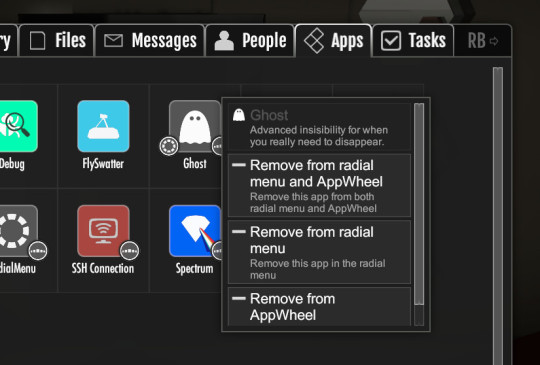
Also, after getting annoyed about trying to
get spotted and escape a very specific situation again and again, while
also trying to monitor logs and other stuff, I ended making good use
of our Lua apps system, and made one that turns the player invisible.
That took about 10 minutes to do, so at least our apps system is showing
some great potential here. I don’t see this one being an actual feature
in the game for obvious reasons, but it is great tool for testing the levels and debugging AI!
That’s it for now, maybe I’ll get to talk about more design-y stuff next time!
Pontus
If you haven’t already - be sure to wishlist Off Grid on Steam - each wishlist makes a big difference to us, and we really appreciate your support!
Under åren har det varit många diskussioner fram och tillbaka kring öppen källkod kontra proprietär kod (dvs program där användaren inte har tillgång till själva koden utan bara programmet).
Ofta lyfts säkerhetsaspekterns fram som ett plus för öppen källkod då eventuella säkerhetshål fixas av många så fort de dyker upp. Riktigt så är det alltså inte enligt ett antal undersökningar. Till syvende…
So yesterday I took the kids for a picnic at a lovely little place called castle hill,and then we headed over to the park for a bit more fun and games.
The end result…I have a small child who believes she is a pirate, and a slightly bigger child who wanted to take a ladybird home for a pet 😂
And today the weather is pretty grim so far, play date with friends this morning and I’ve promised the girls a bit of crafting this afternoon
#pirates #pirate #pirateship #park #ladybirds #tobeachildagain #tobeachild #bughunting #hillrolling #parkfun #crafting #play date #friends #kidslife #summer #summerhols #summerholidays #raining #craftersofinstagram #mumslife #lifeofawahm #wahmuk