#LanguageAcquisition

19 posts loaded — scroll for more

Text
languageslinguistics

Finding good articles for language learning: 


When I teach English I try to find articles that match the student’s level and that help facilitate interesting conversations. When you’re studying a language by yourself it can be more challenging to find content that will help you along your journey. When searching, especially if you’re just starting out use Google translate - the extension is super helpful to understand what you’re searching for! 

National News Articles - One safe bet is to look at the National News outlets. Whatever the NPR is for your target language, there will be content that is relevant to what is going on today in the world. I also recommend checking cultural resources within these outlets. If there is a cultural section it can provide more relevant information than some boring stuff relating to politics. 

Hobbies & Blogs - A quick google search about say, knitting in your target language might bring up some information that is more relevant to you. Medium.com, although heavily English focused sometimes has articles that might be more specific to what you are looking for. I can also recommend Tumblr there are blogs, they are personal and you can see modern up-to-date versions of the language. 

Youtube Personalities - Stepping out of the box of “Standard” language grammar, and phrases we have youtube/tik tok personalities. I think they’re awesome since you can see real-ish interactions between people. Having the best grammar and vocabulary will only go so far if you sound like a News Anchor. Spaces online such as Youtube offer a glimpse at what the native speaker sounds like when they’re in their own world. Grammar rules out of the window all you get is the actual speaker. Many Youtubers have blogs as well which allows you to read for your ever growing vocab list. 

AI as a Tool- Gemini, ChatGPT, DeepSea any of these Live Language Models offer the chance to have a conversation with a computer in the hope of finding relevant articles and resources that match your language needs. I think this could be good to help specify your level and find resources that match that level. If you enjoy reading AI generated content, you can prompt AI to make articles for you. I have done this before by stating - “I would like to have an article that is 300 words about Whales in Antarctica, I want this to be in French for a B1 speaker, please include challenge words for this level put them in bold and provide a translation into English at the bottom of the article.” It is amazing because the Live Language Model is able to create something that you can learn from! It might not be the most authentic article, but it is something! 

I think that learning through articles is a really good way to improve on your language skillsets. I know that I included youtube, but that can be a pathway to finding blogs or other written content that can benefit your language learning journey. I recommend that if you use articles to always write down new and unfamiliar words. This way you can continue to improve and grow your vocabulary.

Text
specialsaathi
specialsaathi

Play-Based Speech Therapy

As a parent, there’s nothing more heartwarming than seeing your child laugh, learn, and grow. But for some children, communicating effectively can be a challenge. That’s where play-based speech therapy comes in – a fun and engaging approach to helping kids develop essential communication skills.

Source: Mrs.Speechiep, google

What is Play-Based Speech Therapy?Play-based speech therapy is a type…


View On WordPress

Link
howtological
howtological

Discover the best websites for learning new languages. From Duolingo to Rosetta Stone, these top 10 platforms offer a variety of languages and cater to different learning styles. Master a new language today with the help of these resources.
https://howtological.com/learning-2/?feed_id=2176&_unique_id=662dceaa246d9

photo
Link
howtological
howtological

Discover the best websites for learning new languages. From Duolingo to Rosetta Stone, these top 10 platforms offer a variety of languages and cater to different learning styles. Master a new language today with the help of these resources.
https://howtological.com/learning-2/?feed_id=2011&_unique_id=66040cc67547f

photo
Link
howtological
howtological

Discover the best websites for learning new languages. From Duolingo to Rosetta Stone, these top 10 platforms offer a variety of languages and cater to different learning styles. Master a new language today with the help of these resources.
https://howtological.com/learning-2/?feed_id=1881&_unique_id=65e327acbf522

photo
Link
cebozcom
cebozcom

Ways to Learn a Foreign Language: Practical Tactics to Improve Your Language Skills | CeBoz.com

Ways to Learn a Foreign Language: Practical Tactics to Improve Your Language Skills | CeBoz.com

Learning a foreign language can be challenging, but also rewarding and fun. In this blog post, we will share some practical tactics to help you improve your language skills and achieve your language goals.

photo
Text
thesubtleartofenglish

English needs no introduction at this point. This language is understandable to a wide range of individuals from different nations, whether or not it is innate. It is undeniable that those who are exposed to this language in their early years will continue to speak it at their highest fluency levels as they become older and will also likely acquire higher competence levels because of their early exposure. But the question is, what distinguishes individuals who acquired fluency in English from those who did not? Thinking back on my English-speaking cousins has inspired me to research the variations in English language skills among people, hence my decision to delve into the underlying aspects of this topic.

As soon as I started noticing two of my cousins, I developed an interest in learning more about the variations in English proficiency. Although they come from different backgrounds—my parents’ sides—both of them can speak this language fluently, to the point where they can converse with native speakers. I could even go as far as to say that they are comparatively on par with native speakers. One of them, Sean Colbie, 14, has been speaking English since nursery, and his continuous exposure to different English cartoons during his early years helped him significantly develop. Her mother found out that his son has a strong fondness for watching Cartoon Network at the age of six. This became apparent when he was in first grade, and from then on he became even more committed to watching foreign shows. “Mga around Grade 1, lagi lagi na siyang nanunuod ng mga cartoons. Mostly in English. Sinusubaybayan niya almost every day yung channel na Cartoon Network, dahil ‘dun na-adapt niya yung mga dialogues na naririnig niya sa mga shows na napapanuod niya sa T.V. (Around Grade 1, he always watched cartoons. Mostly in English. He follows the Cartoon Network channel almost every day, and that’s where he adapted the dialogues he hears in the shows he watches on T.V.).”

 Moreover, Sean’s fondness for speaking in English was further strengthened and reinforced the moment he was introduced to his phone, which he often uses to access YouTube and Facebook, among other media platforms. In that regard, watching videos that are hosted by English native speakers has become his pleasure, which has helped him develop toward fluency in the language. There is no denying that media consumption can significantly contribute to one’s communicative progress. Research on how media intake affects English competence is still under progress, yet some studies point to certain advantages. For example, a study discovered that using social media in English can improve learners’ proficiency in the language since it offers interactive content, visual components, and communication and learning opportunities. Another study indicated that social media usage positively affects learners’ understanding of English as much as it enhances their comprehension of the language and may help them become more proficient in vocabulary, listening, and general language usage. While it may seem like a pivotal contributor to one’s proficiency in English, I don’t intend to digress.

After all, Sean’s ability to speak English has greatly benefited from the impact of YouTubers like PewDiePie, Markiplier, and Matthew Patrick of The Game Theorists. These media personalities encouraged him to speak English more frequently until he was able to do so fluently. “Sa dami ng napapanuod niya sa YouTube and Facebook, naging natural na lang sa kanya ‘yung pagsasalita in English, almost to the point na hindi na siya nagta-Tagalog. It’s never been an issue for us though. Proud naman kami na natutunan niya ‘yung English mostly by himself (With the amount of time he has been watching on YouTube and Facebook, speaking in English has become natural to him, almost to the point that he no longer speaks Tagalog. It’s never been an issue for us though. We are proud that he learned English mostly by himself).”

The same can be observed with my 12-year-old cousin, Eumi, who’s on my father’s side. But instead of acquiring the language naturally, she was intentionally taught by her mother on a regular basis, which is how she acquired fluency in English at such a young age. “Actually akala ko namana niya yung ganoong skill niya sa papa niya. It was until I remembered na ako pala nagturo sa kanya na mag Ingles. Even before bago siya maging talkative, talagang tinarget ko si Eumi na matuto mag-English. English mode yan kaming dalawa every time na magba-bonding kami. Kahit si Vince, nire-remind ko talaga na mag-English ‘pag kakausapin si Eumi. Mandatory datingan, ganun. Tipong makaka-encounter lang kami ng words sa bahay, actually anywhere, mapa-phone, T.V., posters, sa malls, pinapabigkas ko ‘yan kay Eumi. As much as possible, ine-encourage ko siya na mag-read. Read, read, read, read, read, read, tina-try ko talagang ma-push si Eumi sa pagbabasa since appropriate naman din talaga yung pagbabasa sa children natin. Anybody her age should be encouraged to read textbooks, stories, kahit yung simple alphabetical posters, lahat ‘yan very advisable sa kapwa parents natin, especially for the sake of their kids’ growth and development (Actually I thought she inherited that skill from her father. It was until I remembered that I taught her to speak English. Even before she became talkative, I really targeted Eumi to learn English. It’s English mode for both of us every time we bond. Even Vince, I really reminded him to speak English when talking to Eumi. Every time we encounter English words at home, actually anywhere, phones, T.V., posters, in malls, I make Eumi pronounce them. As much as possible, I encouraged her to read. Read, read, read, read, read, read, I was really trying to push Eumi to read since reading is really appropriate for our children. Anyone her age should be encouraged to read textbooks, stories, even simple alphabetical posters, all of which is very advisable to our fellow parents, especially for the sake of their kids’ growth and development).” 

Now that I clarified where this assessment ultimately stems from, it is obvious that Eumi and Sean are the sole reason I became curious about the difference between attaining fluency in English during the early years and attaining it during the later stages in life. There is very little difference between their fluency levels when compared to one another, and their natural usage of this language only continues to evolve as they get older and mature. With that being said, my curiosity then prompted me to harp on the belief that their natural acquisition and gradual improvement of speaking in English have something to do with the critical period in a child’s learning development, especially in light of the fact that they gradually gained fluency in this language from infancy and childhood to adolescence.

Becoming advanced with learning a language can have a significant impact on how well you grasp its usage eventually. This is where the critical period in a child’s learning development takes effect since it is a biologically determined stage where the child is supposed to be optimally ready to acquire certain skills. Based on its definition, this period is associated with brain plasticity and is characterized by the highest potential for learning and development. The critical period is generally considered to occur in the early years of a child’s life, from birth to around the age of five. It is crucial to learn language, vision, hearing, and other skills during this period because it is when the brain is particularly responsive to learning and the development of neural connections. This relates to how they developed their English language skills in a manner similar to that of native speakers, which is particularly clear given that they were exposed to the language from an early age. One of them, as I mentioned earlier, picked up English organically by watching different English-language cartoons, let alone the fact that he was instructed to communicate in English with everyone around him, including his family. To a certain degree, his family has some influence in how he developed his natural fluency in the language, and that is largely due to the fact that they decided to speak to him in English for as long as they could, primarily in an effort to help him become a native English speaker from birth.

Despite the fact that Eumi learnt the fundamentals of the language from her parents, she has also benefited from viewing English cartoons and speaking to everyone in English. The Language Acquisition Device (LAD) developed by Noam Chomsky is a factor that sets Eumi and Sean apart from the rest of our cousins. It is a theoretical concept that suggests the existence of a biological structure in the human brain that enables children to acquire language. Chomsky proposed that children are born with an innate ability to understand and generate language, and the LAD serves as a universal grammar processor, which allows them to grasp the complexities of language through exposure and interaction. Based on the manner in which Sean developed his preference for speaking English in his early years, youngsters may be able to progress in their English proficiency in a manner that will allow them to do so in the future. However, with Eumi, that isn’t mostly the case. She learnt the language more intentionally and didn’t pick it up naturally. Even if her education can be whittled down to homeschooling and tutorials, her parents have given her enough guidance that she has become incredibly proficient in English when speaking to others. She began with the fundamentals, as did Sean, who also started with basic words and sentence structures before expanding his vocabulary and growing more accustomed to speaking the language at such a young age.

All things considered, we can argue that learning to speak English in the early phases of human development, from birth to childhood, can aid non-native speakers like me in adapting and achieving higher levels of proficiency and fluency than those who are only beginning to learn it during their adolescent years. It is true that early development is more critical than later development, whether or not it takes work to understand the fundamentals of English communication during the adolescent years, and this is especially evident when you are learning the English language for communicative purposes.

REFERENCES & SOURCES:

Ohwovoriole, T. (2023, July 25). Critical period in brain development: definition, importance. Verywell Mind. https://www.verywellmind.com/critical-period-in-brain-development-definition-importance-7556041

Levels of learning a language – Mango languages. (2023, March 16). https://mangolanguages.com/resources-articles/levels-of-learning-a-language/

Sriram, R. (2020, June 24). Why ages 2-7 matter so much for brain development. Edutopia. https://www.edutopia.org/article/why-ages-2-7-matter-so-much-brain-development/

Cisneros-Franco, J. M., Voss, P., Thomas, M. E., & De Villers-Sidani, É. (2020). Critical periods of brain development. In Handbook of Clinical Neurology (pp. 75–88). https://doi.org/10.1016/b978-0-444-64150-2.00009-5

Jones, M. (2021, April 13). English Proficiency levels: A guide to determining your level. SpeakUp Resources. https://magoosh.com/english-speaking/english-proficiency-levels-a-guide-to-determining-your-level/

Vipond, T. (2023, October 25). Language proficiency levels. Corporate Finance Institute. https://corporatefinanceinstitute.com/resources/career/language-proficiency-levels/

Dore, R. A., Logan, J., Lin, T., Purtell, K. M., & Justice, L. M. (2020). Associations between children’s media use and language and literacy skills. Frontiers in Psychology, 11. https://doi.org/10.3389/fpsyg.2020.01734

Arulchelvan, P. (2019). Social media usage among English language learners in Primary School. https://www.redalyc.org/journal/6437/643770323033/html/

Muftah, M. (2022). Impact of social media on learning English language during the COVID-19 pandemic. PSU Research Review. https://doi.org/10.1108/prr-10-2021-0060

Text
thxnews
thxnews

TikTok: Your Gateway to English Mastery

TikTok: Your Gateway to English Mastery


Introduction


In a world dominated by smartphones and social media, TikTok has emerged not only as a source of entertainment but also as a valuable tool for students worldwide to learn English. While skepticism might surround the idea of using a platform primarily known for short videos as an educational resource, there is substantial evidence supporting TikTok’s effectiveness in language acquisition.


Social sharing in public. Photo by Josh Rose. Unsplash.


Social sharing in public. Photo by Josh Rose. Unsplash.


TikTok’s Role in Learning


TikTok boasts several features that make it an excellent companion for English learners. Its visual and auditory nature aids in better comprehension and retention of new words and phrases. Moreover, its interactive platform enables users to connect with fellow English learners globally, offering valuable opportunities for practice and feedback from native speakers.

However, it’s important to acknowledge the platform’s potential pitfalls, such as inappropriate or irrelevant content, and inconsistencies in grammar and pronunciation among users. Educators play a pivotal role in mitigating these challenges by curating content and providing guidance and support.

In the grand scheme, TikTok proves itself as a valuable tool for students eager to enhance their language skills, with its benefits outweighing its drawbacks.


Two older schoolgirls sharing fun on a mobile phone. Photo by Shingi Rice. Unsplash.


Two older schoolgirls sharing the fun on a mobile phone. Photo by Shingi Rice. Unsplash.


The Benefits of Using TikTok to Learn English


TikTok’s ascent to social media stardom has transcended age barriers, captivating users of all generations. Beyond its entertainment value, TikTok holds immense potential as an educational aid, particularly for English learners.

Pronunciation Enhancement

TikTok offers an ideal platform for honing pronunciation skills. With its bite-sized videos, learners can repeatedly listen to native speakers until they master the nuances of pronunciation.

Vocabulary Expansion

The platform provides a unique opportunity to expand vocabulary. By searching for videos related to their interests, learners can familiarize themselves with words and phrases commonly used in those contexts.

Listening Skill Development

Watching English videos on TikTok contributes significantly to improving listening comprehension. Exposure to the language in various conversational settings aids learners in understanding spoken English.

For those seeking an enjoyable and effective approach to learning English, TikTok is a treasure trove worth exploring.


Browsing and learning English. Downloading TikTok with a mobile phone. Photo by May Gauthier. Unsplash.


Browsing and learning English. Downloading TikTok with a mobile phone. Photo by May Gauthier. Unsplash.


How to Get Started with Using TikTok to Learn English?


For those intrigued by the idea of using TikTok for English learning, embarking on this journey is a straightforward process:

Step 1: Download the TikTok App

Begin by downloading the TikTok app to your device. It serves as your gateway to a world of educational content.

Step 2: Browse and Search

Navigate the app by exploring videos and utilizing the search function. For content tailored to English learners, employ hashtags like #EnglishLesson or #LearnEnglish. Following English-language TikTok accounts, such as @bbclearningenglish or @voicedailyenglish, is also beneficial.

Step 3: Watch, Learn, and Engage

Select videos of interest and start watching while taking notes of new words and phrases. Mimic the pronunciation and rhythm of the speakers to enhance your speaking skills. To elevate your learning experience, consider creating your own TikTok videos, incorporating hashtags like #EnglishPractice or #LearnEnglish to connect with fellow learners.


Mohsen Rezaei - Physics Teacher - Shadeh High School


Teacher at Shadeh High School. Photo by Sonia Sevilla. Wikimedia.


How Do Educators Approach Using TikTok in Class?


Educators have discovered innovative ways to integrate TikTok into the learning process. Their approach involves various stages:

Stage 1: Introduction and Discussion

Educators introduce students to the app, explaining its functionality and potential benefits. Open discussions are encouraged to address both positive aspects and concerns, fostering a collaborative learning atmosphere.

Stage 2: Exposure and Participation

Students are encouraged to watch short videos to gain insights into the video creation process. They then engage in scriptwriting and reading aloud, actively participating in content production.

Stage 3: Rehearsals and Progress

Practical rehearsals and practice sessions follow, allowing students to break language barriers and develop creativity. TikTok’s popularity outside the classroom further reinforces language acquisition.

Teachers report significant progress, with up to 75% of students displaying improved English comprehension.


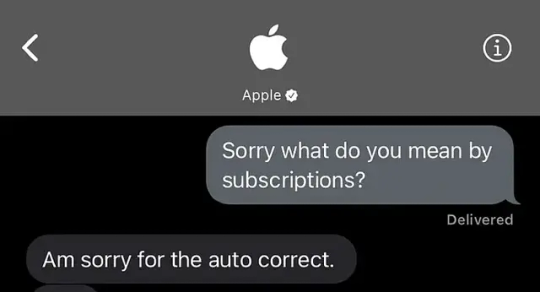
Apple’s iMessage Support having bad grammar. Photo by Wxkmez. Wikimedia.


Apple’s iMessage Support has bad grammar. Photo by Wxkmez. Wikimedia.


The Challenges of Learning English Through TikTok


While TikTok offers numerous benefits for English learners, challenges exist:

Content Appropriateness

Not all TikTok content is suitable for educational purposes. Screening content is essential to ensure students access appropriate material.

Grammar and Pronunciation Variances

The app’s user-generated content may exhibit inconsistencies in grammar and pronunciation. Educators must provide guidance and encourage learners to supplement their TikTok-based learning with other resources.


TikTok-als-Puzzle. Photo by Christoph Scholz. Flickr.


TikTok-als-Puzzle. Photo by Christoph Scholz. Flickr.


TikTok Educational Trends


TikTok’s influence as an educational platform has grown over the years. English teachers have used the app to share lesson plans, activities, and advice, and this trend continues to expand in 2023.

Educators can utilize TikTok to post educational videos that aid students in learning and practicing the English language. It also provides a global platform for English teachers to collaborate and share valuable resources.


Conclusion


TikTok, initially known for its entertainment value, has proven to be a potent tool for English language learning. Its concise videos aid in pronunciation, vocabulary expansion, and listening skill development. Educators and students alike have harnessed TikTok’s potential, transforming it into an engaging and effective educational resource.

Students have reported that the editing process is the most challenging, demonstrating their commitment to learning. For those seeking an enjoyable and efficient way to learn or teach English, TikTok offers a captivating avenue for exploration.


Sources: Research Gate, University of Malaga & THX News.

Read the full article

Photo
blc5ir
blc5ir


Looking for reliable language services that can provide you with accurate and timely translations, transcriptions, proofreading, or editing services? Look no
further than the Better Language Company. We understand your frustration with unreliable companies that fail to deliver on their promises and miss the mark when it counts.Our dedicated language experts have the experience and expertise necessary to ensure your message is delivered accurately and on time, no matter the language. With our help, you can make your next project a success and achieve the results you need.

Don’t settle for second-best when it comes to your language needs. Trust the Better Language Company to get it right the first time. Let us know how we can best assist you today.

.

Text
parantsguide
parantsguide

Reading is essential for children’s cognitive development, language skills, academic success, concentration and discipline, and imagination and creativity. Introducing reading into a young child’s life, as well as the conversations that it will provoke, will assist them in making sense of their own lives, especially at an early age.

Text
specialsaathi
specialsaathi

GESTALT LANGUAGE PROCESSING AND AUTISM

–TRIVENI GOSWAMI VERNAL Registered Special Educator (A64010)

Speech and Language are two separate entities, even though more often than not, we tend to substitute one for the other. While Speech refers to the physical aspect, production of sounds etc, language involves the cognitive component (the syntax, grammar, ideas etc).

While we tend to associate Speech with Communication, speech alone,…


View On WordPress

Photo
scholarshipja
scholarshipja

Follow @language_spot and learn Spanish 💥🇯🇲💯
・・・
#thelanguagespot #languageacquisition #settinggoals #achievinggoals (at ScholarshipJamaica.com)
https://www.instagram.com/p/CIjzIIHBdLK/?igshid=thgygvbh0pq6

photo
Text
learnenglishwithjulia

2 Key elements of language acquisition: fluency and accuracy

Diary submitted by Damian L, Madrid
When should fluency take some priority over accuracy and vice versa? 
This is a particularly hot issue up for debate with various different points of view over which of the two key components of second language acquisition should carry more weight when teaching; accuracy or fluency. There are many formalists who would put greater importance on learning the forms and rules of a language. However, some activists would argue for the other, saying that one must focus more on learning how to use a language. I think, as with most things, striking a balance is the best way forward and one should only put more emphasis on one over the other in specific circumstances. 
In this diary, I shall attempt to briefly outline some examples when one of these two components takes priority over the other, and explain why some might argue for this slight imbalance. However, before doing so, I’d like to express why this issue is so important to consider. It is no understatement that many EFL teachers can become plagued by trying to decipher which component should take precedence in the classroom environment. For example, I have at times seen my students begin to disregard the correct structure and grammar when I have allowed my class to become too fluency orientated. On the other hand, however, I too have fallen trap to following an approach which is too accuracy orientated. This resulted in my students becoming too constricted by the rules and led to them obsessing on producing perfection and in turn had a detrimental impact on their learning and communication. This therefore brought me first-hand experience in trying to find a balanced approach and when and where to adapt and rely more on one approach than the other. 
I believe one of the first things a teacher should contemplate when faced with this dilemma is to consider the student’s age. If you are dealing with kids some might argue that it is preferable to let fluency take priority as young learners may become discouraged to communicate as their resilience and determination are likely to be much lower than that of an older learner. However, this does not mean ignoring their mistakes, but rather that it may be more beneficial to address those more specifically later, perhaps even individually. The level of the student should also be considered. Logically, students with lower levels of English should have fewer fluency-based activities as they first need to learn the linguistic form to produce the language. 
Another key aspect the teacher should note is what part of the lesson it is. Many argue that it is alright, or even beneficial, to adapt and be flexible, switching from a more fluency orientated approach to a more accuracy orientated approach throughout a lesson. This is because different parts of a lesson require different needs in terms of accuracy and fluency. Some would argue that at the beginning of a lesson a teacher should be more focussed on fluency so as to elicit the most engagement and communication from the learners in the warm up session. Then when moving onto the introduction, a teacher could take a more accuracy orientated approach in order to show them what is correct and incorrect and that they fully understand and are ready to begin to use what they have learned. Here, towards the end of the class, in the practise and student initiative phases, fluency maybe be more advantageous.
To conclude, I believe that a teacher should try to take as balanced an approach as possible in order to not run the risk of straying too far to one extreme. However, it is important to keep in mind that leaning more on one side than the other is sometimes necessary depending on your student and the course objectives.
https://youtu.be/hASkHzhbrJM

2 Key elements of language acquisition_ fluency and accuracy tefl trainer blog


Read the full article

Text
learnenglishwithjulia

2 Key elements of language acquisition: fluency and accuracy

Diary submitted by Damian L, Madrid
When should fluency take some priority over accuracy and vice versa? 
This is a particularly hot issue up for debate with various different points of view over which of the two key components of second language acquisition should carry more weight when teaching; accuracy or fluency. There are many formalists who would put greater importance on learning the forms and rules of a language. However, some activists would argue for the other, saying that one must focus more on learning how to use a language. I think, as with most things, striking a balance is the best way forward and one should only put more emphasis on one over the other in specific circumstances. 
In this diary, I shall attempt to briefly outline some examples when one of these two components takes priority over the other, and explain why some might argue for this slight imbalance. However, before doing so, I’d like to express why this issue is so important to consider. It is no understatement that many EFL teachers can become plagued by trying to decipher which component should take precedence in the classroom environment. For example, I have at times seen my students begin to disregard the correct structure and grammar when I have allowed my class to become too fluency orientated. On the other hand, however, I too have fallen trap to following an approach which is too accuracy orientated. This resulted in my students becoming too constricted by the rules and led to them obsessing on producing perfection and in turn had a detrimental impact on their learning and communication. This therefore brought me first-hand experience in trying to find a balanced approach and when and where to adapt and rely more on one approach than the other. 
I believe one of the first things a teacher should contemplate when faced with this dilemma is to consider the student’s age. If you are dealing with kids some might argue that it is preferable to let fluency take priority as young learners may become discouraged to communicate as their resilience and determination are likely to be much lower than that of an older learner. However, this does not mean ignoring their mistakes, but rather that it may be more beneficial to address those more specifically later, perhaps even individually. The level of the student should also be considered. Logically, students with lower levels of English should have fewer fluency-based activities as they first need to learn the linguistic form to produce the language. 
Another key aspect the teacher should note is what part of the lesson it is. Many argue that it is alright, or even beneficial, to adapt and be flexible, switching from a more fluency orientated approach to a more accuracy orientated approach throughout a lesson. This is because different parts of a lesson require different needs in terms of accuracy and fluency. Some would argue that at the beginning of a lesson a teacher should be more focussed on fluency so as to elicit the most engagement and communication from the learners in the warm up session. Then when moving onto the introduction, a teacher could take a more accuracy orientated approach in order to show them what is correct and incorrect and that they fully understand and are ready to begin to use what they have learned. Here, towards the end of the class, in the practise and student initiative phases, fluency maybe be more advantageous.
To conclude, I believe that a teacher should try to take as balanced an approach as possible in order to not run the risk of straying too far to one extreme. However, it is important to keep in mind that leaning more on one side than the other is sometimes necessary depending on your student and the course objectives.
https://youtu.be/hASkHzhbrJM

2 Key elements of language acquisition_ fluency and accuracy tefl trainer blog


Read the full article

Text
learnenglishwithjulia

2 Key elements of language acquisition: fluency and accuracy

Diary submitted by Damian L, Madrid
When should fluency take some priority over accuracy and vice versa? 
This is a particularly hot issue up for debate with various different points of view over which of the two key components of second language acquisition should carry more weight when teaching; accuracy or fluency. There are many formalists who would put greater importance on learning the forms and rules of a language. However, some activists would argue for the other, saying that one must focus more on learning how to use a language. I think, as with most things, striking a balance is the best way forward and one should only put more emphasis on one over the other in specific circumstances. 
In this diary, I shall attempt to briefly outline some examples when one of these two components takes priority over the other, and explain why some might argue for this slight imbalance. However, before doing so, I’d like to express why this issue is so important to consider. It is no understatement that many EFL teachers can become plagued by trying to decipher which component should take precedence in the classroom environment. For example, I have at times seen my students begin to disregard the correct structure and grammar when I have allowed my class to become too fluency orientated. On the other hand, however, I too have fallen trap to following an approach which is too accuracy orientated. This resulted in my students becoming too constricted by the rules and led to them obsessing on producing perfection and in turn had a detrimental impact on their learning and communication. This therefore brought me first-hand experience in trying to find a balanced approach and when and where to adapt and rely more on one approach than the other. 
I believe one of the first things a teacher should contemplate when faced with this dilemma is to consider the student’s age. If you are dealing with kids some might argue that it is preferable to let fluency take priority as young learners may become discouraged to communicate as their resilience and determination are likely to be much lower than that of an older learner. However, this does not mean ignoring their mistakes, but rather that it may be more beneficial to address those more specifically later, perhaps even individually. The level of the student should also be considered. Logically, students with lower levels of English should have fewer fluency-based activities as they first need to learn the linguistic form to produce the language. 
Another key aspect the teacher should note is what part of the lesson it is. Many argue that it is alright, or even beneficial, to adapt and be flexible, switching from a more fluency orientated approach to a more accuracy orientated approach throughout a lesson. This is because different parts of a lesson require different needs in terms of accuracy and fluency. Some would argue that at the beginning of a lesson a teacher should be more focussed on fluency so as to elicit the most engagement and communication from the learners in the warm up session. Then when moving onto the introduction, a teacher could take a more accuracy orientated approach in order to show them what is correct and incorrect and that they fully understand and are ready to begin to use what they have learned. Here, towards the end of the class, in the practise and student initiative phases, fluency maybe be more advantageous.
To conclude, I believe that a teacher should try to take as balanced an approach as possible in order to not run the risk of straying too far to one extreme. However, it is important to keep in mind that leaning more on one side than the other is sometimes necessary depending on your student and the course objectives.

2 Key elements of language acquisition_ fluency and accuracy tefl trainer blog


Read the full article

Photo
paulita7zacdf
paulita7zacdf

Interlengua de tres estudiantes de español :3

#language #lingüística #linguistics #languageacquisition #languagelearning #foreignlanguage #bilingualism
https://www.instagram.com/p/Bpaz6dEnpFW/?utm_source=ig_tumblr_share&igshid=1bu00drexabcl

photo
Link
boughtwithaprice
boughtwithaprice

WHY YOU SHOULD BE A MULTILIGUAL

WHY YOU SHOULD BE A MULTILIGUAL
www.marnixplan.org
Video
miltonbyates
miltonbyates

Recital Poetico VII @ #johntylerelementary #PK3 #MESYsWORLD #DADDYsGIRL #DCPS #SpanishImmersion #languageacquisition #SpecializedInstruction #DC (at John Tyler Elementary School)

Video
sanfrangeles-blog
sanfrangeles-blog