
تقنية Vitrek Accumeasure™ لقياس رقائق السيليكون بدقة عالية

تقنية Vitrek Accumeasure™ لقياس رقائق السيليكون بدقة عالية ⚙️ ملخص المقال تقدم شركة Vitrek الأمريكية تقنية Accumeasure™ Capacitive Wafer Measurement Tools حلاً مبتكرًا واقتصاديًا لقياس رقائق السيليكون بدقة عالية، يستهدف بشكل خاص المصانع الصغيرة والمتوسطة (mini-fabs) ومتخصصي صناعة أشباه الموصلات ذات الحجم الإنتاجي المنخفض. تم تطوير هذه التقنية لتكون بديلًا فعال التكلفة وأقل تعقيدًا لأنظمة القياس البصرية التقليدية، مما يسهل بدء التشغيل ويخفض التكاليف الرأسمالية للمشروعات الناشئة. 🔧 تطور نظم قياس رقائق السيليكون تعتبر قياسات الدقة العالية في تصنيع Wafer أساسية لضمان الجودة والتحكم في العمليات داخل مصانع أشباه الموصلات. في هذا السياق، زادت الحاجة لأجهزة قياس تتمتع بحساسية فائقة ودقة تصل إلى 0.1 نانومتر، مع قابلية التكامل […] 🔗 المزيد في الرابط أدناه


Reviving an ancient 3.5" capacitive touch display breakout 🔍🔧📟
Blimey! We found a bin of these 3.5" 480x320 capacitive touch displays while clearing out some space in the adafruit factory; we totally forgot about them… at the time, we were having some difficulty with getting them working consistently, but we were also not sure if we remember what was up. We will assume they are OK and design a version of our 3.5" TFT breakout https://www.adafruit.com/product/2050 but with support for the captouch chip, which is an FT5336. So far, it mostly works. The FT5336 can report up to 5 touches, and we got that data out. The HX8357D is a bit long in the tooth, but it works over SPI, and we’ve got running drivers, so folks could still use this display!


Capacitive Electronic Water Descaler System - Alternative Water Softener Salt Free for Whole House, Reduces the effects of Limescale and Rust formation [CWD24, Max 1" Pipe]
Capacitive Electronic Water Descaler System – Alternative Water Softener Salt Free for Whole House, Reduces the effects of Limescale and Rust formation [CWD24, Max 1″ Pipe]
Price: (as of – Details)
4 wattsHOW IT WORKS BETTER: Yarna CWD24 is a PATENTED water descaler whole house that treats water with electric impulses which are generated in the electronic unit & are controlled by a computerized micro-chip. The signal-frequencies are transmitted via the ULTRA FLAT IMPULSE BANDS that are wrapped around the pipe. The bands form a frequency-field that changes the…

1000W Heater Desktop Mini Heater Household Small Heating Heater Portable Electric Heater Ptc Ceramic Heating Capacitive Touch ©
1000W Heater Desktop Mini Heater Household Small Heating Heater Portable Electric Heater Ptc Ceramic Heating Capacitive Touch ©
Price: (as of – Details)
NOTE: Our mini heater DOES NOT generate cooling air.
NOTE: Our mini heater DOES NOT generate cooling air.
NOTE: Our mini heater DOES NOT generate cooling air. However since it’s an heater it will need Heat dissipation when it’s off work or stop working. Therefore, it’s not product break down but an normal phenomenon when it outlet cool air. Features:
1. Using…

1000W Heater Desktop Mini Heater Household Small Heating Heater Portable Electric Heater Ptc Ceramic Heating Capacitive Touch (White)
1000W Heater Desktop Mini Heater Household Small Heating Heater Portable Electric Heater Ptc Ceramic Heating Capacitive Touch (White)
Price: (as of – Details)
Product Description
Gomyhom 1000W Heater Desktop Mini Heater
Features
Mini and Portable
Small but Efficient
10 m²= 107.6391 ft² coverage, perfect for personal space use
6000w-1000w power adjustable
Low Db Working
Multiple Angle Placement
Tip over and Overheating Protection
PTC ceramic heating element and fire resistant shell
NOTE: Our mini heater DOES NOT generate…


Model 165 Stainless Steel Differential Pressure Transducer
Product Description
The Model 165 Series capacitive pressure transducer for building energy management systems, environmental pollution control, oven pressurization, lab and fume hood control, HVAC and VAV applications.
The Model 165 Series capacitive pressure transmitter is available for full scale pressure range from 0 to 0.1″WC till 0 to 100″WC. Both unidirectional and bidirectional pressure ranges are offered. The output of the Model 165 capacitive type pressure transducer is available in two versions: 0 to 5VDC and 0 to 10VDC, where 0VDC is true zero without offset. The output of Model 165 capacitive transducer for pressure measurement is 4 to 20 mA. All units are temperature compensated. The accuracy can be 0.6%, 0.4% or 0.25% at room temperature.
The patented variable capacitance pressure sensor is constructed by stainless steel and glass, no glue or other organics. That provides excellent performance, corrosion resistance and long-term stability.
Additionally, our unique production setup allows us to accommodate special orders for nonstandard pressure ranges (e.g. -0.5″WC to +3.5″WC).
Key Features of Alpha 165 capacitive pressure transmitter:
Up to 15 PSI Proof Pressure on all Ranges
Miswiring Full Protection
Unsymmetrical Bidirectional Pressure Ranges
True Zero Output for Voltage Unit
Specification of Alpha 165 capacitive type pressure transducer:
Accuracy: ±0.25%, ±0.40% or ±0.60% of span
Differential Pressure Ranges:
Unidirectional: 0.10 in.W.C. to 100.00 in.W.C.
Bidirectional: ±0.10 in.W.C. to ±50.00 in.W.C.
NEMA 1; ABS enclosure
Mounting: surface mount
Output signal: current or voltage
Process Applications of Alpha 165 capacitive transducer for pressure measurement:
HVAC and VAV Control
Clean Room and Isolation Rooms
Duct Static Pressure Measurement
Draft Control and Fume Hood Control
Furnace Air Flow Control
Power Plant Air Flow Monitor and Control
https://www.alphainstruments.com/product/model-165-differential-pressure-transmitter/


Miniature Sensors for Small Spaces
Miniature Sensors for Small Spaces. Get the same great sensor in a smaller package!

Get the same great sensor in a smaller package! Balluff offers several flexible plug-and-play, miniature sensors that:See how tiny these sensors really are by watching this…
- Are designed for small spaces
- Don’t require an amplifier
- Include options like Inductive, Capacitive, Photoelectric and Magnetic Cylinder sensors


Test video of 19 inch capacitive touch screen with 3mm explosion-proof cover glass.

📸 Photo of the day: TP223N single channel capacitive touch sensor.
#Enewground
#tp223n
#touch
#capacitive
#arduino
#arduinouno
#raspberrypi
#maker
https://www.instagram.com/p/B0YOA9Nn4Vr/?igshid=mmilh9i36ys


So, let’s combine the currently established coffee notification button circuitry with the new capacitive touch plate made of conductive PLA filament. It works so fine, it’s amazing. Until now this was just working in my mind, and I’m very pleased with the result and quick success. 🚨✔️
#maker #tinkering #electronics #capacitive #touch #sensor #ttp223 #pcf8883 #button #switch #arduino #esp #esp8266 #esp8285 #electronics #neopixel #rgb #led #lights #ring #3dprinting #conductive #filament #experiment #proof #concept #test #hobby #fun #👨🔧 (hier: Berlin-Fennpfuhl)
https://www.instagram.com/p/By6TTILIVMq/?igshid=wx3c5ingq0of
First test with conductive filament as a capacitive touch button. 🔘⚡
Instead of a TTP223 as a sensor IC I used the PCF8883.
•
The filament is some no-name brand (“ezPrint”, never heard of, no real info in the interwebz), so expectations were extremely low, like the advertised voltage range it should be used with. But it works extremely well, better than expected definitely. I guess such filament is kinda perfect for this use case. Yay! 🙌
•
Can you guess what I will use it for?
•
#maker #tinkering #electronics #capacitive #touch #sensor #ttp223 #pcf8883 #button #switch #arduino #3dprinting #conductive #filament #experiment #test #hobby #fun (hier: Berlin, Germany)
https://www.instagram.com/p/By3heWDo8Uf/?igshid=mxhq009ec23c

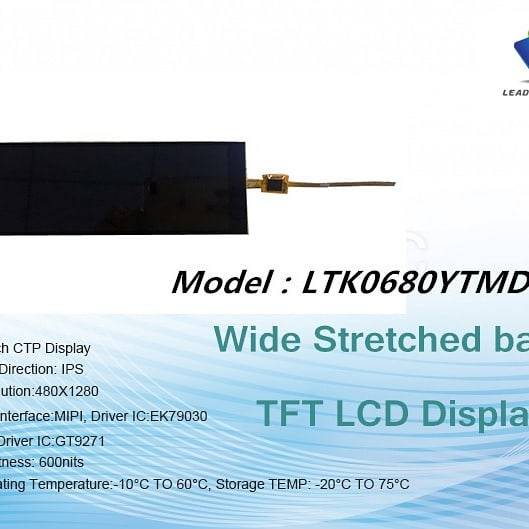
Leadtekdisplay latest 6.8" IPS #TFTLCD with wide temp, 600nits high brightness! It is a #capacitive touch panel and very suitable for outdoor & POS applications, etc
https://www.instagram.com/p/BuvieGoD_ev/?utm_source=ig_tumblr_share&igshid=1tb6ktbirzje7

MusiCubes - Part 3: Touch Me!

Now that the MusiCubes tray is assembled and the RFID-sensor and LEDs are working as expected, It’s time to add the last feature of the original concept: invisible capacitive touch sensors to control the volume of the music.
[[MORE]]Read the full series of this project:
- Part 1: Concept & Prototyping
- Part 2: Assembling The Tray
- Part 3: Touch Me!
- Part 4: The Software
- Part 5: The Finishing Touch
In my last blog post about the MusiCubes project I already showed that I experimented with a capacitive touch sensor behind 3mm MDF. And since that gave promising results, It’s time to incorporate the sensors into the MusiCubes tray.

The sensor that I’ll be using is the MPR121. A multichannel proximity capacitive touch sensor. It’s a 3-in-1 module with the following features: Capacitance Sensing, Touch Sensing, and Proximity Sensing. Since it uses I2C it’s pretty easy to connect to the ESP8266. And the breakout board on which I ordered them makes connecting them a breeze.

Because I want to make the two fairly large empty planes next to the play-bay touch sensitive, I need some sort of metal touch planes below the 3mm MDF to function as electrodes. I my case I just stole some pieces of brass my dad was using to built his NS 5500 model train. Not sure if he needs those pieces, but if that is the case, the model train will now need to be a cabriolet.

I glued the pieces of brass in place using an overdose of hot glue, and soldered a piece of wire to it.

The two plates where then connected to the MPR121 breakout board which is connected to the ESP8266 using a JST connector which allows me to easily disconnect or rewire it.

The first tests with the integrated touch sensor were very promising. But soon I noticed a lot of false positives on one of the two sensors. And since these sensors are controlling the volume of my Sonos system, false positives are very annoying. In this case the music was muted within a few minutes of idling.
It turns out that the long green wires to the brass plates pick up too much interference. Especially the wire that goes under the connection to the RFID reader. This interference generates most of the false positives.

The MPR121 gives you a lot of room to tweak the sensitivity of the sensors, but of course it’s best to prevent as much interference as possible. And since the sensors are pretty cheap, connected via I2C and offer the option to change the I2C address, I opted for an extra MPR121 IC close to the brass plate. This eliminated a lot of false positives.

Unfortunately this didn’t solve all the issues. So I’ve been playing with all the possible registers the are described in the documentation of the MP121. And while I did notice some improvement, I didn’t manage to completely prevent all false positives. Because of this I added some code that checks the length of the registered touch. Anything shorter than 50ms is ignored. And since 99% of the false positives are around 17ms, this solves most of the issues. In addition to this, I added a few other countermeasures to prevent unwanted volume changes.
But let’s save the software discussion for next blog. For now, let’s enjoy this cool demo of me controlling the volume of my Sonos system using the two invisible capacitive touch sensors.
In the next blog we’ll dive in the code and the software architecture of the project.