#structuraldesign

20 posts loaded — scroll for more

Text
offshore46
offshore46

🏗️ Understanding BIM Shop Drawing Services: Efficiency & Precision

Construction projects today require seamless coordination between architects, engineers, and contractors. BIM-based shop drawings deliver data-driven accuracy that traditional drafting simply can’t match.

From clash detection to automated revisions and precise fabrication details, BIM transforms how buildings move from concept to reality.

Explore the future of intelligent construction documentation in our latest blog.

Text
gebeoutdoor
gebeoutdoor

The Vibe: Raw, structural, and bold. Why settle for the bulk of antique wooden furniture? Aluminium allows for thinner, stronger frames. Our aluminium outdoor chairs offer a weightless aesthetic with heavy-duty durability.

  • Garden furniture aluminium is the gold standard for high-traffic patios.
  • Precision-engineered aluminium garden furniture sets.
  • Sleek alternative to the “standard” looks of freedom furniture.

Strength Redefined: https://gebeluxe.com/

✉️ Reach Out: https://gebeluxe.com/contact/

Text
abarentcontruction
abarentcontruction

Why February Is the Worst Month for Foundation Damage in Canada?

February is when many Canadian homeowners first realize something is wrong with their home’s structural integrity. While the weather may feel quieter than spring storms, behind the scenes, February is often the most damaging month for foundations—especially in regions like Edmonton, Central Alberta, Vancouver, and the Lower Mainland.

If you’ve noticed new cracks, damp basement walls, or doors suddenly sticking, you’re not alone. These issues often peak right now, and they’re rarely random.

The good news? Most February foundation damage is manageable when caught early.

In this guide, we’ll explain why February foundation damage is so common, the warning signs to watch for, and how to act before the spring thaw turns small issues into expensive repairs.

Why February Is So Hard on Foundations in Canada

February represents the peak of Canada’s frost‑action stress. By this point in winter, the ground surrounding your home has frozen deeply. However, fluctuating late‑winter temperatures create a volatile environment for both concrete and soil.

During brief daytime warm‑ups, snow and ice begin to melt. This water seeps into the soil around your foundation. When temperatures drop again overnight, that trapped moisture refreezes and expands by approximately 9% in volume, placing intense lateral pressure on foundation walls.

Understanding how professional Foundation Repair Services address this pressure is essential for homeowners dealing with repeated winter movement and cracking.

Common Foundation Problems That Appear in February

Many homeowners don’t realize damage is occurring until spring, but February is when issues often begin.

Foundation Cracks Worsen in Winter

Small cracks formed earlier in the season can expand as water freezes inside them. Over time, this weakens the concrete and significantly increases the risk of leaks and structural deterioration.

Learn more about how cracks are professionally sealed through Foundation Crack Repair solutions.

Basement Water Intrusion and Moisture

Ice buildup around the foundation can redirect melting snow toward basement walls. This often results in:

  • Damp basement walls
  • Musty odors
  • Efflorescence (white powder on concrete)

Proper Basement Waterproofing helps prevent moisture intrusion during winter thaw cycles.

Structural Shifting and Uneven Floors

As soil moves unevenly, parts of the foundation may settle or lift, leading to sloping floors, sticking doors, and window frame separation.

5 Warning Signs of February Foundation Damage

If you notice any of the following signs during or after February, your foundation may already be under stress:

  • New or widening cracks in basement walls or floors
  • Doors and windows sticking or misaligned
  • Moisture stains or damp patches on basement walls
  • Bowing or leaning foundation walls
  • Gaps forming around window frames or baseboards

These issues rarely resolve on their own and usually worsen once the spring thaw arrives.

Why Waiting Until Spring Can Make Foundation Damage Worse

Many homeowners assume foundation repairs should wait until warmer weather. Unfortunately, delaying action can lead to more extensive and expensive repairs.

  • Spring thaw releases trapped water into existing cracks
  • Saturated soil increases hydrostatic pressure against foundation walls
  • Minor cracks can turn into structural failures

Addressing February foundation damage early can prevent basement flooding and long‑term structural damage.

What Homeowners Should Do in February

Taking proactive steps in February can significantly reduce foundation damage.

Monitor Your Foundation Closely

Inspect your basement walls, floors, and exterior foundation for new cracks or moisture signs.

Improve Drainage and Snow Management

  • Clear snow away from the foundation perimeter
  • Ensure downspouts extend away from the home
  • Prevent ice buildup near basement walls

Schedule a Professional Foundation Inspection

A professional assessment can identify early‑stage damage before it escalates into a major repair. Book an inspection through Abarent Construction for expert guidance.

Foundation Repair and Waterproofing Solutions

Professional foundation repair services may include:

  • Crack repair and epoxy injections
  • Structural reinforcement and stabilization
  • Basement waterproofing systems
  • Drainage and moisture control solutions

These solutions protect your home from further winter‑related damage and prepare it for spring melt.

For additional reading on freeze–thaw cycles and frost depth in Canada, visit Government of Canada – Climate Information.

Frequently Asked Questions (FAQ)

Can foundation cracks get worse in winter?

Yes. Water freezing inside cracks expands and widens them, making winter—especially February—one of the most damaging seasons for foundations.

Is February really worse than January for foundation damage?

Often, yes. February combines deep frost penetration with increased temperature fluctuations, intensifying freeze–thaw stress.

Should foundation repairs be done in winter?

Many inspections and certain repairs can be safely done in winter, and early intervention often reduces overall repair costs.

Final Thoughts: Don’t Ignore February Foundation Warning Signs

February may be cold and quiet, but it is one of the most destructive months for foundations in Canada. Freeze–thaw cycles, frost heave, and hidden moisture can cause damage that becomes very visible—and expensive—by spring.

If you notice cracks, moisture, or structural changes, acting now can protect your home from serious long‑term damage.

A strong foundation starts with early attention—especially in winter.

Get Directions for Edmonton and Vancouver OR Visit us @ https://www.abarent.net

Call us: EDMONTON: (587) 410-5729 | VANCOUVER: (604) 260-2004

Connect with Abarent Construction Online:[ LinkedIn ] [ Pinterest ] [ Facebook ] [ YouTube ] [Instagram

Text
lumanisystems-blog
lumanisystems-blog

Aluminium Frame Windows: Strength You Can Trust

The core benefit of an aluminium window is its strength. Aluminium frame windows can support much heavier glass loads , allowing for floor-to-ceiling designs. This structural rigidity makes aluminium doors and windows the preferred choice for high-rise buildings and luxury villas where safety and expansive views are equally important.

Text
architectureengineersawards

Timber vs Concrete 🌲🏗️ | SCID Has the Answer #researchawards #globalresearchawards #scifax.

Timber or concrete which really performs better? 🌲🏢 In under 60 seconds, see how SCID compares structural performance, carbon impact, and efficiency revealing what the data says about smarter material choices in modern architecture and engineering.

Architecture Engineers Awards

🔗 Nominate now! 👉 https://architectureengineers.com/award-nomination/?ecategory=Awards&rcategory=Awardee

🌐 Visit: architectureengineers.com
📩 Contact: contact@architectureengineers.com

Get Connected Here:
*********************
Instagram : https://www.instagram.com/architecture_engineers_awards/ Facebook : https://www.facebook.com/profile.php?id=61576995475934
Tumblr : https://www.tumblr.com/architectureengineersawards Pinterest : https://in.pinterest.com/architectureengineersawards/ Blogger : https://architectureengineers.blogspot.com/
Twitter : https://twitter.com/Architectu54920
YouTube : https://www.youtube.com/@Architechtureengineer LinkedIn : https://www.linkedin.com/in/architecture-engineer-01a044361/

#TimberVsConcrete #SCID #SustainableMaterials #StructuralDesign #LowCarbonConstruction #ArchitectureEngineering #MaterialPerformance #GreenBuilding #ArchitectureShorts

Text
samskyeye
samskyeye

A Peek at the Architect’s Drawing Table

I work with writers who already have something good on the page and want it to hold together as the story grows.

Beta Reading / Structural Support
Especially for Romance, Fantasy, and YA, where structure does a lot of invisible work:

  • worldbuilding logic that unfolds naturally instead of info-dumping
  • magical or haunted settings with clear rules (and consequences)
  • romantic arcs that escalate alongside the plot, not ahead of it
  • YA pacing that balances banter, emotion, and momentum

Your voice, chemistry, and tone are already doing heavy lifting.
My job is to tighten when pressure increases — so tension, magic, and romance land harder without changing the vibe.

Worldbuilding & Setting Logic
Perfect for:

  • fantasy worlds that feel lived-in, not overexplained
  • haunted or uncanny settings where the rules stay consistent
  • contemporary worlds where the supernatural leaks in slowly
  • stories where readers should feel unease before they understand it

Clear rules make emotional beats hit deeper, especially in romance and YA.

Short-Form Promo & Momentum Support
For serialized stories (Tumblr-friendly, reader-forward):

  • BookTok-style trailers or teaser sequences
  • character-voice-driven snippets and banter
  • romantic tension, looming magic, or “calm before the cursed” energy
  • content designed to build anticipation between updates

Serialized Romance, Fantasy, and YA stories thrive when readers know something is coming, even if they don’t know what.

I don’t rewrite your story.
I don’t flatten your voice.
I make sure the structure can support the feelings, the magic, and the payoff.

If your WIP:

  • starts strong but wobbles in the middle
  • has great chemistry but unclear stakes
  • or feels almost right, but not solid yet

Submissions and inquiries are open.

Story Architect

Text
abarentcontruction
abarentcontruction

Foundation Repair Cost in Alberta: 2026 Pricing & Value Guide

One of the most common questions we hear at Abarent Construction is: “How much is this going to cost me?”

It’s a fair question. Your home is likely your largest investment.

In 2026, with the rising costs of specialized structural steel, advanced materials, and skilled labor, understanding the variables of foundation repair cost in Alberta is more important than ever. While every project in Edmonton, Sherwood Park, St. Albert, and Vancouver is unique, this guide will help you understand what goes into a professional estimate and why “Quality without Compromise” is the most cost-effective path.

Foundation Repair Cost Guide 2026ALT

The Abarent Approach: Itemized Accuracy Over Vague Estimates

Unlike some contractors who might provide a “ballpark” figure over the phone, we believe in total transparency. Following an on-site foundation inspection, we provide a detailed, multi-page itemized quote.

This line-by-line breakdown covers:

  • Specific Structural Stages: Every phase of the project from site prep to completion.
  • Premium Materials: High-grade steel for hydraulic push piles and superior sealants.
  • Contingency Planning: Potential optional issues that might arise during excavation.
  • Engineering & Compliance: Required engineering fees and municipal permit costs.

Pro Tip: In 2026, transparency is the new industry standard. If a contractor won’t itemize their quote, they are likely hiding “surprise” costs.

2026 Foundation Repair Cost Estimates (Alberta)

The following table provides a general range for common structural and waterproofing services in the 2026 market.

Note: These are professional estimates. Every home in the Edmonton and Vancouver area is unique, and a final price can only be determined through a site-specific itemized inspection.

What Determines Your Foundation Repair Cost?

In Alberta, our “expansive clay” soil means a solution for a home in Leduc might be completely different from a home in Stony Plain. As foundation experts, we analyze four primary cost drivers:

1. Depth to “Load-Bearing” Strata

In places like Fort Saskatchewan or Spruce Grove, stabilizing a home requires driving piles deep into the earth until they hit competent soil or bedrock. Since structural steel is priced by the foot, the depth required to reach stability is a primary factor in your final investment.

2. Choice of Technology

  • Hydraulic Push Piles: Often the most efficient for heavy residential structures. They use the weight of the building to drive the piles deep below the “active” frost zone.
  • Helical Screw Piles: Ideal for lighter structures (decks/additions) or areas with limited overhead clearance.

3. Site Accessibility and Excavation

Complexity impacts labor. If our specialized equipment has direct access to the wall, costs remain standard. However, hand-digging near utility lines or working around complex landscaping increases the labor hours required to protect your property.

4. Professional Engineering & Permits

As an APEGA Permit Holder in Alberta and an EGBC Permit Holder in British Columbia, our rates include certified engineering oversight. This ensures your repair meets all 2026 Building Codes and passes rigorous city inspections.

The “Budget” Trap: Why “Cheap” is Expensive

In the Greater Edmonton Area, we see it every year: a homeowner chooses a low-bid, uncertified company to save a few thousand dollars, only to call us two years later when the “fix” fails.

The Double-Cost Penalty: When a budget repair fails, fixing it a second time often costs double the original price. We must first excavate and remove failed materials—unreliable concrete patches or sub-par piles—before we can install a permanent, engineered solution.

Why Abarent Protects Your Equity:

  • Real Estate Protection: A non-engineered repair is a massive liability during resale. An Abarent-backed repair protects your home’s equity and ensures a smooth home inspection.
  • $5 Million Liability Insurance: We carry substantial insurance to protect your asset throughout the entire process—something many “budget” contractors rarely offer.
  • Fixing the Cause, Not the Symptom: A cheap contractor fixes the crack; as foundation experts, we fix the soil stability. Using hydraulic push piles, we bypass the active frost zone entirely.

Summary of Value: Your Investment in Stability

When you hire Abarent Construction, you are investing in:

  • 36+ Years of Regional Experience: Mastery of Western Canada’s unique soil chemistry.
  • Diagnostic Excellence: A thorough professional inspection before a single shovel hits the dirt.
  • Permanent Results: Knowing the job is “done right the first time.”

Get Your Custom, Itemized Quote

Don’t gamble with your home’s structural integrity. Contact our foundation experts today for a professional inspection and a clear, engineered path forward.

Contact Abarent Construction: Request Your Detailed Estimate Here

  • Edmonton & Area: (587) 409-4404
  • Vancouver & Lower Mainland: (604) 260-2002

Connect with Abarent Construction Online:

LinkedIn ] [ Pinterest ] [ Facebook ] [ YouTube ] [Instagram] [Edmonton] [Vancouver]

Text
olivia13rose44
olivia13rose44

Before We Trust What Stands

Most structures don’t ask for attention.
They just exist — holding weight, resisting movement, doing their job quietly. We walk through buildings, cross bridges, lean on railings without ever asking how sure that strength actually is.

That question is answered long before we arrive.

I started reading about structural testing and realized how much of the built world is based on verification, not assumption. Strength isn’t guessed. It’s measured. Pressed. Questioned from multiple angles. 🧱

What I find fascinating is that testing doesn’t come from doubt — it comes from responsibility. Materials are stretched, compressed, bent, and stressed in controlled ways to understand how they behave when reality isn’t ideal. Because reality never is.

There’s something honest about that process. Instead of trusting appearances, engineers rely on evidence. Numbers. Data. Reactions under pressure. Structural testing isn’t dramatic — it’s methodical. And that’s what makes it reliable.

Learning about structural testing tools changed how I look at everyday environments. Buildings stopped feeling static and started feeling responsive — like outcomes of thousands of small decisions made long before the first brick was placed. 🏗️

I also like how unapologetic testing is. Structures are meant to be questioned. Pushed beyond comfort. Exposed to forces they might never see again — just to be sure. Failure in testing isn’t a problem; it’s information. It’s preparation.

There’s a quiet confidence in knowing that strength has already been negotiated. That someone already asked, “What happens if?” and waited for a real answer.

In a way, structural testing feels like a conversation between design and reality. An agreement that safety isn’t aesthetic — it’s earned. And that trust isn’t assumed — it’s built, measured by measured.

We don’t notice this work because it succeeds by being invisible. When structures hold, nothing happens. And that nothing is the point. 🧪

Text
olivia13rose44
olivia13rose44

What Strength Actually Looks Like

We usually notice structures when something goes wrong.

A crack. A collapse. A sudden question mark where certainty used to be. But long before any of that happens, there’s a quieter phase — one where strength is measured, not assumed.

I’ve been reading about structural testing lately, and it changed how I look at buildings, bridges, even everyday objects. Strength isn’t just about standing tall. It’s about how something behaves when pressure shows up. When weight increases. When forces pull in directions you didn’t plan for. 🧱

What fascinates me is that testing isn’t about destruction — it’s about understanding. Applying controlled stress to see where limits live. Watching how materials respond, shift, absorb, or resist. It feels less like proving toughness and more like asking honest questions.

There’s something reassuring about that approach. Instead of trusting appearances, engineers rely on data. Numbers. Measured reactions. Quiet proof that something can hold up when it matters.

Reading about structural testing tools made me realize how much of our confidence in the built world is borrowed. We walk into spaces assuming safety, rarely thinking about the checks that happened long before the first door opened. That trust is invisible, but it’s everywhere. 🏗️

I also like how unapologetic the process is. Structures are meant to be questioned. Meant to be pushed. There’s no ego in testing — only curiosity and preparation. Failures aren’t disasters; they’re information.

It made me rethink how we define reliability. Maybe it’s not about never bending. Maybe it’s about knowing exactly how much bending is okay.

In a way, structural testing feels like a quiet contract between builders and the people who use what they build. A promise that stress has already been accounted for. That someone asked the hard questions early, so others don’t have to later.

And maybe that’s the most impressive part — strength that doesn’t need to announce itself. Just enough proof to let everything else stand. 🧪

Text
spaceframe-safs
spaceframe-safs

Curved Steel Magic: Shapes That Blend Strength & Style ✨🏗️

Curved pipe truss is the ultimate blend of sleek design and tough structural strength—steel pipe truss components precision-formed into smooth curves, arches and flowing lines .

It’s not just bent steel pipe: every curve is engineered to spread weight, wind and load evenly across the truss. Perfect for big spans, it cuts out bulky support columns while keeping unbeatable industrial-grade durability.

From factory roofs to large open-space builds, it’s the go-to for creating eye-catching, flowing shapes that work as hard as they look—style and strength, all in one curved pipe truss design. That’s the real curved pipe truss magic.

Text
civilawards
civilawards

Why Bridges Fail Together ⚠️ | Hidden Risks & How Engineers Stop It #globalresearchawards #scifax.

Bridges often fail together because they share similar designs, materials, construction eras, and exposure to extreme events like floods, earthquakes, and overloads. When one structural element collapses, it can trigger a dangerous chain reaction known as progressive failure. Engineers prevent this through resilient design, redundancy, smart monitoring systems, and proactive maintenance—ensuring safer, longer-lasting infrastructure.

Global Civil Engineering Awards

🔗 Nominate now! 👉 https://civilengineeringawards.com/award-nomination/?ecategory=Awards&rcategory=Awardee

🌐 Visit: civilengineeringawards.com
📩 Contact: contact@civilengineeringawards.com

#BridgeEngineering #BridgeFailure #InfrastructureSafety #CivilEngineering #StructuralDesign #ProgressiveCollapse #SmartInfrastructure #StructuralHealthMonitoring #EngineeringShorts

Video
ianfulgar
ianfulgar

Buildings serve as arguments articulated through their structural composition. When modules shift and the structural spine remains visible, the city can interpret the flow of forces. I prefer towers that reveal their structural logic rather than concealing it behind a facade. Such clarity imparts a sense of humanity to architecture, even when its appearance is mechanical.

Text
abarentcontruction
abarentcontruction

Who do you call first? Structural Engineer or Contractor?

Think of it like your health: You go to a Doctor for a diagnosis before you go to a Surgeon for the operation. Foundation repair should work the same way.

  • Call a Structural Engineer first if you notice cracks, sloping floors, or doors/windows sticking. They provide an unbiased, professional assessment to find the real cause of the problem—whether it’s seasonal frost heave, clay soil expansion, or true structural failure.
  • Call a Contractor second once you have the engineer’s report. This ensures the contractor is fixing the right problem and prevents you from paying for expensive, unnecessary “solutions” that don’t address the root cause.

Protect your home and your wallet this winter—start with a professional assessment, not a sales pitch.

Don’t guess when it comes to your home’s stability. Ensure your repairs are backed by science and engineering, not just a quote. Click the link below to book an independent structural assessment and get the facts before you dig.

Video
ianfulgar
ianfulgar

As more corporate towers are built in earthquake-prone areas, their design is shaped by how buildings move, not just how they are stacked. In Philippine business districts, factors such as lateral forces, ground motion, and drift limits now influence massing decisions from the outset. This results in towers with angled forms, visible structural elements, or changing forms. These designs show a shift in architecture, where stability comes from the building’s shape and structure, not just hidden internal frames. For designers, this means the tower’s form is a direct response to seismic conditions, not just a neutral object placed on the ground.

Text
aec-industry-insights

Structural Drafting Standards: AISC, ACI, and AWS Requirements Explained

Structural drafting is not just about drawing lines—it’s about communicating engineering intent clearly, accurately, and in compliance with recognized industry standards. In the United States and many global projects, three standards dominate structural drafting workflows:

Understanding how these standards affect structural drawings, shop drawings, and BIM models is essential for producing code-compliant, construction-ready documentation.

This guide explains AISC, ACI, and AWS drafting requirements, how they are applied in real projects, and best practices for modern drafting teams.

Why Structural Drafting Standards Matter

Structural drawings are legal and contractual documents. If drafting standards are not followed:

  • Fabricators may misinterpret details
  • Contractors may raise RFIs or change orders
  • Inspectors may reject drawings
  • Structural safety may be compromised

Standards ensure:

  • Consistency across drawings
  • Clear communication between design and construction teams
  • Compliance with building codes and inspection requirements

Overview of Major Structural Drafting Standards

Each standard influences how details are drawn, labeled, and documented.

AISC Standards in Structural Drafting

What Is AISC?

AISC publishes standards governing structural steel design, fabrication, and erection, widely adopted in commercial and industrial construction.

Key references include:

  • AISC Steel Construction Manual
  • AISC 360 (Specification for Structural Steel Buildings)
  • AISC Code of Standard Practice

AISC Drafting Requirements

Structural drawings following AISC must clearly indicate:

1. Steel Member Identification

  • Beam, column, brace sizes (W, HSS, L, WT, etc.)
  • Grade of steel (e.g., ASTM A992, A500)
  • Orientation and camber requirements

2. Connection Details

  • Bolted or welded connections
  • Bolt size, grade, and spacing
  • Shear tabs, moment connections, base plates

3. Tolerances and Fabrication Notes

  • Erection tolerances
  • Surface preparation and coatings
  • Shop vs field work differentiation

AISC in Shop Drawings and BIM Models

Modern steel detailing uses 3D modeling tools like Tekla and Revit, but AISC requirements still apply:

  • Accurate connection geometry
  • Model-based quantity extraction
  • Compliance with Code of Standard Practice responsibilities

AISC ensures models are fabrication-ready, not just visually correct.

ACI Standards in Structural Drafting

What Is ACI?

ACI governs concrete design and detailing, including reinforced and prestressed concrete.

Common references:

  • ACI 318 – Building Code Requirements for Structural Concrete
  • ACI Detailing Manual (SP-66)

ACI Drafting Requirements

Concrete drawings must include detailed reinforcement information.

1. Rebar Detailing

  • Bar sizes and grades
  • Spacing and layout
  • Hooks, bends, and lap lengths

2. Concrete Specifications

  • Compressive strength (f’c)
  • Exposure conditions
  • Placement notes

3. Structural Elements

  • Footings, slabs, walls, beams, columns
  • Construction joints and control joints

ACI and Rebar Shop Drawings

ACI standards heavily influence rebar shop drawings, requiring:

  • Clear bar marks and schedules
  • Accurate cover dimensions
  • Clash-free reinforcement layouts

BIM-based rebar modeling helps ensure compliance and constructability.

AWS Standards in Structural Drafting

What Is AWS?

AWS defines standards for welding symbols, procedures, and quality control used across steel and metal construction.

Key reference:

  • AWS A2.4 – Standard Symbols for Welding

AWS Drafting Requirements

Welding information must be communicated clearly on drawings.

1. Welding Symbols

  • Type of weld (fillet, groove, plug, slot)
  • Size and length
  • Field or shop weld indicators

2. Weld Location and Continuity

  • Arrow and reference line placement
  • Intermittent vs continuous welds

3. Special Instructions

  • Preheat or post-weld treatment
  • Inspection requirements

Why AWS Accuracy Is Critical

Incorrect welding symbols can lead to:

  • Structural weakness
  • Fabrication errors
  • Safety failures

AWS compliance ensures weld quality and structural integrity.

How These Standards Work Together

In real projects, AISC, ACI, and AWS are not used in isolation.

Example:

  • A steel-framed building uses AISC for steel members
  • Concrete foundations follow ACI requirements
  • Steel connections reference AWS welding symbols

Structural drafting must integrate all three seamlessly.

Drafting Standards in BIM and Digital Workflows

Modern structural drafting combines standards with BIM processes.

Best practices include:

  • Template-based drafting standards
  • Standardized annotation families
  • LOD control for design vs fabrication models
  • Regular coordination and model audits

Software does not replace standards—it enforces them when used correctly.

Common Mistakes to Avoid

  • Missing material grades
  • Incomplete welding symbols
  • Incorrect rebar cover
  • Mixing design intent with shop-level detailing
  • Ignoring code-referenced notes

Attention to detail is critical in standards-based drafting.

Best Practices for Standards-Compliant Structural Drafting

  • Always reference the latest code editions
  • Follow project-specific specifications
  • Maintain clear general notes sheets
  • Use BIM models as a single source of truth
  • Coordinate early with fabricators and contractors

Final Thoughts

Structural drafting standards like AISC, ACI, and AWS are the backbone of safe, buildable, and code-compliant construction documents.

Whether you’re producing design drawings, shop drawings, or BIM models, understanding how these standards shape drafting requirements is essential for success in modern construction projects.

Text
modernluxuryaesthetics

Pro guide The Art of Structural Design: Selecting PRO Designer Shoes & Hats for Executive Impact! 👠🎩

For the executive woman, footwear and headwear are crucial elements of her Structural Design—the foundation that carries her presence and the crown that frames her authority. PRO Women’s Shoes & Hats are the essential, strategic investments that define your Vertical Impact, ensuring every step is confident and every silhouette is complete. These pieces are chosen for their impeccable craftsmanship, ergonomic support (even in heels)، and ability to communicate status and precision, seamlessly tying together the look achieved by your Minimalist Women’s Fashion or Luxury Occasionwear and complementing the meticulousness of your Manicure Nail.

Why PRO Shoes & Hats Are Essential for Executive Poise (The Vertical Impact Framework):

Poorly made shoes compromise comfort, gait, and posture, while cheap hats undermine the elegance of the entire outfit. Strategic footwear and headwear are distinguished by:

  1. Impeccable Structural Integrity: Investing in shoes with premium leather soles, reinforced heels, and ergonomic insoles (even for high heels). This structural quality ensures comfort over long periods (critical for Travel and long meetings) and maintains the clean lines of the shoe, enhancing Vertical Impact.
  2. Signal of Quality and Craftsmanship: Designer shoes and hats from respected ateliers utilize proprietary lasts and hand-finished details. This superior craftsmanship is immediately discernible, signaling discerning taste and financial success (linking to Luxury Accessories).
  3. Versatility and Style Longevity: Focusing on classic silhouettes (e.g., pointed-toe pumps, elegant loafers, structured fedoras) that integrate seamlessly into both the Minimalist Women’s Fashion and formal Luxury Occasionwear contexts, maximizing the return on investment.
  4. Completion of the Executive Silhouette: Headwear (where appropriate, e.g., outdoor events, formal functions) and footwear complete the visual line. They anchor the entire outfit, providing a polished beginning and end to the structure, making the wearer look instantly more put-together and authoritative.

Your Essential PRO Shoes & Hats Arsenal (The Vertical Impact Protocol):

  • Section 1: Core Footwear Strategy (The Foundation):
  • The Investment Pump: 1-2 pairs of classic leather or suede pumps (50-80mm heel) in black and nude/taupe. Must feature superior interior padding and structure for extended wear.
  • The Elegant Flat/Loafer: A pair of designer leather loafers or structured ballet flats for travel, commuting, or days requiring maximum agility, ensuring a polished look without height sacrifice.
  • The Tailored Boot: High-quality leather or suede ankle boots (heel or flat) with a clean shaft, chosen to pair seamlessly with tailored trousers and skirts.
  • The Occasion Shoe: A metallic or silk evening sandal/pump specifically reserved for Luxury Occasionwear, featuring fine detailing and delicate straps.
  • Section 2: The Vertical Finish (Headwear Strategy):
  • The Structured Felt Hat (Winter): A classic fedora or wide-brim hat made from high-quality wool or rabbit felt in a neutral color (black, camel, deep gray). Provides warmth and a powerful visual statement for outdoor formal settings or Travel.
  • The Straw/Panama Hat (Summer): A finely woven straw or Panama hat for sun protection and sophisticated warm-weather events.
  • The Fascinator/Formal Headpiece: Where required for high-level formal events, a discreet, elegantly designed fascinator or small structured hat that complements the Luxury Occasionwear silhouette.
  • Section 3: Maintenance & Preservation:
  • Cedar Shoe Trees: Unfinished cedar shoe trees for all leather footwear to absorb moisture and maintain the shoe’s original shape, prolonging its life.
  • Protective Spray/Cleaner: Premium leather/suede protective sprays and specialized cleaning kits (linking to the meticulous care given to Manicure Nail tools).
  • Hat Boxes: Acid-free, rigid hat boxes for storing structured hats, protecting their shape and keeping them within the organized system of your Closet Organization.

The Executive Mandate for Structural Excellence:

Treating PRO Women’s Shoes & Hats as vital elements of your visual authority requires discipline. Rotate your shoes regularly to allow them to breathe. Use shoe trees after every wear. Never compromise fit for fashion—foot health is critical for overall Home Fitness endurance. This disciplined investment ensures your entire presence is anchored in quality and structural perfection.

Walk with Confidence. Lead with Polish!

✨ Access the Curated Selection: Discover the PRO Tools & Resources that Define This Lifestyle!

Written by **Anya Sterling**, Founder and Lead Curator at Modern Luxury Aesthetics.

To learn more about **Anya’s expertise** across the luxury niches, click here to visit the “About Me” page.

Text
cadcenterhyd
cadcenterhyd

🚀 Design Your Future with Precision

Take your technical career to the next level at CAD CENTER Hyderabad — where innovation meets expertise. From mastering AutoCAD and BIM workflows to achieving excellence in Structural, Interior, and Project Planning Design, our industry-driven courses are crafted to turn your skills into professional mastery.

📅 Flexible durations.
🎯 Real-world applications.
🏆 Learn from certified trainers trusted by top design professionals.

Unleash your potential. Build. Design. Lead.

🌐 www.cadcenterhyderabad.com
📞 +91 9032931333 | +91 7799020555 

Text
cadcenterhyd
cadcenterhyd

🏗️ Smarter Projects Start with BIM — Learn from the Experts

Take your design skills to the next level with CADCenter Hyderabad, a leading institute for BIM courses in Hyderabad and AutoCAD training in Hyderabad. Our expert-led programs blend practical knowledge with real-world project experience, preparing you for success in the construction and infrastructure industries.

💼 Learn from industry professionals
🎯 100% Placement Assistance
💰 Flexible Online | Offline Batches Available

Whether you’re an aspiring architect, civil engineer, or design professional, our BIM training helps you master intelligent 3D modeling, coordination, and project visualization — skills top employers value most.

📞 Call Now: +91 9032931333
🌐 Visit: www.cadcenterhyderabad.com

✨ Join the top-rated AutoCAD & BIM training institute in Hyderabad — where smarter projects begin.

Text
archupnet
archupnet

House Collapses in Ayodhya After a Powerful Internal Explosion

House Collapses in Ayodhya After a Powerful Internal Explosion

Internal Blast Shakes a Residential Neighborhood in Ayodhya

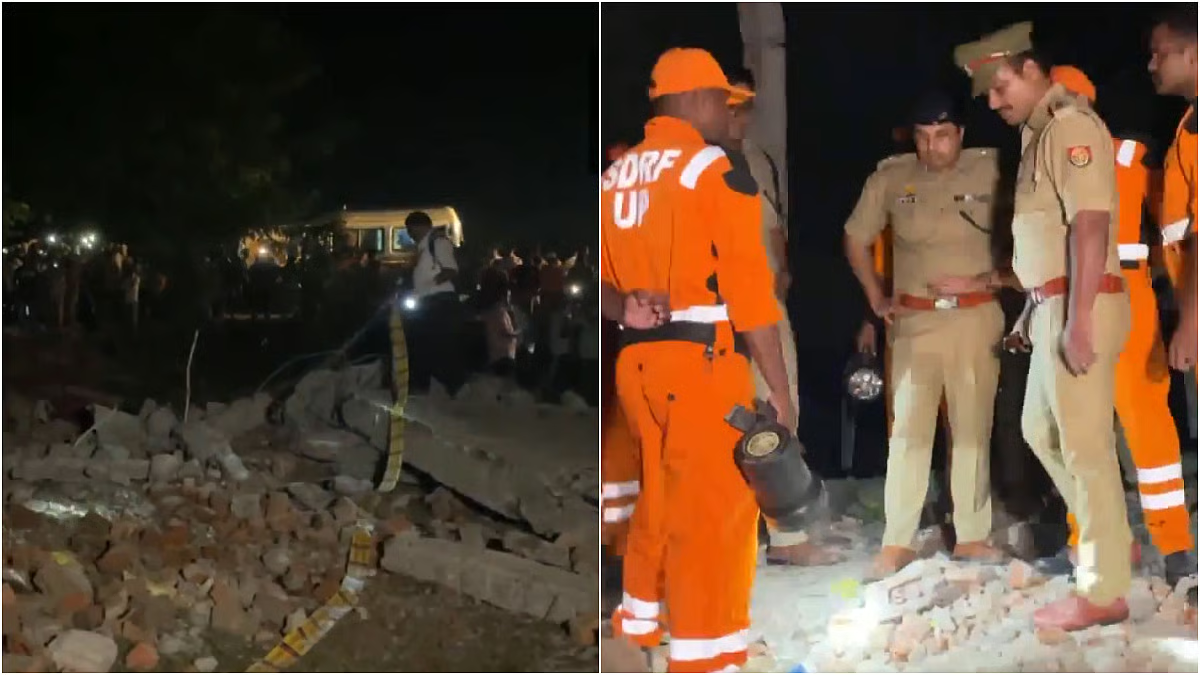
A two-story house in one of Ayodhya’s residential areas collapsed after a strong explosion inside the kitchen, destroying the entire structure and scattering debris across the surrounding neighborhood. The blast caused visible damage to nearby buildings and raised concern among local residents.


Scene showing the ruins of a collapsed house in Ayodhya after a powerful internal explosion.
The aftermath of the Ayodhya house collapse reveals extensive damage and tragic human loss.
Fragile Traditional Design Led to Total Structural Failure

The house was built using a basic structure of reinforced concrete and local brick, lacking sufficient structural reinforcement. This made it vulnerable to collapse under sudden internal pressure.
Site observations indicate that the building relied on load bearing walls between the two floors, and when the explosion occurred, the internal columns buckled, causing the upper floor to cave in on the ground level.


Dense Urban Fabric Amplified the Damage

The house stood within a densely built urban area, where homes are tightly packed without expansion joints or proper ventilation gaps. This close spacing allowed the explosion’s shockwave to spread easily, leading to cracks in walls and ceilings of surrounding houses.


Rescue teams search through debris after a gas cylinder blast caused a house collapse in Ayodhya.
Emergency crews continue operations amid debris following a gas explosion that leveled the structure.
Gas Leak Suspected Behind the Incident

Preliminary assessments suggest that the blast was caused by a domestic gas leak inside the kitchen, which generated intense internal pressure beyond the capacity of the walls to resist. Poor ventilation and the absence of pressure release openings likely intensified the destruction.


Aerial view of the collapsed house surrounded by local residents at the explosion site
Locals gather around the remains of the collapsed house in Ayodhya as rescue efforts continue.
The Incident Raises Questions About Safety Standards in Older Buildings

The collapse renewed debate over the structural safety of older residential buildings, especially in areas with unregulated expansion and limited engineering supervision. Experts emphasize the importance of regular inspections for traditional houses to ensure their stability and compliance with modern safety requirements.


Nighttime scene showing rescue teams working to locate survivors after the house collapse in Pagla Bhari village.Rescue efforts extend into the night as teams search for survivors beneath the rubble in Ayodhya’s Pagla Bhari village.
A Call to Reevaluate Housing Conditions in Densely Populated Areas

The event highlights the need for safer urban planning in crowded districts and for revising outdated construction systems that may pose risks to residents in case of similar accidents.


✦ ArchUp Editorial Insight


The article examines the Ayodhya house collapse from an architectural lens. It focuses on the fragility of traditional housing structures in dense urban areas. The description points to weak load-bearing walls and poor spatial ventilation, making the internal blast powerful enough to bring the entire frame down. While the structural assessment is clear, the text could expand on preventive design strategies and resilience measures. Still, its measured tone stresses the need to review local construction standards and encourage safer housing awareness among older neighborhoods.


Explore the Latest Architecture Exhibitions & Conferences

ArchUp offers daily updates on top global architectural exhibitions, design conferences, and professional art and design forums.
Follow key architecture competitions, check official results, and stay informed through the latest architectural news worldwide.
ArchUp is your encyclopedic hub for discovering events and design-driven opportunities across the globe.


https://archup.net/launch-of-dubais-tallest-wellness-focused-residential-tower-with-innovative-architectural-design/
https://archup.net/myth-and-architecture-how-stories-shape-our-spaces-from-ancient-greece-to-the-virtual-world/
Dive into the world of architecture – from bold concepts to global competitions – curated with ArchUp.
#ArchUp #architecture

Text
abarentcontruction
abarentcontruction

Celebrating 30 Years of BBB Accreditation Abarent Construction Group LTD.

We’re proud to announce that @abarentcontructiongroupltd has been Accredited for @betterbusinessbureauarizona-blog for 30 years — since 1994! 🏆

For three decades, you’ve trusted us with your homes, businesses, and foundations — and we couldn’t be more grateful. This milestone reflects our unwavering commitment to integrity, quality, and exceptional service.

A huge thank-you to our clients, partners, and dedicated team for being part of this journey. Here’s to many more years of building strong foundations — in construction and in trust. 💙

From our family to yours — thank you for helping us reach this milestone! 💙

Protect your home with experts you can trust.

Call us at 780-448-2592 or visit www.abarent.net to schedule your consultation.