#presentationskills

20 posts loaded — scroll for more

Text
s-track
s-track

Enhance communication in your next training session. 🎤
Introducing the S-Track NearLink Wireless Mic LARK 100. It ensures every word is heard clearly, whether you’re leading a workshop or a university lecture.
Key benefits:

  • Stable, high-definition audio via NearLink tech
  • Freedom to move around the room
  • Hassle-free setup
    Perfect for corporate trainers and educators.
    If you have similar scenarios, please feel free to contact us directly for a consultation.

Text
visual-sculptors
visual-sculptors

What are some essential tips for creating impactful PowerPoint presentations?

In the realm of business presentations, storytelling is more than just a technique—it’s an essential art form. A compelling narrative can transform a mundane presentation into a captivating experience. But how can you craft a story that truly resonates with your audience?

Why Storytelling Matters

Memorability: Stories have a unique ability to stick in our minds. They create mental images and emotional connections that dry data and bullet points simply cannot achieve.

Connection: A well-told story fosters a deeper bond with your audience, making them more receptive to your message.

Understanding Your Audience

Every audience is distinct, influenced by their cultural backgrounds, experiences, and preferences. Tailoring your narrative to these nuances is vital for effective communication.

  • Diverse Preferences: Some audiences may embrace humor, while others prefer a more serious tone. Identifying these preferences can significantly enhance your storytelling impact.
  • Cultural Sensitivity: Be aware of cultural references and idioms that may not resonate universally. Your story should be inclusive and relatable to all.

Practical Techniques for Improvement

To elevate your storytelling skills, consider implementing these practical techniques:

  • Practice with Peers: Rehearse your presentation with friends or family to gain valuable feedback. They can highlight areas that need clarification or suggest adjustments to boost engagement.
  • Self-Recording: Record yourself while practicing. This will help you assess your pacing, body language, and delivery style, allowing you to identify areas for improvement.
  • Experiment: Don’t shy away from trying different storytelling techniques. Whether it’s utilizing metaphors, sharing personal anecdotes, or incorporating case studies, experimenting can help you find what resonates best with your audience.

The Goal of Storytelling

The ultimate aim of storytelling in presentations is to forge a genuine connection with your audience. You want your message to be not just heard but truly felt. The most impactful stories provoke thought, inspire action, and leave a lasting impression.

In a world saturated with information, how will you craft your narrative to ensure it stands out? What techniques have you found to be the most effective in engaging your audience? Let’s discuss!

Visual Sculptors, founded by ex-McKinsey designers, transforms analysis into clear, board-ready presentations that support executive decisions. Services: Contact VS

Text
visual-sculptors
visual-sculptors

How can mastering slide design enhance the effectiveness of business consulting presentations?

Introduction

In the consulting industry, effective communication is essential. Consultants must convey complex ideas and strategies to diverse audiences, making it crucial to present information clearly and engagingly. One key element that can elevate a presentation is visual design. Well-crafted slides not only capture attention but also enhance understanding and retention of information. This article explores the importance of optimizing slide design to improve audience engagement and the retention of insights.

Prioritize Clarity

Importance of Clear Messaging

Clarity is the cornerstone of effective communication. In consulting presentations, messages need to be succinct and easily digestible. This can be achieved by utilizing bullet points and minimizing text on each slide. When information is presented clearly, it enhances comprehension and allows the audience to retain key insights more effectively.

Practical Example

Consider two slides discussing a new marketing strategy. The first slide is cluttered with dense text and multiple bullet points, overwhelming the audience. In contrast, the second slide presents the same information using three concise bullet points paired with relevant visuals. This clear presentation allows the audience to grasp the core message quickly and facilitates better retention of the information.

Focus on Visual Appeal

Creating Engaging Presentations

Visual appeal plays a crucial role in maintaining audience engagement. High-quality images, cohesive color schemes, and well-organized layouts can significantly enhance a presentation’s effectiveness. A visually appealing design captures attention and reinforces the message being delivered.

Practical Example

Take, for instance, a slide that initially uses low-resolution images and a chaotic color palette. After a redesign, the slide features high-resolution visuals and a harmonious color scheme that complements the content. This transformation not only makes the slide more attractive but also aids in conveying the intended message more effectively.

Leverage Storytelling

Engaging the Audience Through Narrative

Storytelling is a powerful tool in presentations. A well-structured narrative can captivate an audience and make complex information more relatable. It is vital to support assertions with relevant data and include a strong call to action to drive home the message.

Practical Example

Consider a case study where a consultant used storytelling to present a client’s success story. By framing the presentation around the client’s journey—challenges faced and solutions provided—the consultant engaged the audience more effectively. The inclusion of data highlighting the results achieved reinforced the narrative, leading to greater audience understanding and engagement.

Enhance Data Visualization

Simplifying Complex Information

Data visualization is critical in making complex information accessible and understandable. Transforming data into digestible visuals, such as charts and infographics, can significantly improve clarity and memorability.

Practical Example

Imagine a situation where a consultant presents a complex table filled with statistics. By converting this table into an infographic, the same data can be represented visually, allowing the audience to grasp the information at a glance. This method not only simplifies the data but also enhances the overall impact of the presentation.

Addressing Misconceptions

A common misconception in presentations is that more information equates to better engagement. However, overwhelming the audience with excessive details can lead to confusion. It is essential to strike a balance between delivering sufficient information and maintaining an aesthetically pleasing design.

Conclusion

In conclusion, the strategies outlined in this article—prioritizing clarity, focusing on visual appeal, leveraging storytelling, and enhancing data visualization—are critical for creating effective consulting presentations. By optimizing slide design, consultants can significantly improve communication and decision-making processes within their audience. Embracing these strategies will elevate the quality of presentations and lead to better outcomes in consulting engagements. As you prepare your own presentations, consider implementing these techniques to foster improved audience engagement and retention of insights.

Explore our Portfolio to see how Visual Sculptors delivers clarity, consistency, and consulting-grade design across presentations.

Text
visual-sculptors
visual-sculptors

What are the key strategies to enhance corporate presentations for greater impact?

In today’s fast-paced business environment, delivering a compelling presentation can make all the difference. Whether you’re pitching a new product, sharing quarterly results, or offering strategic insights, mastering presentation skills is essential for success.

1. Choose the Right Format: Selecting an effective presentation format is vital. Consider these options:

  • Elevator Pitch: Ideal for quick introductions.
  • In-Depth Marketing Plans: Perfect for comprehensive strategy discussions.
  • Interactive Workshops: Engage your audience through active participation.

2. Craft a Compelling Message: Your message is the heart of your presentation. To leave a lasting impression:

  • Start Strong: Grab attention with a bold statement or an intriguing question.
  • Maintain Engagement: Use storytelling techniques and relatable examples to keep your audience interested.
  • Conclude with Action: End with a clear Call to Action that encourages your audience to take the next steps.

3. Focus on Clarity in Design: Visual design significantly impacts how your message is perceived:

  • Consistent Color Schemes: Use brand-aligned colors that enhance readability.
  • Impactful Visuals: Incorporate images and graphs that complement and reinforce your message.
  • Keep it Minimal: Ensure your slides are clean and focused, highlighting key points for better retention.

4. Avoid Common Pitfalls: Even experienced presenters can make mistakes that weaken their message:

  • Cluttered Slides: Steer clear of overcrowding with too much information; simplicity is crucial.
  • Ignoring Audience Needs: Tailor your content to resonate with your audience’s interests and expectations.
  • Lack of Practice: Rehearse thoroughly to ensure a smooth delivery and bolster your confidence.

5. Practice and Refine Your Skills: Developing effective presentation skills takes time and ongoing effort. Engage with your audience, and you may discover that your presentations lead to significant business outcomes.

Remember, every presentation is an opportunity not just to share information but also to inspire action.

What strategies have you found most effective in your presentations? Let’s discuss how we can improve our presentation skills together!

Preparing for your next high-stakes presentation? Contact Visual Sculptors to collaborate with a seasoned team of presentation specialists trusted by global leaders.

Text
leojhonson
leojhonson

#PublicSpeaking

#PresentationSkills

#AnxietyRelief

#TechForGood

#ConfidenceBuilding

Text
rainbucks
rainbucks

🎤 Master the Art of Public Speaking with Rainbucks

Strong communication is the foundation of leadership. Our Public Speaking Skills Program equips you with the confidence, strategy, and presence needed to influence any audience.

At Rainbucks, we help you transform your communication skills through practical, real-world public speaking training.

👉 For More Details fill the form:- https://forms.gle/mZuwg39G4YQDQCzn9
🌐 rainbucks.org

Text
rainbucks
rainbucks

🎤 Master the Art of Public Speaking with Rainbucks!
Transform your communication skills and become a confident, clear, and captivating speaker.

Whether you’re addressing a small team or a large audience — learn how to inspire, engage, and leave a lasting impact.

Limited seats available — enroll today!

👉 For More Details fill the form:- https://forms.gle/mZuwg39G4YQDQCzn9
🌐 rainbucks.org

Text
icyoasissavagery
icyoasissavagery

Simple Ways to Improve Your Presentation Skills and Speak with Confidence

Text
lucasproductionsusa
lucasproductionsusa

Too many slides and messy visuals make presentations forgettable and exhausting. Strong clarity in slides frees audiences from confusion and disengagement. This post shows basic ways to make your presentation cleaner and more effective. Learn how small changes in structure and visuals make big improvements to audience impact.
Learn more: https://lucasproductionsusa.com/avoid-death-by-powerpoint/

Text
rainbucks
rainbucks

🎤 Master the Art of Public Speaking with Rainbucks
Clear communication builds confidence and leadership.

Our Public Speaking Skills training equips you with the tools to speak with clarity, influence audiences, and deliver impactful presentations.
Upgrade your communication skills with Rainbucks’ Public Speaking Skills program.

👉 For More Details fill the form:- https://forms.gle/mZuwg39G4YQDQCzn9
🌐 rainbucks.org

Text
lucasproductionsusa
lucasproductionsusa

Most speakers do this without realizing… and it kills confidence instantly.

Touching or leaning on the lectern makes you look tense.
Strong speakers keep posture open and let their voice carry authority.

Here’s how to look confident on stage:
• Keep hands free for natural gestures
• Step away from the lectern sometimes
• Maintain eye contact
• Use pauses instead of leaning

Have you seen presenters grip the lectern?

More tips here: https://lucasproductionsusa.com/never-touch-the-lectern/

Text
essaywritting12
essaywritting12

PPT Dimensions Guide: Choose the Right Slide Size Like a Pro!
Learn more here https://tr.ee/SyZ3W9

-

Text
rainbucks
rainbucks

🎤 Master the Art of Public Speaking with Rainbucks

Strong communication is the foundation of leadership. Our Public Speaking Skills Program equips you with the confidence, strategy, and presence needed to influence any audience.

At Rainbucks, we help you transform your communication skills through practical, real-world public speaking training.

👉 For More Details fill the form:- https://forms.gle/mZuwg39G4YQDQCzn9
🌐 rainbucks.org

Text
womaneng
womaneng

I was literally in the kitchen boiling pasta 🍝when I suddenly remembered the presentation I have to finish before 23:59… and Kimi AI saved my life. 😭💛
🍌 Kimi with the Nano Banana Pro model is actually insane.
It turns any boring PPT into a clean, detailed, and professional presentation in minutes.
Comment “kimi” to get the link or check the link in my bio.
And yes—you can use it for free right now.
Here’s how to do it:
• Go to Kimi
• Click on Slides
• Write a prompt or upload any PDF, doc, PPT, or image
• Select Nano Banana Pro
• Boom—Kimi creates an amazing PPT with charts, diagrams, and visuals
Everything is fully editable and you can export it anywhere.
Plus, you get a free 48-hour unlimited trial 🤯✨

Text
rainbucks
rainbucks

🎤 Master the Art of Public Speaking with Rainbucks!
Transform your stage fear into confidence and communicate with impact.
Learn how to build confidence, refine your voice and tone, and connect deeply with your audience.

Gain confidence, refine your tone, and build a mindset that connects with every audience.

👉 For More Details fill the form:- https://forms.gle/mZuwg39G4YQDQCzn9
🌐 rainbucks.org

Link
americanmoviecompany

CONFIDENCE MONITOR RENTAL $1,295 10 Hours/Day — American Movie Company

Looking to elevate your presentations and ensure your delivery is seamless? Check out the Confidence Monitor from American Movie Company! This innovative tool allows speakers to maintain eye contact with their audience while easily keeping track of their script or notes. Perfect for events, conferences, or any public speaking engagements, a Confidence Monitor helps you stay confident and composed.

Learn more about how a Confidence Monitor can enhance your next event at: https://www.americanmovieco.com/teleprompter-rental/confidence-monitor

photo
Text
loveyouenglish
loveyouenglish

English for Public Speaking: Build Confidence and Clarity

English for Public Speaking: Build Confidence and Clarity

I’ll teach you English for public speaking.


Have you ever stood in front of an audience with your heart pounding, hands shaking, and your thoughts racing faster than your words?


If so, you’re not alone.


Public speaking can be nerve-wracking for anyone, but doing it in a second language like English? That’s a whole new level of challenge.


But here’s the good news: you don’t have to be a native speaker—or a professional—to become a confident, clear communicator in English. You just need the right mindset, the right tools, and a little practice.


In this blog, I’ll guide you step-by-step on how to master public speaking with confidence, clarity, and impact.


Whether you’re preparing for a presentation, speaking at a meeting, or simply sharing your opinion in class, these strategies will help you shine.


Why English Public Speaking Is a Skill Worth Building


Public speaking in English opens doors.


🌍 It’s global: English is spoken in business, academia, tourism, and media around the world.


💼 It’s professional: Clear communication boosts your credibility and career opportunities.


🎓 It’s academic: Students who speak up in discussions, debates, or oral exams stand out.


📱 It’s modern: Podcasts, YouTube, TikTok, interviews—public speaking is everywhere now.


Mastering English speaking skills doesn’t just improve how you talk—it changes how people listen to you.


1. Shift Your Mindset: It’s Not About Perfection


Most fears around public speaking come from the idea of “making a mistake.”


“What if I say the wrong word?”


“What if people laugh at my accent?”


“What if I forget everything?”


Here’s the truth: nobody expects you to be perfect. They expect you to be real and understandable.


🎤 What your audience really wants:


Clear ideas


A natural flow


A little personality


2. Speak Clearly—Not Quickly


Many learners believe speed = fluency. But speed without clarity leads to confusion. What really makes you sound confident is clear, calm speech.


🟢 Instead of: “Uh hi todayI’mgonnatalkabout…”


✅ Try: “Hi. Today, I’m going to talk about…”


Practice Tip:
Record a sentence like:


“I believe communication is the key to leadership.”


Say it slowly and clearly. Then say it fast. Which one sounds more confident?


Pro Tip: Use pauses. A 1–2 second pause gives your audience time to think—and gives you time to breathe.


3. Use a Simple Structure (That Works Every Time)


A good speech is like a sandwich: it needs a strong beginning, a solid middle, and a satisfying end.


🧱 Basic Structure:


Introduction – Grab attention (a question, story, or fact)


Body – 2–3 main points with examples


Conclusion – Summarise and end with impact


Example Topic: “Why Learning English Changed My Life”


Intro: “Ten years ago, I couldn’t say a full sentence in English. Today, I work at an international company.”


Body:


It gave me access to education.


It helped me connect with people around the world.


It opened up job opportunities.


Conclusion: “English didn’t just change my resume—it changed who I believed I could be.”


4. Use Natural, Spoken English


Forget textbook phrases. Public speaking should sound like you’re having a real conversation.


Too formal: “I intend to illustrate the impact of reading habits.”


Better: “Let me show you how reading can really change your life.”


Here are phrases that work well on stage:


Purpose
Useful Phrases
Emphasizing
“This is something I really care about…”
“Let me stress this point…”
Giving Examples
“For instance…”
“Here’s a quick example…”
Changing Topic
“Let’s move on to…”
“Now, let’s take a closer look at…”
Concluding
“To wrap things up…”
“So, what’s the takeaway?”

5. Practice Out Loud (Daily, if You Can)


Reading silently is not enough. Your mouth needs practice. Your brain already knows the words—your tongue needs to learn how to say them clearly.


✅ 3 Great Ways to Practice:


Record Yourself: Use your phone. Speak for 1–2 minutes. Listen. Repeat.


Mirror Practice: Speak in front of a mirror to check facial expressions and confidence.


Shadowing: Play a short clip of a native speaker and repeat sentence by sentence. Try TED Talks or YouTube interviews.


Mini Exercise:
Pick a daily topic: “My favorite meal,” “A mistake I learned from,” or “My weekend.” Speak for one minute every morning. No script!


6. Improve Pronunciation—But Don’t Stress Over It


You don’t need an American or British accent to speak well. What matters is being understood.


Focus on:


Word stress: (e.g., ‘PRE-sent’ vs. ‘pre-SENT’)


Rhythm and intonation: Sound natural, not robotic.


Linking sounds: “I’m gonna go” sounds more natural than “I am going to go.”


📱 Tools to Try:


YouGlish.com – Hear how real people pronounce words.


ELSA Speak – AI app that gives feedback on your accent.


BBC Learning English – Great free pronunciation videos.


7. Use Confident Body Language


What your body says is just as important as your words.


Do:


Stand or sit tall.


Use open hand gestures.


Make eye contact (or look just above people’s heads).


Don’t:


Cross your arms.


Keep your hands in your pockets.


Look down the whole time.


Online tip: Look into the camera, not the screen, when speaking during video calls.


8. Avoid Common Public Speaking Mistakes


Knowing what not to do helps you grow faster. Here are a few traps to avoid:


❌ Long, complicated sentences
✅ Use short, clear thoughts.


❌ Speaking without pauses
✅ Let your message breathe.


❌ Memorizing your whole script
✅ Learn key points and speak naturally.


❌ Too many “uh,” “um,” “like”
✅ Replace with short, silent pauses.


❌ Flat voice (monotone)
✅ Vary your pitch to sound more engaging.


9. Get Feedback to Improve Faster


Feedback helps you grow. You don’t have to speak perfectly—you just need to speak, reflect, and adjust.


🎯 Ways to Get Feedback:


Join a public speaking group (like Toastmasters).


Ask a friend or teacher to listen and share honest tips.


Watch your own recordings. Note what you like and what you’d change.


10. Be Ready for Real Situations


Let’s look at how to apply these skills in real life:


🧑‍🏫 In Class:

Start strong: “Today, I want to share my thoughts on…”


Use visual aids or cue cards.


End clearly: “Thanks for listening. I’d love to hear your questions.”


👩‍💼 At Work:

Begin with purpose: “I’d like to highlight three key results.”


Use clear transitions: “Let’s move on to the second point…”


Wrap up: “To summarize, here’s what we achieved.”


💻 Online:

Use a checklist: mic, camera, lighting.


Speak a little slower.


Greet people by name: “Hi Ana, great to see you.”


11. Build Your Public Speaking Vocabulary


The more you hear and use strong expressions, the more natural they’ll feel.


Purpose
Example Expressions
Starting
“Let’s begin with…” / “I’d like to start by saying…”
Adding Info
“Also…” / “Another important thing is…”
Giving Examples
“For instance…” / “Take this case…”
Emphasizing
“What I really want you to remember is…”
Concluding
“So, in short…” / “That’s my message today.”

Challenge: Use 3 of these in your next practice session.


12. Final Thoughts


The most powerful speeches don’t use fancy words. They use real emotion and clear messages.


If you can make your audience feel something—curiosity, hope, laughter, inspiration—they’ll remember you.


So don’t worry about sounding like a native speaker. Focus on sounding like you—a speaker who’s clear, confident, and willing to keep improving.


🎁 Bonus: 5 Quick Habits to Boost Your Public Speaking


Talk aloud for 2 minutes a day (about your plans, ideas, or a recent event).


Watch one TED Talk and repeat your favorite sentence.


Record one audio note daily in English.


Write and speak one mini speech a week (1–2 minutes).


Practice eye contact and posture in the mirror for 30 seconds.


👩‍🏫 A Word From me


I’ve taught English to thousands of learners—from shy teenagers to business leaders. The most common fear I hear is: “What if I mess up?”


Here’s my honest answer: You will. Everyone does.


But what matters is that you get back up, smile, and speak again. With time, your fear fades. Your confidence grows. And soon, people aren’t just listening to your English—they’re listening to your voice.


So keep going. The world is waiting to hear what you have to say.


Read more:
How to Improve Your Public Speaking at Work
How to Reduce Anxiety When Speaking English
8 Best Ways to Introduce New Vocabulary to English Learners
How to Improve English Vocabulary WITHOUT Forgetting Words

Text
businessanalyst-ba
businessanalyst-ba

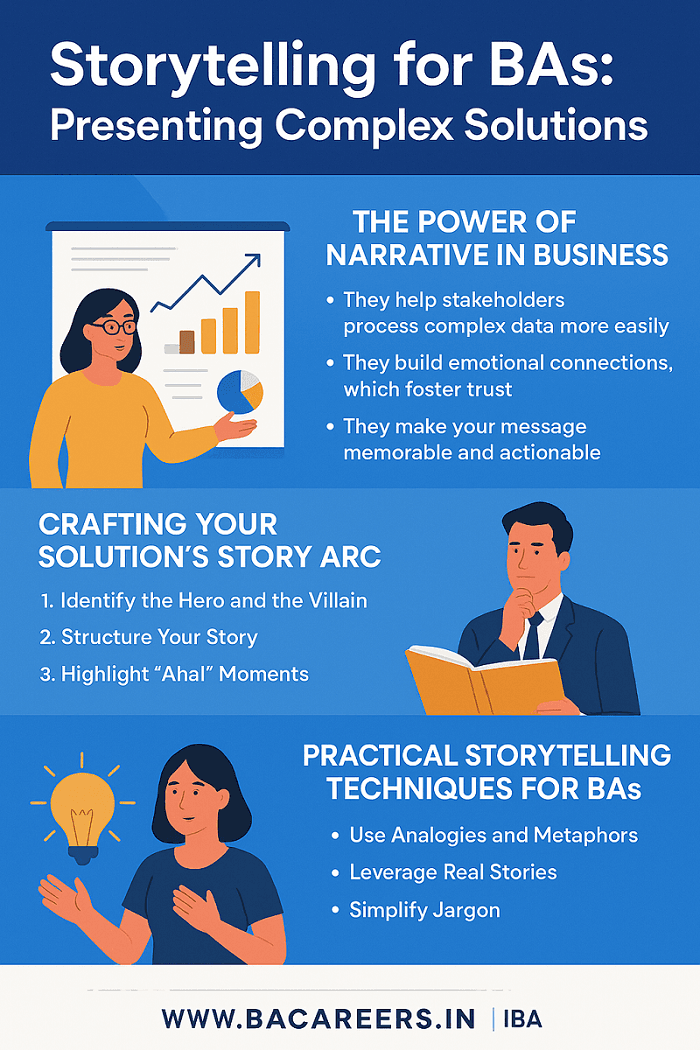
Storytelling for BAs: Presenting Complex Solutions


Storytelling for Business Analysts


Are your presentations often met with blank looks or just polite nods? You’ve done the work—analyzed data, designed processes, and come up with smart ideas—but when it’s time to present, the group seems lost.


That’s because numbers and facts alone don’t grab people’s attention—stories do.


In today’s busy business world, Business Analysts need to do more than just show results.
They need to connect with people, build trust, and make others want to take action.
Let’s see how using stories can turn your presentations from boring to engaging.


The Power of Storytelling in Business


People love stories.
From ancient drawings on cave walls to today’s popular talks, we remember stories, not just lists of numbers.


For a Business Analyst, storytelling helps make complex data easier to understand and connect with business goals.


Why stories work:


They help people understand complicated data better.


They build trust by showing real feelings and connections.


They make your message stick and show what action to take.


Example:


Imagine a BA talking about a new automation tool.
Instead of saying:


“Using this tool cuts manual work by 40%.”


Try this:


“Meet Priya, our operations manager, who spends half her day checking invoices.
With our new tool, she’ll finally have time to focus on solving problems, not just entering data.”


Suddenly, people care.
They can see the real difference.


Real-life Example:
In a bank, a BA used a story-based approach to get support for a compliance project.
By focusing on “keeping customers safe” instead of “upgrading systems,” leadership approved the project quickly—within one meeting.


Related Read:
Stakeholder Engagement Strategies
— Learn how to communicate better with different people.


Crafting the Story of Your Solution


Every good story follows a structure—and your presentation should too.


1.
Identify the Hero and the Villain


Hero: Your customer, user, or stakeholder
Villain: The problem, inefficiency, or risk


Example:
“Finance managers (the hero) get stuck with manual work (the villain).
Our new tool (the solution) helps them escape the mess of data entry.”


2.
Structure Your Story


Beginning: The current situation—what’s wrong or inefficient
Middle: The journey—your solution and how it changes things
End: The future—how much better things get, how efficient, or how happy customers are


3.
Highlight ‘Aha!’ Moments


Show key ideas that make your audience say, “Oh, I get it now!”


For example, show how dashboards save time and help people make better decisions.


Tip:
If you’re presenting in a workshop or sprint review, use visuals—flow diagrams, before-and-after charts, or short user stories can make your message more real.


Internal Link:
Effective Requirement Elicitation Techniques
— Learn how to get the details that help build your story.


Practical Storytelling Tips for BAs


Here’s how to use storytelling in your everyday presentations.


1.
Use Analogies and Metaphors


Make complex ideas simple by comparing them to something familiar.


Example:
“Think of this workflow like a GPS—it shows the way and warns about traffic ahead.”


2.
Use Real Stories


Client stories: Show the human side of success.


Case studies: Share real outcomes, not just features.


Personal stories: Share lessons from past projects.


3.
Simplify Jargon


Use simple business language instead of technical terms.


Example:
Instead of saying “API integration reduces latency,” say, “Our systems will finally work together in real-time.”


4.
Use Visual Storytelling


Use pictures—process maps, storyboards, or mockups—to help your audience “see” the story.
Tools like Miro, Lucidchart, or Figma can help.


External Link:
Harvard Business Review – The Science of Storytelling
— Discover how stories affect attention and decisions.


Your Call to Action: Be a Storytelling BA


Key Points:


Facts help, but stories move people.


A clear story turns complex ideas into easy-to-understand messages.


Storytelling makes you a better communicator and change-maker.


Try This:


In your next presentation, replace one data slide with a story—someone real, a problem they face, and how your solution helps them.


You’ll notice the difference right away—more interest, more questions, and more support.


Related Resource:
Agile Methodology for Business Analysts
— Learn how storytelling fits into Agile and sprint reviews.


External Source:
IIBA – Business Analysis Competency Model
— Explore how communication and storytelling are important skills for modern BAs.


Conclusion


Storytelling isn’t just a “soft skill"—it’s a powerful way to communicate that sets good BAs apart from great ones.


When you tell a story, you don’t just show data—you inspire people to act, build trust, and create real change.


So, the next time you’re making a BRD, an executive presentation, or a sprint demo, remember:
Don’t just show the data.
Tell the story behind it.


PMI – The Importance of Communication in Project Success.


🔗 Related Articles:

Agile Methodology for Business Analysts


Stakeholder Engagement Strategies


Effective Requirement Elicitation Techniques


Business Analyst Interview Tips


Change Management for Business Analysts


🌐 External Links

Harvard Business Review – Why Your Brain Loves Good Storytelling


International Institute of Business Analysis (IIBA)


PMI – The Importance of Communication in Project Success

Text
tgbschool
tgbschool

What I Learned from My First Presentation in MBA

My first MBA presentation wasn’t just about slides or data—it was about confidence, clarity, and communication. Standing in front of peers and professors, I realized that presenting isn’t about perfection—it’s about connection.

  • Confidence grows with preparation—the more you practice, the more natural you become.
  • Clarity beats complexity—simple, structured slides create a stronger impact.
  • Body language speaks louder than words—eye contact and posture build credibility.
  • Feedback is your friend—every suggestion helps polish your next talk.
  • Teamwork matters—collaboration makes ideas more powerful and presentations smoother.

Text
sweettntmag
sweettntmag