Service Quality (SERVQUAL Model) is a powerful and globally recognized framework used to measure and improve service performance by identifying the gap between what customers expect and what they actually experience. Developed by Parasuraman, Zeithaml, and Berry, the SERVQUAL model evaluates service quality across five key dimensions — Tangibility, Reliability, Responsiveness, Assurance, and Empathy. It helps organizations understand customer needs, improve service delivery, boost satisfaction, and build long-term customer loyalty.
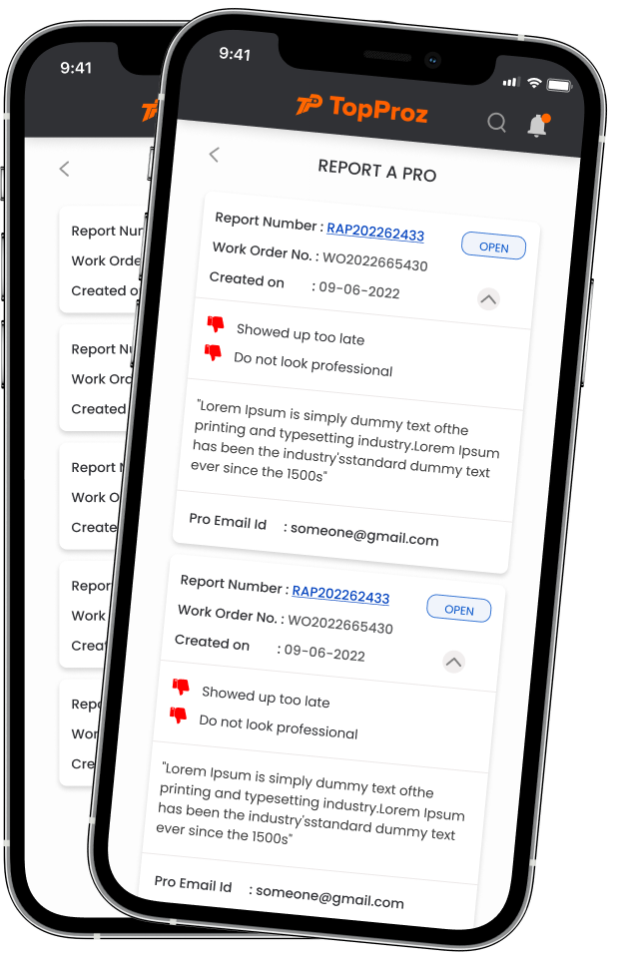
Take control of your service experience with TopProz. Report any inconsistencies or issues you encounter with service professionals quickly and efficiently. Your feedback helps improve quality and accountability in the service marketplace.
🌟 Our customer review speaks volumes! At B2BCert, we take pride in our role in facilitating the ISO 20000-1 certification journey for our clients. Leveraging our profound understanding of IT service management, we’ve empowered businesses to enhance service quality and efficiency, leading to elevated client satisfaction. Join us and discover how B2BCert can transform your certification journey! 💼🚀
Managed Services are tasks handled by us (Rapidflow Inc.), frequently in the context of business information technology services. The managed services model is a way to offload general tasks to an expert in order to reduce costs, improve service quality, or free internal teams to do work that’s specific to their business.
Rapidflow Cloud Managed Services
Cloud Migration Services
Managed Network Services
Managed Mobility Services
Managed Infrastructure
Managed Business Services
Managed Security Services
24X7 HelpDesk
have the curiosity about to know the Rapidflow Inc and
The impact of CSR on brand equity of Bangladesh telecommunication sector: purchase intention and brand loyalty of the university students of Dhanmondi area.
The Research Focuses on the impact of corporate social responsibility (CSR) on customer’s purchase intention. The direct or indirect influence upon a customer’s motivation for subscribing to Robi (Robi Axaitia, Telecommunication service) has been critically analyzed in this paper. The result of the research has been evaluated and cross examined. The aim was to find out the purchase intention of the students who are living in Dhanmondi, Dhaka. The data has been collected from a survey which was conducted among 32 respondents and the answers were critically examined to avoid any sort of misrepresentation of the result. By the end of the study, we have seen that there has been an influence of CSR on the purchase intention of the customer. Apart from CSR there are some other factors which also impacted the purchase intention of the customers. Such factors are the perceived quality, customer satisfaction and brand loyalty of the customer.
How would you expect the service cost to go down, when the capabilities contributing to the service cost keep going up?
(the capabilities contributing are skilled resources, products and services used by the service provider from internally or externally and many other factors)
While product cost going up is justified, service cost going up is questioned all the time, and bargained for low cost. Which only pushes the service providers to sacrifice quality to meet price competition.
At the same time, the expectation of the cost reduction on services are of no surprise for those organizations that do not meet the service quality expectations and give no regards to customer experience, or considering customer as the main focus.
This should be avoided by providing quality service to customers and coming up with proper SLAs without hidden conditions. Creating customer trust is an important factor in building a solid loyal customer base. This automatically happens when you provide consistency in the quality of service provided.
The customer contribution also plays a role in this, but for that to happen you need to build awareness and create maturity regarding your product and services. In the mean time you may also come across customers who are only focused on pricing, they are dealt differently using various strategies based on organizational focus and the markets they are in.
Normally customers are happy to pay when service quality is good, but the service should be focused on customers, not around organization’s profit / benefits only.
Some years ago, I was a part of the rebranding process of an Insurance company.
We had a fantastic Messaging session for the Board and Management Team of the company and they were glad. However, when we got to the point of rebranding, we presented series of logos and the brand manual to the same Executives.
The Board didn’t approve it because they saw these logos as being a deviation from their conservative nature.
This is an example of “historical inertia”, global brands that started from the garages such as Amazon, Google, Disney and others have moved on.
It’s good to have your history but there is a need to ensure that Innovation, Service Quality must be carried forward for growth. Sentiment is nice, but it can hold back progress.
Renew your brand in the mind of your stakeholders through rebranding, introduction of a new product etc and PR will amplify the good works
Quality is considered as one of the imperative factors. In hospital industry patient is a consumer of the hospital whose fulfillment must be taken note. The fulfillment of the patient has relied upon the service execution which has been performed by the hospital. The quality of the service measures the expectation and perception of the patient about service quality which has been given by the administration, so the level of a gap can be addressed. Service dissatisfaction in the hospital industry emerges because of gaps that emerge in patient service. In the event that the service gave meets the patient desire at that point the patient is satisfied, in case the service gave meet not up to the patient expectation then the patient is dissatisfied. The gap between the two will indicate whether the service quality is high or low on each of this variable service engagement, patient safety, staff capacity, admission and discharge process, a culture of respect in order to measure service quality by using SERVQUAL model.
People Management bagi saya adalah bagaimana kita mempengaruhi orang lain untuk melakukan apa yang kita inginkan. Bukan hanya kemampuan leadership yang harus dimiliki, tetapi diperlukan keterampilan kita dalam memahami sisi emosional sehingga kita mampu membaca segala situasi dan kondisi yang dialami seseorang. Ingat, setiap orang memiliki masalah yang berbeda-beda, raut wajah bukanlah hal yang tepat untuk merepresentatifkan kondisi hati seseorang. Terkadang ada orang yang selalu ceria walaupun ia memiliki segudang masalah. Masalah keluarga, pertemanan, kesulitan finansial, atau masalah-masalah lainnya, terkadang menjadi rintangan tersendiri dalam kita melakukan people management.
Saya teringat pertama kali ketika saya ditugaskan harus mengelola sekian banyak orang dengan satu visi, saya harus mengangkat mereka ke derajat yang lebih tinggi dibanding saat itu. Jujur, saat itu saya sedikit bingung. Pertama, saya merasa tidak memiliki kecakapan di bidang tugas baru saya itu. Kedua, bagaimana saya harus mengelola sekian banyak orang dengan kondisi yang berbeda-beda, banyak orang saat itu yang sejujurnya saya anggap lebih senior dibanding saya, bagaimana bisa saya mengarahkan mereka untuk mengikuti program-program yang saya buat. Agak mustahil, tapi saya segera sadar bahwa saya sudah diberi amanat, saya adalah seorang leader, saya adalah seorang manager, dan saya harus lakukan tugas saya dengan baik.
Hal pertama yang saya lakukan saat itu, saya berupaya mengembangkan diri agar menjadi lebih baik, paling tidak, saya harus terlihat cakap dalam bidang baru saya. Minggu-minggu pertama saya lakukan dengan cara berlatih dan terus berlatih untuk mencapai level yang saya inginkan agar bisa percaya diri di depan orang-orang yang saya hadapi. Jelas, dengan bidang pekerjaan baru saya, kompetensi saya harus setingkat lebih tinggi dibanding orang-orang lainnya karena pasti saya akan lebih banyak menghadapi kelas training, kelas-kelas sosialisasi, lebih banyak berinteraksi dengan orang yang setingkat atau dua tingkat lebih tinggi dari saya, bahkan harus siap berbicara di hadapan direksi sekalipun.
Ada tiga hal yang saya terapkan dalam melakaksanakan People management:
1. I’m not your boss, but I’m your true friend because I have ever been you : Ceritakanlah semua kegelisahanmu kepada saya, berceritalah di hadapan saya, tidak di belakang saya, ungkapkan semua isi hatimu, keluh kesahmu akan pekerjaanmu, permasalahan-permasalahan yang menghampiri hidupmu, apa yang menjadi kendala dalam hidupmu. Ceritakanlah sehingga aku bisa memahamimu.
2. The Authority is mine, but you can change it : segala keputusan, program-program yang saya buat, adalah sepenuhnya kewenangan saya, namun itu tidak mutlak, anda berhak mengubahnya dengan cara melakukan hal yang benar berdasarkan aturan yang benar. Jika anda tidak puas, anda berhak protes, anda berhak mengkritik saya, akan tetapi lakukan dengan cara yang benar. Banyak kejadian yang pernah saya alami dengan beberapa orang yang dapat dikatakan sulit diatur, baperan, ataupun bersifat pembangkang, dan ketika mereka melakukan protes dengan cara yang tidak benar (ex. mendiamkan saya, membenci saya, menghasut orang untuk membenci saya), justru akan semakin saya biarkan, bahkan saya singkirkan, saya lebih baik kehilangan 1 orang pembangkang yang dapat meracuni kinerja orang lain, sekalipun dia handal, daripada kehilangan 100 orang baru yang harus saya didik agar menjadi pribadi yang handal. Intinya, ikuti aturan main, jika anda merasa tidak mampu, percayalah bahwa setiap proses dan usaha tidak akan pernah mengkhianati hasil, jadi, teruslah mencoba.
3. I must got angry, but I have to embrace : bagi saya tiada kemarahan yang dilakukan dengan sengaja, bahkan marah itu sebaiknya dihindari, sekalipun kita merasa gendok, jengkel, kecewa terhadap seseorang, tidak sepatutnya kita luapkan dengan kemarahan. Walaupun harus saya akui sebagai manusia pasti tidak luput dengan rasa marah, namun ketika marah, saya tidak pernah mengakhirinya dengan perasaan dendam atau jengkel berkepanjangan. Bagi saya marah harus diakhiri saat itu juga dan kemudian merangkul kembali orang yang kita marahi, dengan cara itu saya merasa melakukan pendekatan psikis yang sempurna. Dimana seseorang merasa diingatkan tanpa merasa diintimidasi, justru ia akan merasa dilindungi, dan itu akan menjadi kunci bahwa arahan-arahan kita selanjutnya akan lebih diperhatikan. Dan mereka akan menjadi lebih baik.
Ketiga hal itu adalah kunci pertama saya dalam melakukan people management, pendekatan psikis akan lebih berguna dibandingkan pemaksaan berdasarkan kekuasaan (power of position). Dan itulah yang menjadi karakter saya dalam melakukan People management untuk mencapai visi yang sudah ditetapkan. Dan di postingan saya berikutnya, saya akan berbagi kisah tentang pengalaman saya yang semoga menjadi inspirasi bagi para pembaca semua.
As service designers, we are familiar with services as a series of processes. We know that production and consumption of services cannot be separated since the customer must first ask for the service before it can be implemented. However, what happens at the end when the service has been completed? The customer leaves with some sort of outcome, or perception of the service. This includes both the end products and the service processitself. It is this outcome that is the topic of this post’s discussion, servicequality.
Why Consider Service Quality?
Since customers actively participate in service production,
both service designers and service providers have a need to understand how
customers perceive and evaluate services.
Poor quality drives customers away, placing firms at a competitive
disadvantage. By understanding customer quality perception and evaluation, we
can begin to identify ways of managing this process and influence it to move in
a desired direction that yields positive results for both customer and service
provider.
We will take a look at a few facets of examining service
quality. The content of this post is mostly a brief overview and summary of
interesting tidbits found in the corresponding references listed under the “Sources”
section of the blog.
***Note:
The following words are used interchangeably: ‘customer’ and 'user’, 'service provider and 'company’
All images are scanned from current textbooks
used in SERV711 Winter Quarter 2015 and are intended for academic purposes
only. Images are owned by their respective authors and publishers.
(pp.#) denotes page numbers where a specific information
and quotes can be found
Sources
Grӧnroos, C. (2007). Service management and
marketing: Customer management in service competition (3rd ed.).
West Sussex, England: John Wiley &
Sons, Ltd.
Lovelock, C., & Wirtz, J. (2011). Services
marketing: People, technology, strategy (7th ed.). Upper Saddle
River, NJ: Prentice Hall
Parasuraman, A. (2013). SERVQUAL revisited: Finding
service gaps in the age of e-commerce. IESEinsight,
Second Quarter 2013 (17), 30-37.
Part 1: What Do We Mean by Service Quality?
There are many different perspectives of service quality
as quality means different things to different people. Lovelock and Wirtz
describe service quality as follows:
The Transcendent View:
Quality is based on merit and is seen as a mark for high achievement and defined
standards. It is assumed that people come to recognize quality through repeated
exposure and experience. However, this may not be practical since everyone
views things differently.
The Manufacturing-Based
Approach: Quality is based on adherence to specific specifications. This
approach is operations-based and stems from manufacturing and engineering
processes. This means specifications tend to be centered around cost reduction
and productivity.
User-based Definitions:
Quality follows the common saying of “…in the eyes of the beholder.” Quality is
determined by the user. Therefore, it is highly subjective and usually equates
to maximum satisfaction. Again, one must take multiple users who have varying perspectives
into consideration.
Value-based Definitions:
Quality is determined according to the trade-off between price and value.
Quality is often determined to be what Lovelock and Wirtz call “affordable
excellence” (pp.384).
Technical and Functional Quality: Another Approach to Service Quality
Another approach to service quality, Grӧnroos’, defines
quality as whatever the customer perceives it to be. Taking this approach minimizes
the risk of poorly defined quality that leads to poor decision-making, costing
the service provider money and time.
In defining service quality, Grӧnroos writes (pp.73), “Services are more or less subjectively experienced processes where
production and consumption activities take place simultaneously. Interactions,
including a series of moments of truth between the customer and the service
provider, occur. What happens in these interactions, so-called buyer-seller
interactions or service encounters, will obviously have a critical impact on
the perceived service.” To sum up, customers experience service quality on two
dimensions (Technical and Functional). This is visually represented in Grӧnroos’
model pictured below. This model provides a more holistic view of how customers
form and evaluate service quality.
Found in: Grӧnroos, C. (2007). Service management and
marketing: Customer management in service competition (3rd ed.)(pp.74). West
Sussex, England: John Wiley & Sons,
Ltd.
Technical/Outcome Dimension:
What the customer is left with after the service is finished. Buyer and seller
interactions are finished. It is based on the outcome of the service.
Functional/Process-related
Dimension: How the customer receives and experiences the service. it is
based on the process of the service.
Image
(corporate/local): Serves as a lens or filter that shapes customer
perception. The service provider’s operating methods, processes, and services
are visible to the customer and form an “image” of the company.
Total quality:
The sum of what and how a customer perceives service quality that has been
filtered through a positive or negative company image
It is important to note that this model can be expanded out
to include a number of other external and internal factors that affect customer
perception of service quality. The following models show the continued expansions.
Found in: Grӧnroos, C. (2007). Service management and
marketing: Customer management in service competition (3rd ed.)(pp.77). West
Sussex, England: John Wiley & Sons,
Ltd.
Found in: Grӧnroos, C. (2007). Service management and
marketing: Customer management in service competition (3rd ed.)(pp.79). West
Sussex, England: John Wiley & Sons,
Ltd.
The Difference between Quality and Productivity
Broadly, quality focuses on the benefits created from the
customer’s point of view. Productivity focuses on the financial costs incurred
by the service provider. Quality and productivity must be addressed together as
they can be in conflict of one another if not properly integrated. For example,
improving the efficiency of a service does not necessarily increase its quality.
Faster employees may make customers feel rushed and unappreciated. Similarly, employees
going above and beyond to exceed customer satisfaction may prove costly and
time consuming for the provider. Improvement strategies must consider quality
and productivity jointly instead of in isolation to create reasonable value for
both customers and companies.
Part 2: Seeing the Gaps: How Do We Correctly Identify Service Quality
Problems
The Gaps Model
Pictured below is the refined
version of The Gaps model as developed by Lovelock and Wirtz. This model identifies six
types of gaps that may occur during the design and delivery of a service.
Correctly identifying potential gaps allows for better strategies to prevent
and/or fix them. These potential quality gaps in the service design and
delivery can damage relationships between provider and customer. It is
important to note that Gap 6 is the most essential and can only be closed after
all others have been closed. Below is a brief summary of what these gaps are
and where they can occur.
Found in: Lovelock, C., & Wirtz, J. (2011). Services
marketing: People, technology, strategy (7th ed.) (pp.386). Upper Saddle River,
NJ: Prentice Hall
Gap 1 The Knowledge
Gap (External gap): The
difference between the beliefs of senior management about customers and the
actual needs and expectations of customers
Gap 2 The Policy Gap
(Internal gap): The difference
between management’s beliefs of customer expectations and the set standards of
the service accordingly. Policies are made to deliver or not deliver based on
perceived customer expectations from management.
Gap 3 The Delivery
Gap (Internal gap): The
difference between established service delivery standards that the actual
performance of delivery teams and service operations
Gap 4 The
Communications Gap (Internal gap): The difference between what the provider says
it will deliver and what it actually delivers to customers
Gap 5 The Perceptions
Gap (External gap): The
difference between what customers think that they have received from the
service and what they actually received
Gap 6 The Service
Quality Gap (External gap): The
difference between what customers expect to receive from the service and their
perception of what was actually delivered
Part 3: How Do We Measure Service Quality?
Soft and Hard measures of service
quality are two broad categories for measuring customer-oriented quality
standards. Soft measures cannot be
easily observed. For that reason, these measures are obtained by talking to
customers, employees, and various other stakeholders. Soft measures provide
guidance, direction, and feedback. Hard measures are characteristics and activities
that can be observed and counted, timed, or audited. Hard measures provide a
way to create standards, especially operational standards. It is important for
service providers to use both to gather comprehensive measurements. Without a
comprehensive view, providers cannot be sure of whether there are gaps in the first
place and the ability to develop potential
corrective solutions and actions.
Measuring Tools
The following is a brief list of tools that can
used to measure service quality. Their descriptions can be found in Lovelock &
Wirtz on pp.390-393 and pp.401. For our service design purposes, we have
taken a user-based definition to quality. Thus, quality measuring tools are based
on customer feedback and read from the customer point-of-view. Measuring
productivity is based on service outcomes. Productivity concerns the financial
valuation of outputs to inputs. Efficiency is a comparison to a set standard, usually
time-based. Effectiveness is the degree to which the service provider is
meeting its goals based on achieved outcomes.
Part 4: How Do We Analyze Service Quality
It’s not enough to just select relevant feedback tools and
collect customer feedback. It is usually impractical to run measurements for
the sake of measuring. There are financial implications for service designers
and providers. Data needs to be turned into useful insights so decision-makers (Ex. Frontline
staff, Process owners, Brand/Department managers, Top Management) can take action. The following is a list of tools used for
analysis. Each may be customized and combined to meet the needs of the service project.
The Fish Bone Diagram:
Gets down to the root cause by identifying possible reasons that cause a
specific problem. For service design, reasons are categorized into eight
groupings (Front-stage personnel, Back-stage personnel, Information,
Procedures, Facilities equipment, Material supplies, Customers, and Other) to
make them more meaningful.
Pareto Analysis: Uses
the 80/20 rule to determine primary causes of observed outcomes. This also reveals
a cause’s importance. 80% of the value of one variable is caused by 20% of the
causal variable.
The Blueprint: Visualizes
the sequential process of the service delivery as experienced by the customer
and the service provider. Their various interactions, front-stage and
back-stage activities, and supporting equipment and processes are made apparent.
The location of service failures can be pointed out along with potential ripple
effects on the entire system.
Part 5: What About Service Quality Online?
The fact that this blog exists and
you are probably reading it on a smartphone, tablet, or laptop is only one of
the many reasons we need to stop and think about the role of technology. It’s
common knowledge that buyers increasingly use the internet to buy goods and
services.
Measuring e-Service Quality
The e-SERVQUAL uses four dimensions to measure online experiences, particularly website
efficiency in terms of shopping, purchasing, and delivery.
Efficiency: Ease
and speed of opening and using the website
Fulfillment: Ability
to fulfill a promised item’s availability and order delivery
Availability: The
degree to which the website functions properly from a technical standpoint
Privacy/Security:
The degree of safety and protection of customer information
Even through the online channel,
customer assessment of efficiency and fulfillment are critical to the overall
perception of value and impacts loyalty intentions.
The Importance of the Human Touch in e-Service Quality
Superior
service can be delivered in the digital space with little to no human contact.
This is due to the nature of online purchasing. Customers who go online are
usually looking for straightforward, quick transactions that are consistently the
same every time. Here, efficiency is vital.
However, when transactions go
wrong, customers expect immediate help, particularly from another person. Thus, service recovery online emphasizes
high-touch service for recovery and redress. Despite this, many companies
discourage customers from human contact. For example, a problem occurs online.
When phone numbers are eventually found amid a visually busy website by
customers, they often lead to automated systems. This may save time and money
for the provider, but strongly frustrates and discourages the customer. Service
providers that can realize a balance between the high-tech and high-touch are
able to deliver e-commerce service propositions and human elements that better
recover service failures.
Key Takeaways
The design of services must consider both users (end
customers) and service providers (companies). Quality and productivity must be
considered jointly and work together to prevent them from working against one
another. As Lovelock and Wirtz state on pp. 383, “Quality and productivity are
twin paths to creating value for both customers and companies.” As a holistic system,
Management, Human Resources, and Operations need to collaborate to ensure
delivery of quality experiences more efficiently to improve long-term
profitability.