
Item: CIDER/pint
Cost: 1f
Supplier: Innkeeper, or perhaps a local Ilvirian monk, by the name of Carrick. Tell him Forlath sent you.

Item: CIDER/pint
Cost: 1f
Supplier: Innkeeper, or perhaps a local Ilvirian monk, by the name of Carrick. Tell him Forlath sent you.

A prologue of sorts. The War of the Gods ended about 500 years ago. According to the bards, this was a war between the Gods of Sedonia and all of demon kind. The Gods had the mortal help of six Great Heroes that modern bards love telling stories about: Avir, the Thief of Time. Ember Stone-Speaker. Rikia the Way Finder/aka Rikia the Hearth Seeker. Sabar, the Keeper of Secrets. Carfax the Clear-Sighted. In all of these stories they owe deference to some great unnamed king. Imagine the Arthurian legends telling stories about all the knights of the round table but never once mention Arthur, just kind of reference a king that these knights owe fealty to.
Now imagine you found a book - something that belonged in a museum, it’s so old - that gives that king a name. Tells stories about him! Even alludes to how he finally died and what happened to the most sacred artifact in your country’s history. This is where Terran, a master of the Scribal Guild and our current protagonist, finds themself. Cracking open that mystery of History would make them the most famous scholar of all fucking time!
However, that path they must take to get there leads to adventuring and adventuring sometimes leads to…heroism.
In Sedonia we have a culture of Heroes and Bards. Yes there are the Great Heroes of legend, but most of the time when you hear a bard sing or tell a story, it’s about a more recent hero. “Hero” is almost like its own social class and just about anybody can become one. They have a semi-symbiotic relationship with the bards of Sedonia: A hero does a thing and the bards turn it into a tavern tale which increases the hero’s renown as well as the bard’s reputation. Therefore it is in the bard’s best interest to make the hero look as good as possible, which can lead to some glossing over of facts, changing of facts or even downright hyperbole! For the Heroes it is in their best interest to treat the bards well and never get on their bad side, because when a bard gets pissed at you they might write a 27 verse song about how you romanced a donkey and after the act was completed the donkey flung itself off a cliff because you were so bad at it. In Sedonia, a bard’s word carries the weight of a herald so whatever they say happened will be taken as truth by the populace. This causes a lot of consternation amongst scholars like Terran who would REALLY like a little more critical thinking to be done thank you very much. Truth, people! Plus, it gives space for unsavory characters to become very well respected and beloved by the populace, no matter what they are ACTUALLY like. So some members of the party have feelings about THAT as well.
Sedonia is surrounded on all sides by tall mountain ranges. We are completely land locked. Normally we have a robust trade with our nearest neighbors, Ravinia and Neban, but recently that trade seems to have dried up quite a bit and at the moment nobody knows why…
Any place names or character names that you recognize from other fiction or from real life will end up getting changed; it’s just easier to keep up with the game if the names are the same between the game notes and the novel rough draft. I think that’s about it, that’s all the information we the players had going into the game and we seem to be figuring it out okay. but feel free to ask questions as the story progresses. It might get answered in the text or it might be something I don’t realize needs clarification.
The game is a home brew based on the Harnmaster system rather than actual DND, so monsters, races, abilities, etc. will not be a one-for-one translation
Catch you at the next update!

One of the things I enjoy about Harn compared to D&D and the general murder-hoboness of some ttrpg is the inclusion of such mundane considerations as birthdays and families.
In the most recent “Mrs Tathelsen’s Device” we talk about Padern’s family, the Fletchers and the rift between him and his brother, Edern.

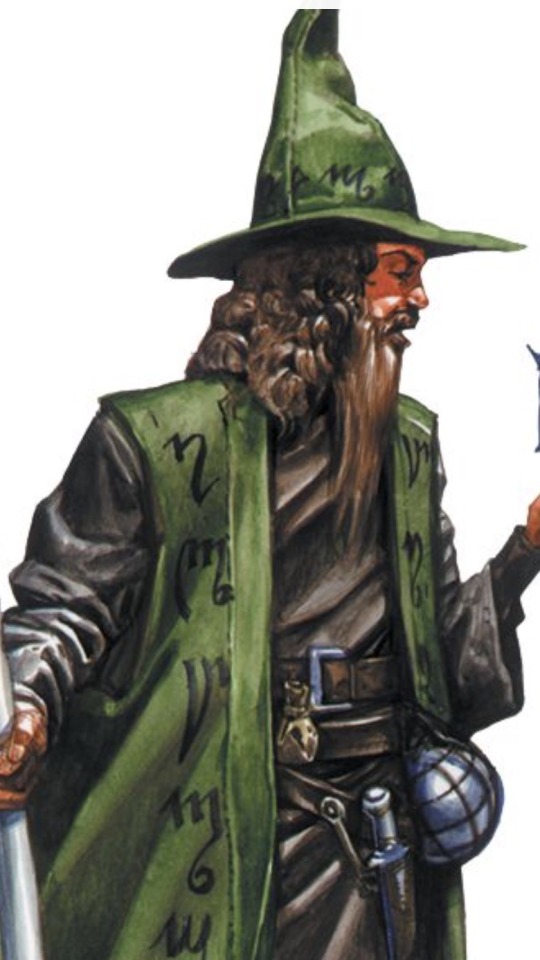
Spell of the week
CS: creates a large bouquet of flowers, this gives a bonus of +25 to any Rhetoric or Oratory check
MS:creates a small bouquet of flowers (less than 5 blooms) +10 to any Rhetoric or Oratory check
MF: produces a single bloom. No bonus
CF: produces a single dead bloom. -10 penalty to Rhetoric or Oratory
+70 Bonus applies to charm spells
Well, happy new year!
I’m collaborating on a few projects, one of which has a “magic tree”. I don’t know that it’s an overdone trope, but I can think of a few in fantasy literature, and literature in general.
So here are my favourite “magic trees” from literature, mythology and pop culture. This list is certainly not exhaustive or comprehensive, just ones that I could think of..
Yggdrasill

The world tree of Norse Mythology.
It’s probably the grand dad of the Tolkien mythical trees. Yggdrasil is attested in the Poetic Edda compiled in the 13th century from earlier traditional sources, and in the Prose Edda compiled in the 13th century by Snorri Sturluson. In both sources, Yggdrasil is an immense ash tree that is central to the cosmos and considered very holy. The gods go to Yggdrasil daily to assemble at their traditional governing assemblies. The branches of Yggdrasil extend far into the heavens, and the tree is supported by three roots that extend far away into other locations; one to the well Urðarbrunnr in the heavens, one to the spring Hvergelmir, and another to the well Mímisbrunnr. Creatures live within Yggdrasil, including the dragon Níðhöggr, an unnamed eagle, and the stags Dáinn, Dvalinn, Duneyrr and Duraþrór. For the record it is an Ash tree.
White Tree of Gondor

First White Tree
The first White Tree of Gondor came from a fruit that Isildur stole from Nimloth the Fair, before it was was destroyed. Isildur brought the sapling to Middle-earth and eventually planted it in Minas Ithil before his house. But when Sauron returned to Middle-earth, he attacked and captured Minas Ithil in SA 3429, destroying the White Tree. Isildur escaped, again taking a sapling with him.
Second White Tree
In TA 2 while in Minas Anor instructing his nephew Meneldil in rulership, Isildur planted the sapling of the White Tree in memory of his brother, Anárion. This White Tree stood until TA 1636, when the Great Plague spread across Gondor and the tree died.
Third White Tree
A third sapling was planted in TA 1640 by King Tarondor. After the line of the Kings failed the tree never bore fruit and seldom flowered and finally withered and died in TA 2872 at the death of the Ruling Steward Belecthor II. At this time no seedling of the tree was found, and the dead tree was left standing “until the King returns.”
Fourth White Tree
Following his coronation as King of Gondor, Aragorn was taken by Gandalf to a hallow on the slopes of Mindolluin. There, Aragorn found a sapling of the White Tree. The dead tree was removed from the court and placed in the Houses of the Dead, and Aragorn planted the sapling in its place. In June of TA 3019, the tree bloomed.
The Christian Tree of Forbidden Knowledge

Whether you consider it sacred or mythical, the Tree in the center of the Garden of Eden has to be considered on your list of important trees.
In Judaism and Christianity, the tree of the knowledge of good and evil is one of two specific trees in the story of the Garden of Eden in Genesis 2–3, along with the tree of life. Alternatively, some scholars have argued that the tree of the knowledge of good and evil is just another name for the tree of life.

Spell: Tree Merge
Fyvrian Level VI
Author: Dennis
Caster is able to physically merge his body and consciousness into a tree of at least his body size or greater.
While merged caster can cast spells, use Psionic abilities IF he is of high enough ability to maintain consciousness
CS: Duration until actively ended by caster. Maintains consciousness
MS:Duration up to SI: days Maintains consciousness
MF: duration SI ROUNDS. Does NOT maintain consciousness
CF: duration indeterminate. Douse NOT maintain consciousness.
SI:30+ maintains consciousness, even with MF
SI:55+ can extend perception through tree body.
SI:85+can extend perception through root network. Maintains consciousness, even with CF
Speed:15-SB
I remember some once noting that if Christmas didn’t exist then Dickens would have made one up.
In one iteration of my P-Harn there is something called “Concordance Eve”, a very Christmas-esque sort of affair, with a celebration and gifts.
In writing about Padern and his little cabin in the mining outpost on lake Myen, I like to think of him, the members of the Rangers, the cooks at maybe a delegation of Taelda getting together for a large meal, a few drinks, some merriment and music during a long, dark Navek evening.
Merry concordance Eve, peace to all

Spell:
Water to Wine
(Odivshe Level I)
Creates SI Quarts of wine from Water. Can be used to heal infection if inbibed. Heals Universal Penalty.
CS:Heals 25 Points of Universal Penalty
MS:Heals 10 points of universal penalty
MF: No effect
CF: No effect

(yeah, i know reddit is shitty, but i just thought i would do the oc’s as subreddits thing with my d&d characters)
(Harnmaster)Zelestra Thyrdult: r/Skyrim
(D&D)Ivellios Amakiir: r/GardenGnomes
(D&D)Arcaadius Umaris: r/TrollCoping
(D&D)Eddie Stone: r/Pyromania
(D&D)Usagi Remali: r/Stories or r/Mspaint
(D&D)Sakura Garessi: r/AskReddit
(D&D)Samedi Thorne: r/Corvids
(Shadowrun)Ryuto Danne/Rozzark: r/Badass
(D&D)Ronnie Taylor: r/BlackSabbath
(D&D)Eddie Walsh: r/Djent
(D&D)Elias Ed: r/UncannyValley
Edit- (d&d) Darius Mirelle: r/kickboxing or r/werewolves

“The mysterious pit of Ilvir is reputed to be the home of Harn’s most bizarre inhabitant, the deity Ilvir.” Eric Hotz’s art for Hârnmaster added to the setting’s consistent historical feel, borrowing from Norman, Saxon, and Viking material culture (Araka-Kalai, Columbia Games, 1987)

Hârn, N Robin Crossby’s system neutral fantasy RPG campaign setting inspired by medieval history, the very first release of what became hundreds of titles in the Hârn setting and HârnMaster rules series (Columbia Games, 1983)

A new HârnMaster set is on Kickstarter through May 4, 2020


This is new. It combines three titles - Araka-Kalai, Misyn Wilderness Area and Ochrynn Abbey - into one megamodule, adds 12 new pages, and reduces the cost.


