Master’s Thesis vs. PhD Dissertation – 15 Differences You Should Know
Learn more here:
Text

Text
Master’s Thesis vs. PhD Dissertation – 15 Differences You Should Know
Learn more here https//businessnewsthisweek.com/education/masters-thesis-vs-phd-dissertation-15-differences-you-should-know/
-
Text

Text

The Ultimate Guide to Securing Your PhD Admission
Introduction
Embarking on a PhD is one of the most rewarding academic journeys, but securing admission to a prestigious program requires strategic planning and preparation. Admissions committees seek candidates who demonstrate academic excellence, research potential, and a clear alignment with the program’s goals.
Navigating the PhD application process can feel overwhelming, but with the right approach, you can position yourself as a top candidate. This guide outlines practical steps and strategies to help you stand out, avoid common pitfalls, and secure admission to your dream program.
1. Understanding What Admissions Committees Look For
Before beginning your application, it’s crucial to understand the key factors admissions committees evaluate.

- Academic Excellence: A strong academic record with relevant coursework.
- Research Potential: Evidence of prior research experience and publications.
- Program Fit: Alignment between your research interests and the program’s focus.
Actionable Tips:
- Review the program’s website to understand its values and priorities.
- Study faculty profiles to identify potential supervisors who align with your research interests.
- Highlight your academic and professional strengths in your application materials.
Pro Tip: Admissions committees value authenticity—don’t exaggerate or misrepresent your achievements.
2. Choosing the Right Program and University
Selecting the right program is a critical step in your PhD journey.
Why This Matters:
- The program’s resources, faculty, and research focus determine the quality of your PhD experience.
- Misalignment can lead to frustration and reduced academic outcomes.
Steps to Choose Wisely:
- Identify programs that specialize in your research area.
- Consider factors like location, funding opportunities, and research facilities.
- Reach out to current students or alumni for insider perspectives.
Pro Tip: Rank your options based on a combination of academic fit, faculty expertise, and personal preferences.
3. Building a Strong Academic Profile
Your academic record is a cornerstone of your application.
What to Focus On:
- GPA and Transcripts: Maintain a strong GPA in your undergraduate and master’s programs.
- Relevant Coursework: Highlight subjects that align with your PhD focus.
- Additional Certifications: Pursue certifications or short courses to bolster your expertise.
Actionable Tips:
- Address any gaps in your academic record through additional coursework or strong letters of recommendation.
- Participate in research projects or internships to showcase your capabilities.
Pro Tip: If your GPA isn’t stellar, emphasize other strengths like research experience or professional achievements.
4. Crafting a Standout Statement of Purpose (SOP)
Your SOP is your opportunity to communicate your motivations, research goals, and suitability for the program.
What Makes a Strong SOP:
- A clear narrative that connects your past, present, and future.
- Specific details about why the program is a good fit.
- Evidence of your passion and preparedness for research.
Steps to Write a Winning SOP:
- Start with an engaging introduction that highlights your passion for research.
- Discuss your academic background and professional experiences.
- Explain how the program aligns with your career aspirations.
- Tailor your SOP for each program you apply to.
Pro Tip: Avoid generic statements. Mention specific faculty, labs, or resources that attracted you to the program.
5. Securing Strong Letters of Recommendation
Letters of recommendation provide an external perspective on your abilities and character.
Why They Matter:
- They validate your academic and research potential.
- Strong, personalized letters can differentiate you from other applicants.
How to Obtain Great Letters:
- Choose referees who know you well and can speak to your strengths.
- Provide them with your CV, SOP, and information about the program.
- Request letters well in advance of deadlines and follow up politely.
Pro Tip: Express gratitude to your referees, as their support is critical to your success.
6. Gaining Research Experience and Publications
Prior research experience demonstrates your ability to undertake independent projects.
What Counts as Research Experience:
- Lab work, internships, or assistantships in academic or industry settings.
- Publications in journals, conference papers, or thesis projects.
How to Build This Experience:
- Join a research lab or collaborate with faculty during your undergraduate or master’s studies.
- Seek out internships or fellowships in research-intensive organizations.
- Work on independent projects and aim to publish your findings.
Pro Tip: Mention your research experience in your SOP and provide links to published work in your CV.
7. Preparing for Standardized Tests (if applicable)
Certain programs require GRE, TOEFL, or IELTS scores, especially for international students.
Why These Tests Matter:
- They serve as an initial screening tool for admissions committees.
- High scores can strengthen your application, especially if your academic record has gaps.
How to Prepare Effectively:
- Create a study schedule and stick to it.
- Use reliable resources like prep books or online courses.
- Take practice tests to identify areas of improvement.
Pro Tip: If your scores are above average, mention them in your application to reinforce your academic capabilities.
8. Networking with Faculty and Current Students
Establishing connections with potential supervisors and students can enhance your application.
Why This Helps:
- Faculty input can influence admission decisions.
- Current students can provide valuable insights into the program.
Steps to Build Connections:
- Email potential supervisors, introducing yourself and expressing interest in their work.
- Attend virtual or in-person events like open houses or academic conferences.
- Join online forums or social media groups related to your field.
Pro Tip: Keep your communication professional and concise to leave a positive impression.
9. Demonstrating Leadership and Community Engagement
PhD programs value candidates who bring diverse skills and experiences.
What to Highlight:
- Leadership roles in academic or extracurricular activities.
- Community engagement or volunteer work that demonstrates teamwork and initiative.
How to Incorporate This:
- Mention leadership experiences in your SOP and CV.
- Discuss how these experiences have prepared you for collaborative research.
Pro Tip: Focus on experiences that align with the program’s values or your research goals.
10. Staying Organized and Meeting Deadlines
Organization is key to submitting a complete and competitive application.
Why This Matters:
- Missing deadlines or incomplete submissions can disqualify your application.
- A systematic approach ensures no important detail is overlooked.
How to Stay on Track:
- Create a checklist of all application requirements and deadlines.
- Use project management tools like Trello or Asana to stay organized.
- Submit your applications at least a week before the deadline to account for unexpected issues.
Pro Tip: Double-check each application to ensure all required documents are included.
Conclusion
Securing a PhD admission requires careful planning, attention to detail, and a strong presentation of your skills and achievements. By understanding what admissions committees value and following the strategies outlined in this guide, you can create a compelling application that highlights your potential as a researcher. Remember, persistence and preparation are the keys to success—your academic dream is within reach!
Text
Key Strategies to Strengthen Your PhD Application Profile
Introduction
Securing admission to a PhD program is a highly competitive process that requires more than just good grades. Admissions committees look for well-rounded candidates who demonstrate a strong academic foundation, clear research interests, and the potential to contribute meaningfully to their chosen field.
https://prashasblog.wordpress.com/wp-content/uploads/2024/12/www.reallygreatsite.com_.png?w=2048
1. Identify and Refine Your Research Interests
A clear and focused research interest is the cornerstone of a strong PhD application.
Why This is Important:
- Admissions committees assess whether your interests align with the program’s strengths and faculty expertise.
- Broad or vague research topics indicate a lack of preparedness.
Strategies to Strengthen This Aspect:
- Explore Your Passion: Reflect on the topics or problems that intrigue you the most.
- Conduct Preliminary Research: Read academic papers, attend webinars, or explore conference proceedings in your field.
- Be Specific: Instead of stating a broad area like “renewable energy,” specify your focus, such as “solar panel efficiency optimization.”
Pro Tip: Create a research statement outlining your topic, its significance, and how it aligns with the program’s goals.
2. Build a Strong Academic Foundation
Your academic record provides the first impression of your capabilities and dedication.
Why This is Important:
- A strong GPA and relevant coursework signal your preparedness for rigorous research.
- Academic achievements often serve as benchmarks for admissions committees.
Strategies to Strengthen This Aspect:
- Take Advanced Courses: Enroll in specialized courses or certifications that align with your research interests.
- Improve Weak Areas: Retake or audit courses if necessary to enhance your knowledge.
- Showcase Academic Achievements: Highlight awards, honors, or scholarships in your CV and SOP.
Pro Tip: If your GPA isn’t stellar, focus on other strengths like research experience or publications.
3. Gain Relevant Research Experience
Hands-on research experience is one of the most critical factors in a PhD application.
Why This is Important:
- It demonstrates your ability to conduct independent research.
- Research experience prepares you for the challenges of a doctoral program.
Strategies to Strengthen This Aspect:
- Work on Independent Projects: Collaborate with professors or join labs to gain exposure.
- Participate in Internships: Seek internships in research-driven organizations or industries.
- Publish Your Work: Aim to contribute to journals or present at conferences.
Pro Tip: Include a brief explanation of your research contributions and results in your SOP to highlight their impact.
4. Craft an Impactful Statement of Purpose (SOP)
Your SOP is your voice in the application process, showcasing your motivations and suitability for the program.
Why This is Important:
- It provides context for your academic and professional journey.
- A well-written SOP highlights your commitment to research.
Strategies to Strengthen This Aspect:
- Personalize Your SOP: Tailor it to each program by referencing specific faculty, facilities, or projects.
- Explain Your Goals: Articulate how the program aligns with your long-term career aspirations.
- Proofread Multiple Times: Ensure your SOP is free from grammatical errors and flows seamlessly.
Pro Tip: Share your draft with mentors or colleagues for constructive feedback.
5. Cultivate Strong Relationships with Referees
Letters of recommendation play a crucial role in validating your abilities and character.
Why This is Important:
- They offer an external perspective on your strengths and potential.
- Strong, personalized letters add credibility to your application.
Strategies to Strengthen This Aspect:
- Choose Relevant Referees: Select professors or mentors who know your work well.
- Provide Context: Share your CV, SOP, and the program’s requirements with your referees.
- Follow Up Politely: Give them enough time to write the letter and gently remind them of deadlines.
Pro Tip: Express gratitude to your referees for their time and effort.
6. Enhance Your Academic CV
Your CV provides a snapshot of your academic and professional achievements.
Why This is Important:
- A well-structured CV highlights your qualifications effectively.
- It serves as a quick reference for admissions committees.
Strategies to Strengthen This Aspect:
- Highlight Research Contributions: Include publications, conference presentations, and projects.
- Organize Information: Use clear headings like “Education,” “Research Experience,” and “Awards.”
- Keep It Concise: Limit your CV to 2-3 pages, focusing on quality over quantity.
Pro Tip: Use action verbs like “developed,” “analyzed,” or “collaborated” to describe your achievements.
7. Prepare for Standardized Tests (if applicable)
Certain PhD programs require GRE, TOEFL, or IELTS scores, especially for international students.
Why This is Important:
- High test scores can strengthen your academic profile.
- They often serve as a cutoff for initial screenings.
Strategies to Strengthen This Aspect:
- Plan Ahead: Register for tests well in advance of application deadlines.
- Use Prep Materials: Invest in reliable test prep books or online courses.
- Practice Regularly: Take mock tests to familiarize yourself with the format.

8. Network with Faculty and Current Students
Building connections can provide valuable insights and enhance your application.
Why This is Important:
- Faculty can offer guidance on tailoring your application to the program.
- Current students can provide insider tips on navigating the admissions process.
Strategies to Strengthen This Aspect:
- Attend Webinars or Conferences: Engage with faculty members during Q&A sessions.
- Reach Out via Email: Politely introduce yourself and inquire about their research.
- Join Online Communities: Participate in forums or social media groups related to your field.
Pro Tip: Be professional and concise in your communication to leave a positive impression.
9. Demonstrate Leadership and Extracurricular Involvement
PhD programs value candidates who bring diverse skills and experiences to the table.
Why This is Important:
- Leadership and extracurricular activities showcase your ability to contribute to the academic community.
- They demonstrate skills like teamwork, initiative, and time management.
Strategies to Strengthen This Aspect:
- Highlight Leadership Roles: Include experiences like organizing events or leading teams.
- Showcase Relevant Skills: Mention extracurricular activities that align with your research or academic interests.
Pro Tip: Include a brief mention of these activities in your SOP to add a personal touch.
10. Stay Organized and Meet Deadlines
Organization is key to submitting a strong application without missing critical components.
Why This is Important:
- Late or incomplete applications are often disqualified.
- A structured approach ensures every detail is addressed.
Strategies to Strengthen This Aspect:
- Create a Timeline: Use tools like Google Sheets or Trello to track deadlines and tasks.
- Double-Check Requirements: Ensure all documents, test scores, and fees are submitted.
- Submit Early: Aim to complete your applications a week before the deadline to avoid last-minute issues.
Pro Tip: Keep digital backups of all your application materials.
Conclusion
Strengthening your PhD application profile is a multifaceted process that requires effort, preparation, and strategic planning. By refining your research interests, building meaningful connections, and showcasing your achievements effectively, you can present yourself as an outstanding candidate. Remember, a strong application not only opens doors to prestigious programs but also sets the foundation for a successful academic journey.
Text
Common Mistakes to Avoid During PhD Applications
Introduction
Applying for a PhD is a transformative step in an academic journey, one that demands dedication, preparation, and precision. Yet, many brilliant candidates fail to secure admission due to avoidable mistakes. A minor oversight in aligning research interests, submitting a generic Statement of Purpose (SOP), or ignoring deadlines can turn a promising application into a missed opportunity.
Take Arjun Kumar, for instance—a talented researcher with a stellar academic record. Arjun’s initial PhD application was rejected because he submitted a generic SOP and overlooked contacting potential supervisors. Learning from his mistakes, he refined his approach, conducted in-depth research on programs, and reached out to faculty. The result? He secured admission to a prestigious program on his second attempt.
This blog highlights the most common mistakes applicants make during PhD applications and provides actionable strategies to avoid them, ensuring your application stands out for all the right reasons.
1. Lack of Research on Universities and Programs
Every PhD program is unique, and so is its faculty, research focus, and expectations. Applying without fully understanding a program’s specifics is one of the most common mistakes.
Why This is a Problem:
- Universities look for candidates whose interests align with their faculty’s research.
- Applying to the wrong program wastes your time, effort, and application fees.
How to Avoid This Mistake:
- Understand the Program: Visit the program’s website to learn about its research focus, faculty publications, and ongoing projects.
- Research Faculty Members: Identify professors whose work aligns with your research goals.
- Leverage Online Resources: Use platforms like ResearchGate or LinkedIn to gather insights from alumni or current students.
Pro Tip: Shortlist programs that not only match your research interests but also offer strong mentorship, funding opportunities, and a collaborative academic environment.
2. Poorly Written Statement of Purpose (SOP)
The SOP is your opportunity to showcase your passion, research interests, and suitability for the program. A generic or poorly structured SOP can diminish your chances of admission.
Why This is a Problem:
- A weak SOP signals a lack of effort and clarity.
- Admissions committees may perceive you as uncommitted to the program.
How to Avoid This Mistake:
- Tailor Your SOP: Highlight specific aspects of the program, such as faculty members or research facilities, that attract you.
- Be Authentic: Share your genuine motivations and experiences. For example, explain how a particular research experience shaped your goals.
- Edit and Revise: Proofread your SOP multiple times and seek feedback from mentors or colleagues.
Pro Tip: Avoid clichés like “I have always been passionate about research.” Instead, illustrate your passion with specific experiences or achievements.
3. Weak Academic CV or Resume
Your academic CV is your professional introduction. A poorly structured CV can overshadow even strong credentials.
Why This is a Problem:
- Irrelevant details can clutter your CV, making it hard to assess your qualifications.
- Missing key information, such as publications or research experience, weakens your profile.
How to Avoid This Mistake:
- Focus on Relevance: Highlight publications, conference presentations, and research projects directly related to your field.
- Keep It Concise: Use clear headings and bullet points for easy readability.
- Customize for Each Program: Emphasize skills and experiences that align with the program’s focus.
Pro Tip: Limit your CV to 2-3 pages, ensuring every section adds value.
4. Not Reaching Out to Potential Supervisors
Establishing a connection with potential supervisors can significantly enhance your chances of acceptance.
Why This is a Problem:
- Admissions committees often consult faculty members when evaluating applications.
- Failing to connect might make your application less memorable.
How to Avoid This Mistake:
- Research Faculty Profiles: Read recent publications to understand their research focus.
- Draft a Professional Email: Introduce yourself, express your interest in their work, and attach your CV.
- Be Respectful: Avoid demanding a response or appearing entitled.
Pro Tip: Follow up politely if you don’t receive a reply within two weeks.
5. Applying to Too Many Programs Without Focus
While it’s tempting to apply to numerous programs, spreading yourself too thin can compromise the quality of your applications.
Why This is a Problem:
- Generic applications are less likely to stand out.
- It’s challenging to tailor applications for multiple programs.
How to Avoid This Mistake:
- Prioritize Quality Over Quantity: Apply to 5-8 programs that align closely with your goals.
- Allocate Time Strategically: Dedicate sufficient time to each application.
6. Ignoring Application Deadlines
Deadlines are non-negotiable. Missing even one can derail your plans.
Why This is a Problem:
- Late submissions are often automatically disqualified.
- Rushed applications may contain errors or missing documents.
How to Avoid This Mistake:
- Create a Timeline: Use tools like Google Calendar or Trello to track deadlines.
- Submit Early: Aim to submit applications at least a week before the deadline to account for unforeseen delays.
7. Inadequate Letters of Recommendation
Strong letters of recommendation can differentiate you from other applicants.
Why This is a Problem:
- Generic letters fail to convey your unique strengths.
- Choosing the wrong referees can backfire.
How to Avoid This Mistake:
- Choose Thoughtfully: Select referees who know your work well.
- Provide Context: Share your SOP, CV, and details about the program with your referees.
8. Overlooking Language Proficiency Requirements
International students must meet TOEFL or IELTS requirements, yet many underestimate their importance.
Why This is a Problem:
- Low scores can lead to outright rejection.
- Missing the deadline for test submission can delay your application.
How to Avoid This Mistake:
- Prepare Early: Start studying 3-6 months in advance.
- Schedule Tests Wisely: Ensure scores are ready before application deadlines.
9. Overconfidence or Lack of Confidence
Confidence plays a pivotal role in presenting a compelling application.
Why This is a Problem:
- Overconfidence can lead to careless errors.
- Lack of confidence may result in underselling your achievements.
How to Avoid This Mistake:
- Stay Realistic: Be thorough but humble in your application.
- Seek Guidance: Consult mentors or peers for advice.
10. Ignoring Financial Planning
PhD applications often involve significant expenses, from application fees to travel costs.
Why This is a Problem:
- Poor planning can lead to financial strain.
- Some programs require proof of funding, which can delay your acceptance.
How to Avoid This Mistake:
- Budget Wisely: Account for all potential expenses.
- Explore Funding Options: Look for scholarships, grants, and fee waivers.
Conclusion
Avoiding these common mistakes can greatly enhance your chances of securing a PhD position. By staying organized, tailoring your applications, and approaching the process with diligence, you’ll increase your odds of success. Remember, every detail matters—your future as a researcher depends on it!
Text


- Program: Public Health MPH (STEM-designated)
📆 Deadline: November 21, 2024
📊 Requirements: 2.75 GPA, 6.5 IELTS, No GRE/GMAT required
💸 Scholarship: Up to $6,000 available
Start your journey in Public Health with a globally recognized program and take advantage of incredible scholarship opportunities. No GRE or GMAT needed! Connect with us today to learn more and secure your spot!
Call us today!
📞 +91 8074400600
🌐 ibookconsultancy.in
Photo

I’m an exemplary graduate student! Grad👩🏻🎓😇🥳 #wguteacherscollege #graduatestudies #pnw #history (at Spokane, Washington)
https://www.instagram.com/p/CoqxktNrTlN/?igshid=NGJjMDIxMWI=

Photo

This is a great idea. Let us look forward to these scholarships via the @mofjamaica.
……
Indian President Ram Nath Kovind is urging Jamaican students to take advantage of the opportunity to enroll in some of its best universities, which are globally respected and significantly less expensive than western institutions.
He pointed out that under the world’s largest democracy’s new regional education policy, India is planning to start new institutes of technology abroad.
Read more: Click the link in @jamaicaobserver stories or the link in our bio.
#studyinindia #indiascholarships #graduatestudies (at ScholarshipJamaica.com)
https://www.instagram.com/p/Cds4qvvO_vg/?igshid=NGJjMDIxMWI=

Photo

MBA student comes full circle with JrNYLC experience
By Jaime North, Digital Marketing Specialist
Entering her first year of graduate school, the soon-to-be Master of Business Administration student knew an opportunity with the nation’s largest provider of educational travel experiences would be valuable.
It wasn’t a hard sell for Lyza Klein ’21. In fact, she went through Envision’s Junior National Young Leadership Conference herself as a teenager.
“This summer, from start to finish, taught me so much about myself and what leadership styles work best with mine,” said Klein, who graduated in May with a bachelor’s degree in business administration management. “I got to see what different leadership styles look like when they work together. Also, I got to see what personalities work best with mine and how to create relationships with a lot of different kinds of people.”
She added, “Being able to see both sides of this (JrNYLC) program allowed me to scale how much I have grown over the last decade and have grown into the kind of leader I am. Bloomsburg has played a major role in my growth as well, but this summer allowed me to be even more confident and become someone who likes meeting new people and networking, while letting me get hands-on practice with different leadership styles.”
Klein spent two months this past summer in the Washington D.C. area working as a program office manager for JrNYLC, which provides middle school students the opportunity to experience the power of democracy among the monuments, be inspired by exemplary stories of courage, collaborate to discover solutions to some of the issues they face today, and spend a night in a museum among new friends.
“Working with Envision’s (JrNYLC) was something that meant a lot to me, because I completed the program in 2010 as a scholar,” Klein said. “Following graduation, I had a window of opportunity to do whatever I wanted, knowing that when I came back to Bloomsburg to start my MBA, I would have to begin thinking about my long-term career. Accepting a position with Envision meant I was able to see the administrative side of the program, and I now have experience as both a scholar and an employee.”
According Klein, some of her key responsibilities this summer were:
- scholar accountability and assistance
- oversee travel of the more than 200 scholars arriving each week from across the country
- creating room check reports for the week
- creating departure travel and airport staff manifests to track scholars getting home safely
- manage paperwork and medicine collection
- manage the 24/7 office phone and answer calls from scholars and their families
“Interacting with scholars and their families led me to learn about case management and record-keeping of interactions (we) would have with families,” Klein said. “As an (Bloomsburg) undergraduate, I was highly involved in organizations and clubs in different executive positions. I believe the experience from those roles helped me this summer, because I had experience working with a team to achieve a shared goal.“
Klein said her JrNYLC summer experience prepared her well for her graduate assistantship for the Presidential Leadership Program (PLP) in the president’s office.
“Beyond personal growth, I learned how to manage tasks in the workforce and got the first-hand experience of working with tight deadlines, different personalities and ensuring that my work is acceptable,” Klein said. “I’ll bring the high-level effort and work ethic I worked on and polished all summer to my projects and classwork this school year.”
Although her perspective is as a business student, Klein sees great value in Envision’s JrNYLC for any college major or graduate program.
“Whether you’re an education major and want to be an advisor for a program or are in a different major and want to be in the program office, it’s rewarding either way,” Klein said. “Getting to be a small part of scholars’ lives is worth it all by the end of the summer. This is a role where you’ll grow and learn a lot quickly. It’s an experience where you’ll learn a lot about yourself and your own leadership skills.”

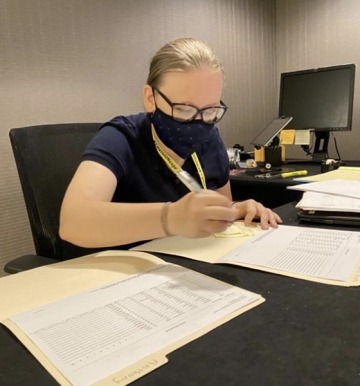

Photo

12.20.2021
I found three kinko’s packets from graduate school while searching for Christmas music books last night. I lost nearly all my graduate school materials in a basement flood some years back, so finding these was really exciting!
1 cover of the packet for W.J.T. Mitchell’s Visual Culture course, Winter 1994, The University of Chicago
2 list of reading from that course
3 List of keywords in Visual Culture we wrote as a class
4 and 5 Readings from, I think, a course for-taught by Paul Rogers and Tom Cummins on Race and Art of the Americas, Fall 1993? Can’t find anything to specify which class - tagging some classmates here to see who might recall?
To say these classes were impactful is an understatement. In the @macraftstudieswwc program I direct now we work through keywords as a way of understanding how meaning shifts and changes in craft discourse. Paul and Tom’s class was what I went to graduate school to do - to examine race and art. Unfortunately, the department and university wasn’t ready to really do this then any more than we are thirty years later. Bringing some of these readings in this semester more directly, too.
A number of people were in this class who yiu may know: Anne Eaton, Rebecca Zorach, Liz Siegel, Anthony Elms, Rebecca House, Lisa Pincus, Rebecca DeRoo - and John Ricco was the course assistant.
#graduatestudies #universityofchicago #thisiscraft #craftscape #visualculture #criticalracetheory
@rabbitrez @sloth_division @johnpaulricco
https://www.instagram.com/namitapdx/p/CXtp9CGJBr6/?utm_medium=tumblr

Photo
Bloomsburg University launches Master of Social Work degree program
Applications are now being accepted for Bloomsburg University’s new Master of Social Work (MSW) degree program with classes beginning in August.
After many years of development, the program will provide for a well-documented need for advanced social work education in the region. Graduates of the MSW program will be trained to use a multi-systemic planned change process to help individuals and communities to adapt and grow through these challenging times. The program has a strong commitment to strengths-based social work practice.
“We’re delighted to be able to offer an affordable, high-quality Masters in Social Work to students in our region,” said James Brown, dean of the College of Liberal Arts. “The demand for licensed social workers is predicted to increase for the foreseeable future, so the MSW program at BU is an excellent option for people with bachelor’s degrees, regardless of their undergraduate major.“
The mission of the MSW program is to prepare students for advanced generalist social work practice focused on developing leaders who promote social, environmental and economic justice with the goal of improving sustainable individual, organizational, and community wellness.
The program is a two-year master’s program that blends classroom instruction with hands-on practicum/internship experiences. Students will be challenged to apply theoretical concepts to real-world experiences.
The degree program also offers an advanced standing, 18-month program for applicants who have already earned a bachelor’s degree in social work.
The program has taken the first official step towards accreditation by being granted pre-candidacy status by the Council on Social Work Education. This multi-year process will culminate in initial accreditation in February of 2024.

Text

The Beginning of the End
I write this from the beautiful NYU Law Vanderbilt Hall courtyard, in my second last week on this amazing campus.
I start my exams in 4 days (!!!) and I finished classes last week. It’s hard to believe!
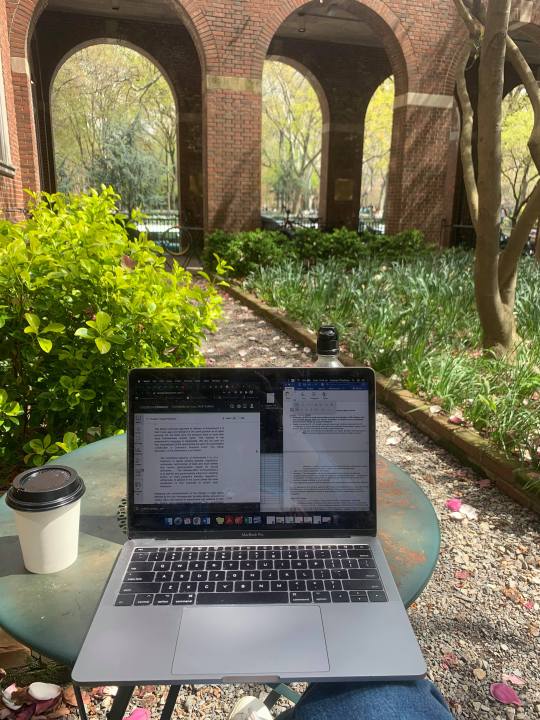
A lot has happened since I last posted. I finished my classes and my externship, got vaccinated, made many more LLM friends who started in the spring and JD friends, and I was interviewing at a few firms in the US. I’m very happy to report that I got an associate role at a firm last week! More on that in my next post, because I know many of you are probably looking for positions in the US after your LLM.
I went to my first baseball game - Yankees vs Orioles at Yankee Studium, and I had a lot of lunches and coffees in the sun at Washington Square Park with LLM and JD friends.


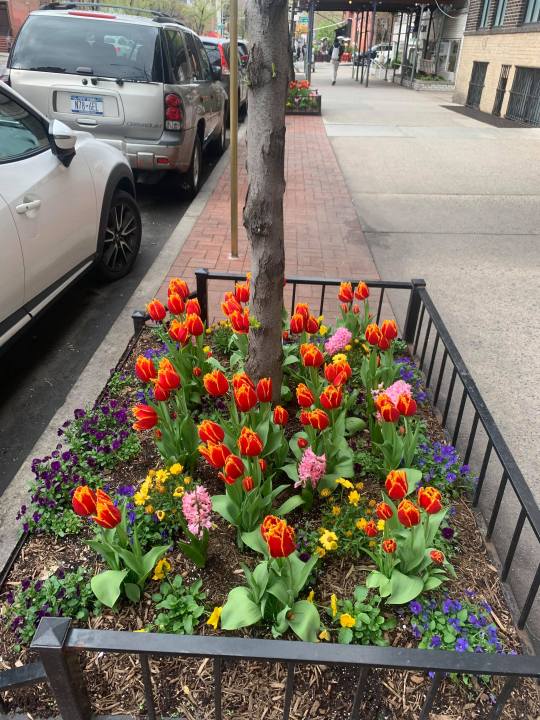
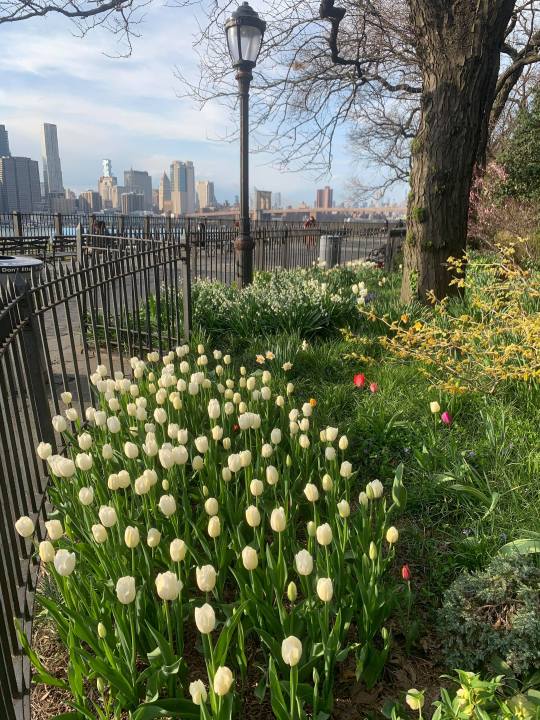
I took about 1 million photos of tulips and other flowers around the city…

And I was also able to meet with a few of my professors for coffee and drinks (yay for the US’s roll-out of vaccinations!). This might seem trivial, but it’s been so nice to be able to meet professors and my work supervisors at the DA’s office in person for final drinks - it feels like the world is semi-normal again in NY. 🌞
On that note, I just want to take a moment and say that I know that many of you in your home countries (especially India and Brazil) are really struggling right now. Many of the students here have had family and friends that have contracted COVID, and if this is the position you are in, I am truly sorry. My thoughts are with you, and I hope you will still be able to travel to the US to undertake your LLM later this year if that is still your goal.
It’s so strange knowing that my time here is nearly up. I’ve loved this year, but it really has gone by so quickly. And even though I’m so glad I came to start the LLM in the Fall Semester, and I made very firm friends with the small group that started with me, it’s sad leaving our new Spring starter friends behind knowing most of them have a whole semester to go! At least I know I will come visit them, as I’ll still be in the US next semester.

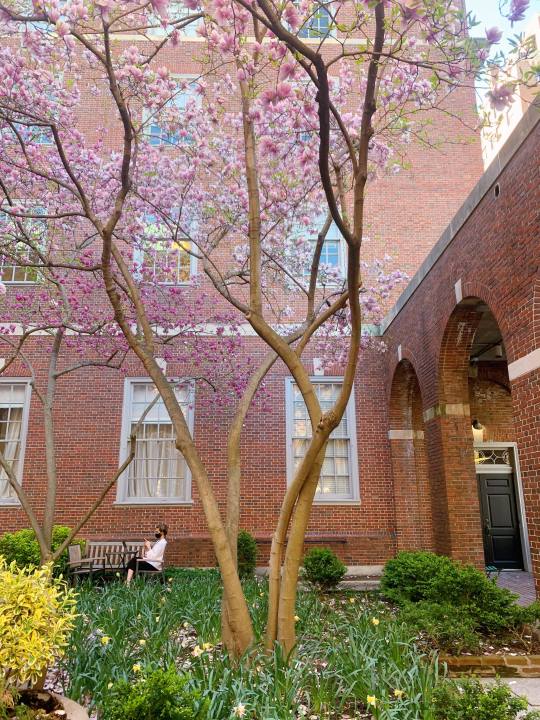
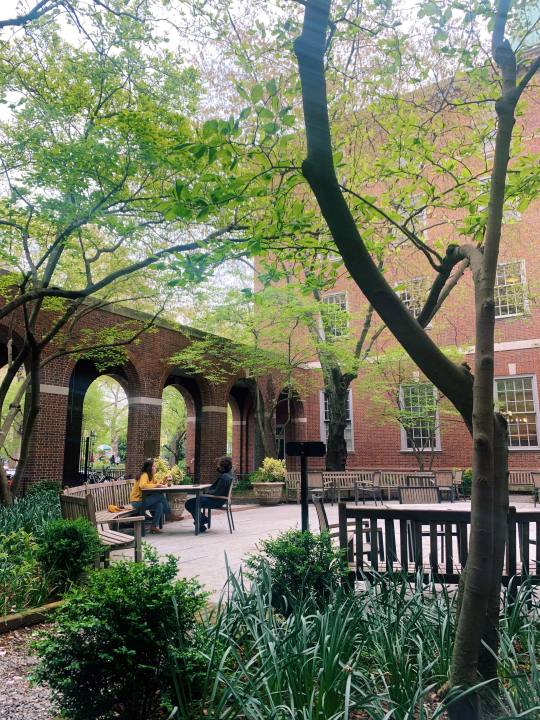
Even the quad has changed so rapidly - from the beautiful magnolia buds above in March, to this equally beautiful summer green of the moment in late April:

Our graduation is coming up in May, and *very* sadly, it won’t be in person. However, you had better believe I will still be getting photos in my cap, tassel, and gown! And we LL.M.s have planned some informal celebrations, especially as we will all be fully vaccinated by then.
I now am going to drag myself into the library instead of procrastinating, but look out for my upcoming posts:
1. How I got a law firm position in the US (in litigation), and what my other LL.M. friends are doing for jobs post-graduation;
2. Making the most of your LL.M. (there’s a million ways to do it, but this will be some tips from my perspective); and
3. Some of my favorite places to relax and decompress in NYC from my year here. 💃
Photo
Alum named outstanding new professional by PCPA
By Rachel Raccio, communications assistant
Bryson Purcell ’17/19M, a graduate of Bloomsburg University’s College Student Affairs master’s program, was recently announced as the winner of the Outstanding New Professional award from the Pennsylvania College Personnel Association (PCPA). This award is presented to an ACPA/PCPA member who has made a significant contribution to higher education and has been employed in the student personnel field for less than five years.
“I was shocked when I heard I won,” Purcell says. “I’m honored to be recognized for the hard work we’ve all been putting in through this past year. Adapting to the online environment while continuing to provide the best support to students isn’t an easy task.”
His time at Bloomsburg is what brought him to love the idea of working with college students. He held a position as one of the Husky Orientation and Welcome Leaders, which initially sparked his interest. His love only progressed as he went through his classes and eventually into the College Student Affairs program.
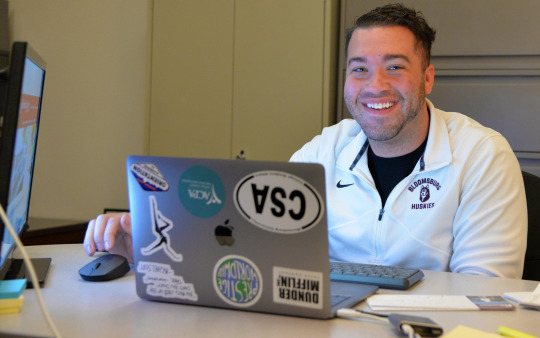
“After my first experience with our traditional summer orientation programming, I immediately applied for a position as an admissions tour guide so I could continue working with future students all year long, not just during the summer,” Purcell says. “During that time, I found some incredible mentors in both New Student Orientation and Undergraduate Admissions, who encouraged me to pursue my graduate degree in College Student Affairs. One being my former supervisor, Dr. Kristin Austin who is taking the lead of PCPA as the president.”
Purcell enjoyed his time in the CSA master’s program and even got hands-on experience as a graduate assistant in multiple departments on campus which only furthered his passion for his career.
“I really enjoyed the CSA program,” Purcell says. “The faculty were extremely passionate about their subject areas and are always looking for ways to push you to be the best you can be. I was able to hold GA positions in New Student Orientation, Department of Teaching and Learning, Office of Undergraduate Admissions, Office of Graduate Admissions.”
Now, he’ going to be serving as the president-elect on the PCPA executive board. He’ll support the president in their absence and train executive board members and committee chairs. Prior to this position, he was the chair of the New Professionals and Graduate Students Community of Practice since 2019. He transitioned to president-elect on March 1, 2021 and will hold this position for a year before he becomes president next March.
Bloomsburg’s CSA program really helped to prepare Purcell for the job search ahead of him once he graduated.
“The fact I was able to complete GA positions in both enrollment management as well as student affairs really gave me a competitive edge when it came time for the job search,” Purcell says “I really enjoyed the fact the CSA program combines aspects of leadership, counseling, experiential learning, and room for students to choose elective courses that directly relate to their interests.”

Photo
Apply for the CHINESE GOVERNMENT SCHOLARSHIPS (MOFCOM) 2021/2022.
Deadline: Friday, April 2, 2021
Visit mof.gov.jm/scholarships for details.
#Scholarships #MOFJamaica #GraduateStudies
@scholarshipja @MOEYIJamaica @JISNews @rjrnews (at ScholarshipJamaica.com)
https://www.instagram.com/p/CNA7YzJByC6/?igshid=1tf4dknmw68q0

Text
The Good, the Bad and the (Studying): Fall 2020 at NYU
These last few weeks of my first semester of the LLM at NYU have been a blur of finals studying and writing papers in the NYU Law Library, hopped up on too much caffeine and not enough sleep or vegetables…
But, as promised, I interviewed my fellow LLM’er, J (from Germany) about his thoughts on the semester! I managed to force this grilling on him while we were going to look at the stunning Christmas lights in the Dyker Heights neighborhood in Brooklyn, so this post will also feature some photos of the lights 🎉
Hi J!

1. Can you describe your background before coming to NYU?
I attended Goethe University in Frankfurt (Johann Wolfgang Goethe-Universität Frankfurt am Main) for my first law degree, and then pursued my PhD in financial crimes and economic regulation at Goethe as well. I am about to defend my PhD over the winter break, so I’m now back in Germany!
In Germany I worked as a research assistant at Goethe and for the Federal Ministry of Justice in Berlin; at several law firms; and as a judicial clerk. Just before leaving, I spent 6 months seconded to a large international bank in their Frankfurt office.
2. What is your area of interest?
White-collar crime and financial regulation.
3. What classes have you taken so far at NYU, and which one was your favorite?
I took a lot of classes this semester (more than the average!), including:
- Graduate Lawyering;
- Professional Responsibility in the Corporate Context (with Professor Harms, Of Counsel at Sullivan & Cromwell and a former partner between 1992 through 2017 in corporate and securities law);
- Criminal Procedure: Fourth and Fifth Amendment (with Professor Schulhofer, a leading criminal justice scholar);
- Corporate Crime and Financial Misdealing: Legal and Policy Analysis Seminar (with Professor Cooley, a former Deputy Chief of the Business and Securities Fraud Section at the US Attorney’s Office for the Eastern District of NY);
- Complex Federal Investigations (with Judge Orenstein, a United States Magistrate Judge for the Eastern District of New York);
- Beyond Criminal Justice Reform (with Professor Morgan, a criminal justice reform scholar and former civil rights litigator at the Abolitionist Law Center); and
- Money and Modern Capitalism at NYU Stern School of Business (with Professor/Governor King and Professor Kanojia).
My favorite was Corporate Crime and Financial Misdealing. Professor Cooley was super nice and extremely smart, and the topic was excellent for white collar crime specialists. We also had a lot of fascinating guest speakers, which made networking really easy (like Federal judges, SEC employees, district attorneys from the US Attorney’s Office for the Southern District of NY, and partners from big law firms).

4. What’s your top tip for LLM applicants putting the finishing touches on their applications for next year, or thinking about applying for 2022?
Well, this is too late for this year’s applicants, but for next year’s - leave a lot of time to have your documents sent to LSAC! I had a lot of issues with LSAC and spent a lot of hours on the phone with them about transcript issues (they wanted a transcript in German, although mine was issued in English?!). Take the stress off and deal with it early.
My next tip applies to anyone who is deciding on which LLM program they will ultimately attend after receiving their offers. I would recommend really taking the time to look closely at the subjects on offer at the different law schools. This was a huge factor for me in choosing between schools like NYU, UPenn, Virginia, Cornell, Berkeley and so on - aside from the appeal of living in New York City!
5. What activities have you been involved with at NYU?
I am a Research Assistant/Teaching Assistant to a Professor of Negotiation, and the Graduate Editor for the NYU Journal of Business & Law.
6. What was the best thing about this semester?
Meeting people from all over the world, in person and over Zoom, and making friends from NYU and Columbia. I now have friends from all over, including the UK, France, Australia, Israel, South Korea, Japan, Switzerland, India, Brazil and more… and there are far more students to meet who are arriving in January!

7. What was the most difficult thing about this semester?
Meeting other people, because connecting with people over Zoom was difficult. It was also harder to network over Zoom, because it just feels less natural.
8. Looking back on the semester (which could be described as out of the ordinary, at best!), are you happy with your decision to attend NYU this semester as planned and not defer?
It wasn’t really an option for me personally to defer for a whole year, and I’m happy I didn’t defer to Spring because the COVID situation has not improved. I’m pretty happy with how things have turned out though!
****
Thanks, J, for playing along!



Photo

Gettin’ ready for tomorrow’s first day high! 🤭💪🏻 #graduatestudies #MDC
https://www.instagram.com/p/CEr8sqdFJlVvQkPAwoozcpjbx2NYimCxJTSb9s0/?igshid=1bcucxj77r2bw

Photo

One year since greatness! Master Jaymie is having a blast, in case you’re wondering. Success comes to those who work at it and don’t complain about how their life sucks. Your life sucks because YOU SUCK. Make good life choices and change any situation not beneficial to your growth and you won’t have to keep peeping other people’s lives for self-validation. Worry about YOU, don’t worry about THEM. #graduationseason #mba #postgrad #graduatestudies #management #educationiskey #valueyourselfworth #youcandoit #avoidignorance #avoididiocracy #classof2019🎓🎉 (at Artpark)
https://www.instagram.com/p/CAdB96Vhkid/?igshid=15qc8anas7w04

Photo

TRUST YOURSELF. Start there ✨
•
•
•
•
#EducationAdvocate #DreamsDoComeTrue #EducationIsPower #GraduateStudies
LET’S STAY CONNECTED!
LINK IN COMMENTS ⬇️
•
•
•
Corporate Slave l Mediapreneur l Education Advocate l Fashion and Brand Influencer l Classical Crossover Soprano l Cover Model #stylediaries #designerfashion #businessdevelopment #womenpower #successmindset #bossbabelife #liveyourdreams #buildanempire #selfgrowth
(at Harvard Division of Continuing Education)
https://www.instagram.com/p/B89Xij9lRfI/?igshid=fu7u5i44roiq
